How to Do Lower Chest With Dumbbells: Step-by-Step Guide
If you’ve been pressing dumbbells week after week and your lower chest still looks flat, you’re not alone. Knowing how to do lower chest with dumbbells is about more than just moving weight. It’s about targeting the right muscle fibers with the right angle and control.
EMG research consistently shows the sternal head of the pectoralis major activates best when your shoulders move into extension past neutral. A decline angle of 15 to 30 degrees does exactly that. Let’s break down why this matters and how to set it up safely, starting with the most direct answer you need.
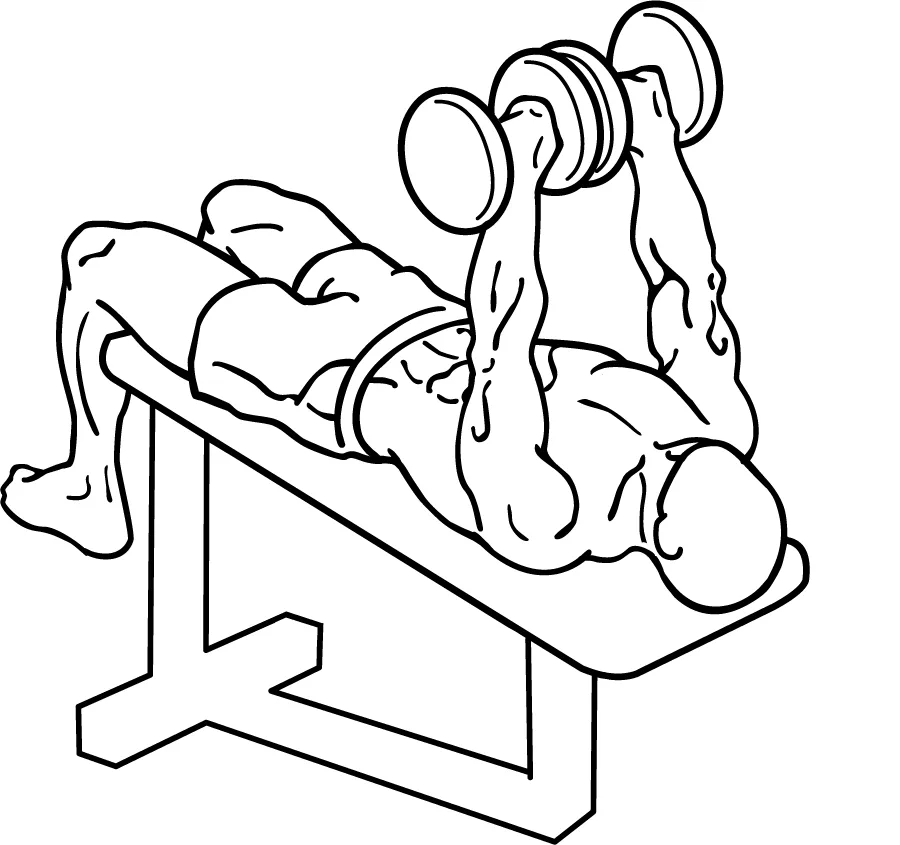
Image source: Wikimedia Commons / Everkinetic (CC BY-SA)
Quick Answer
Use a decline bench set to 15 to 30 degrees. Hold dumbbells with palms facing forward. Lower them to the sides of your chest.
Press up explosively and squeeze. Control the descent for 2 to 3 seconds.
Why Getting Lower Chest Form Right Matters
Getting the form wrong here doesn’t just waste your time. It puts your shoulder joints at real risk. Per the National Strength and Conditioning Association’s guidelines, improper pressing mechanics are one of the most common causes of shoulder impingement in recreational lifters.
The lower chest, or sternal head, attaches to your sternum and runs down toward your abdomen. It’s the larger portion of the pectoralis major. But it needs a specific angle of shoulder extension to be fully recruited.
A flat bench forces your shoulders into flexion, which favors the upper chest. A decline flips that.
Most gym advice skips this entirely. People just do more flat bench presses and wonder why the bottom of their chest stays underdeveloped. If you’re serious about overall development, you need to understand which angle fires which fibers.
Otherwise, you’re just guessing.
There’s also the injury side. A decline press done with flared elbows can jam your shoulder capsule. Done with a too-steep bench, it can strain your neck and upper traps.
As of 2026, aggregate injury data from gym-based studies still show decline presses accounting for a disproportionate share of pec minor strains when form breaks down.
Core Anatomy: What “Lower Chest” Actually Means
The pectoralis major has two distinct heads. The clavicular head sits up top near your collarbone. The sternal head sits below it, attaching along your sternum and the upper six ribs.
That sternal head is what people call the “lower chest.”
Image source: Wikimedia Commons/artist not specified; Ernest Ingersoll is the author of the article.
When you press on a flat or incline bench, your shoulders move into flexion, raising your arms toward your head. That primarily hits the clavicular head. When you press on a decline bench, your shoulders move into extension, arms moving down and behind your body.
That shift in angle recruits the sternal head far more effectively.
Why Angle Matters for Fiber Recruitment
The sternal head’s muscle fibers run diagonally downward and outward. To shorten them fully, you need to bring your elbows down and back relative to your torso. That’s exactly what a decline bench does.
The steeper the decline, the more extension at the shoulder joint.
But there’s a limit. Research from multiple biomechanical analyses suggests that anything beyond 30 degrees of decline starts to shift tension away from the chest and onto the anterior deltoid and triceps. It also increases stress on the shoulder capsule.
The sweet spot sits between 15 and 30 degrees.
This isn’t just theory. If you’ve ever done a decline press and felt nothing in your chest, you were likely either too steep, too flat, or using too much weight. The sternal head responds best to moderate loads with a full range of motion and a controlled tempo.
Step-by-Step Guide: Decline Dumbbell Press
Let’s walk through the setup and execution for a safe, effective decline dumbbell press. This is the most reliable way to hit the lower chest with dumbbells.
Setup and Safety Checks
First, set your bench to a decline angle between 15 and 30 degrees. Most adjustable benches have a notch or a pin for this. Lock it in place.
Secure your legs under the pad at the top of the bench; that’s what keeps you from sliding forward during the press.

Image source: YouTube / I Review Products (YouTube thumbnail (fair-use with source credit))
Load the dumbbells onto your thighs. Lie back and position them at shoulder height with palms facing forward. Your elbows should be at roughly a 45-degree angle to your torso, not flared straight out and not tucked tight against your ribs.
The Pressing Motion
Take a deep breath and retract your shoulder blades. Think about pulling them down and back into the bench. This protects your shoulders and keeps the tension on your chest.
Lower the dumbbells slowly toward the sides of your chest. Your upper arms should travel down until your elbows are just below the level of the bench. Don’t rush this part.
A 2 to 3-second eccentric is ideal for muscle growth.
At the bottom, pause briefly. Feel the stretch across your lower chest. Then press the dumbbells back up explosively.
Squeeze your pecs at the top, but don’t lock your elbows out hard; keep a slight bend to protect your joints.
Exhale as you press. Inhale as you lower. That breathing pattern keeps your core stable.
Reps, Sets, and Progression
This table gives you a simple framework depending on your goal:
| Goal | Reps | Sets | Rest | Tempo |
|---|---|---|---|---|
| Hypertrophy | 8 to 12 | 3 to 4 | 60 to 90 sec | 2-0-1 (eccentric-pause-concentric) |
| Strength | 6 to 8 | 4 to 5 | 90 to 120 sec | 2-0-X (explosive concentric) |
| Endurance | 12 to 15 | 3 | 45 to 60 sec | 3-0-1 |
Start with a weight you can control for the full range of motion on all reps. If you’re struggling to keep your elbows at the right angle or you feel it mostly in your shoulders, drop the weight. Your sternal head will thank you.
Common Mistakes That Cost You Gains (or Cause Pain)
Most lower chest problems come down to a handful of form breakdowns. Here’s what to watch for and how to fix it.
| Mistake | Why It Hurts | The Fix |
|---|---|---|
| Flaring elbows to 90 degrees | Increases shoulder impingement risk | Keep elbows at 45 degrees relative to the torso |
| Using a decline steeper than 30 degrees | Shifts tension to the delts and neck | Stay between 15 and 30 degrees |
| Bouncing dumbbells off the chest | Kills muscle tension, risks rib injury | Control the eccentric, pause at the bottom |
| Not retracting shoulder blades | Loses chest engagement, strains shoulders | Pull scapulae down and back before pressing |
| Using too much weight | Forces compensation, reduces sternal head activation | Lower weight until you feel the lower chest |
The “No Feeling” Problem
One of the most frustrating issues is pressing hard and feeling nothing in your lower chest. This usually means your mind-muscle connection is off or your setup angle is wrong.
Try this: before your working sets, do a light warm-up set of 15 reps. Focus entirely on squeezing your pecs at the top of each rep. Visualize the muscle fibers shortening.
If you still don’t feel it, adjust your bench angle down by 5 degrees and try again.
Another common fix is slowing down the eccentric. Most people drop the weight in under a second. Stretch that to 3 seconds.
The extra time under tension wakes up the sternal head in a way that fast reps never do.
If none of that works, consider switching to a flat dumbbell press with a slight backward lean, not on a decline bench, but just tilting your torso back about 10 degrees. Some lifters find that this cues the lower chest better without the stability demands of a full decline setup.