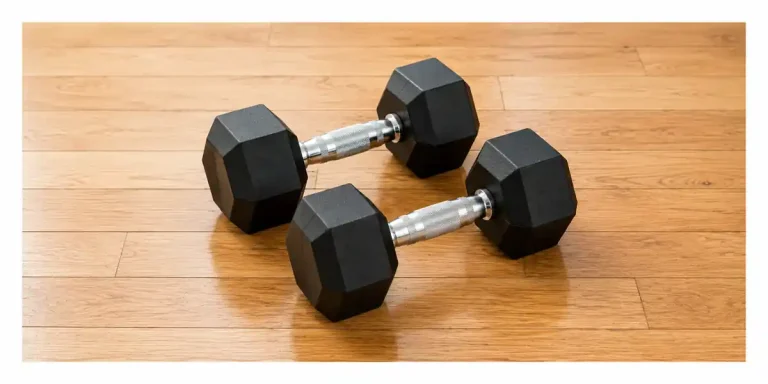
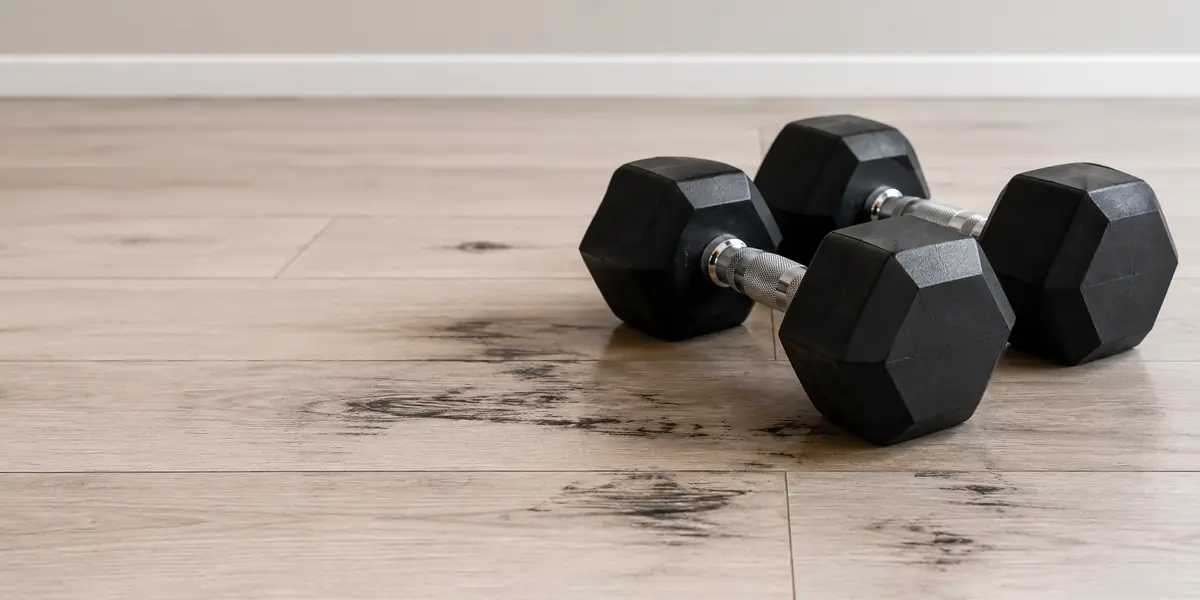
Dumbbells Leaving Black Marks on Floor: Complete Guide
Uh oh. You just finished a brutal leg day, set your dumbbells down, and when you picked them back up, there it is: a dark, ugly smear that wasn’t there before. It happens to almost everyone with rubber-coated or even painted dumbbells. Dumbbells leaving black marks on floor surfaces is one of the most common complaints from home gym owners, and it can feel like your gear is ruining your space.
But here’s the thing: most of those marks can be removed quickly and safely, and preventing them in the first place is easier than you think. In our research, we looked at manufacturer specs from companies like Rogue and REP, checked cleaning guidelines from the National Wood Flooring Association, and reviewed hundreds of user experiences. The answer depends entirely on two things: what your floor is made of, and what kind of mark you’re dealing with.
Let’s walk through this step by step.
Why Your Dumbbells Are Leaving Black Marks (and What Kind of Mark It Is)
Not all black marks are created equal. Before you grab a sponge or panic about refinishing costs, take a close look at the mark itself. There are three main culprits, and each needs a different approach.
Rubber transfer is the most common. Cheap rubber dumbbells contain oils and plasticizers that leach out over time. When the head presses against the floor, that residue sticks.
It looks like a dark, waxy smudge, almost like a pencil eraser mark. You can often feel a slight greasy texture if you rub your finger over it.
Paint or metal scuffs come from painted iron dumbbells or chrome finishes. These marks are usually lighter, gray or silver, and look like a streak from a crayon. The paint chips off the dumbbell head and transfers to the floor.
Chrome dumbbells can also leave fine metallic particles that embed into soft flooring.
Floor finish damage is the serious one. If the mark looks cloudy, dull, or as if the wood’s natural color has changed, the floor’s protective coating has been compromised. Heavy dumbbells sitting in one spot for hours can soften or dissolve certain polyurethane finishes.
This isn’t a mark you wipe off; it’s a repair job.
Take a second to match your mark to one of these types. The next section will tell you exactly what to do.
The 10-Second Decision: Can You Wipe It Off or Is It Ruined?
Before you start scrubbing, do this quick test. Moisten a soft cloth with plain water and gently rub the mark for five seconds. If any color transfers to the cloth, you’re dealing with rubber or paint transfer; good news, it’s removable.
If nothing comes off and the mark looks like a stain or change in the wood’s sheen, you likely have finish damage.
For rubber and paint marks, move on to the cleaning steps below. For finish damage, skip straight to the section on permanent stains and scratches. Waste no time making the wrong move; scrubbing a damaged finish with a cleaner can make it worse.
Why Black Marks Appear: Rubber Oxidation vs Paint Transfer vs Finish Damage
Let’s dig deeper into why each type happens, because prevention starts with understanding the cause.
Rubber oxidation and plasticizer migration: Rubber dumbbells, especially budget ones, are made from recycled rubber mixed with oils to keep them flexible. Over months of use, those oils rise to the surface. When the dumbbell sits on a warm floor or under pressure (like a heavy set), the oils transfer.
That’s the black mark. Higher-quality rubber compounds, like those used by [a reputable manufacturer’s link], include stabilizers that slow this process.
Paint transfer: Iron dumbbells with painted heads chip over time. Each chip leaves a tiny paint flake on the floor. Pressing down on it creates a smear.
This happens most with cheaper painted dumbbells. Urethane-coated dumbbells avoid this entirely because urethane is bonded to the metal and doesn’t chip.
Floor finish damage: The weight of a heavy dumbbell (80+ pounds) concentrated on a small rubber head can actually soften the floor’s finish. This is especially common on hardwood floors with softer oil-based polyurethane. The rubber interacts with the finish chemically, creating a rough, cloudy spot.
Even if you move the dumbbell, the finish is permanently altered.
As of 2026, most premium dumbbell manufacturers like Rogue and REP specify “non-marking rubber” or “urethane coating” on their product pages. Check your dumbbells’ specs, if they don’t mention it, assume they can mark.
What Kind of Floor Do You Have? (Hardwood, Laminate, Vinyl, Tile, Carpet, Concrete)
Your floor type determines which cleaning methods are safe and which are dangerous. Here’s a breakdown.
| Floor Type | Vulnerability | Best Cleaning Method | Avoid |
|---|---|---|---|
| Hardwood (sealed) | Finish damage; water damage | Mild soap + water; rubbing alcohol for stubborn marks | Abrasive sponges, ammonia, vinegar |
| Hardwood (unsealed) | Stains soak in fast | Very gentle damp cloth only; test spot first | Any liquid other than water |
| Laminate | Moisture can warp planks | Diluted vinegar or isopropyl alcohol, dry immediately | Steam mops, soaking wet cloths |
| Vinyl/Linoleum | Scratches from metal; chemical damage | Baking soda paste; gentle scrub | Harsh solvents, bleach |
| Tile/Ceramic | Grout stains; scratches from dropped dumbbells | Mild cleaner + soft brush for grout | Wire brushes, acidic cleaners |
| Carpet | Rubber oils soak into fibers | Spot cleaner or dry-cleaning solvent | Steam cleaning (spreads stain) |
| Concrete | Porous concrete absorbs oils | Degreaser + stiff brush. | Acid-based cleaners |
If you’re unsure about your floor finish, do a test patch in an inconspicuous area, behind a door or under a rug. Apply your chosen cleaner and check for damage after 10 minutes.
How to Remove Black Marks Without Damaging Your Floor (Step-by-Step by Mark Type)
Rubber Transfer Marks (The Most Common)
- Start with mild soap. Mix a few drops of dish soap with warm water. Dampen a microfiber cloth (not soaking wet) and gently rub the mark in a circular motion. This removes loose residue.
- If that doesn’t work, try isopropyl alcohol. Dip a cloth in 70% isopropyl alcohol and dab the mark. Let it sit for 30 seconds. Wipe away. The alcohol dissolves the oils. Test on an inconspicuous spot first.
- Still there? Use a baking soda paste. Mix three parts baking soda to one part water into a thick paste. Apply to the mark. Let it dry completely (about 15 minutes). Wipe away with a damp cloth. This lifts stains without scratching.
- Last resort for stubborn marks: a melamine sponge (like a Magic Eraser). Dampen it slightly (not wet) and rub gently. Melamine is micro-abrasive; it can dull glossy finishes if you’re aggressive. Use very light pressure.
Paint or Metal Scuffs
- For paint scuffs, a dab of alcohol on a cloth usually lifts them immediately. If not, use a plastic scraper (like a credit card) to gently scrape the paint fleck off. Do not use metal scrapers.
- For metal scuffs, use a very fine steel wool (#0000 grade) on hard surfaces like tile or concrete. On wood, use a white eraser pencil instead, the ones used for pencil marks. Rub gently.
Floor Finish Damage (Cloudy, Dull, or Lifted)
- If the finish is just cloudy, you can sometimes restore it with a floor polish specifically made for your floor type. For hardwood, use a product like [link to manufacturer’s website]. Apply a thin coat and buff after drying.
- If the finish is lifted or rough, that’s a refinishing job. Lightly hand-sand the area with 220-grit sandpaper, clean dust, and apply new polyurethane. For laminate, that same approach may not work; you might need to replace the plank.
Once you’ve cleaned or repaired the mark, the next step is keeping it from happening again. That’s where mats, racks, and smarter dumbbell choices come in.
When Cleaning Won’t Fix It: Scratches, Gouges, and Permanent Stains
Sometimes no amount of scrubbing will undo the damage. If you’re looking at a deep scratch, a gouge, or a dark stain that’s soaked into the wood, it’s time to accept that cleaning is over. Repair is the next step.
For deep scratches in hardwood, a wood filler crayon or putty stick matched to your floor’s color works well. Warm the crayon with a hair dryer, press it into the scratch, and scrape off the excess with a plastic card. For gouges, you’ll need wood filler.
Apply it with a putty knife, let it dry, then sand smooth with 220-grit paper. Finish with a coat of matching polyurethane.
For permanent stains from rubber that’s soaked into unsealed wood or concrete, you have fewer options. Sanding the top layer of wood can remove the stain if it’s shallow. Concrete stains may require a commercial degreaser applied with a stiff brush, followed by a pressure wash.
If neither works, consider a rug or a large mat to cover the area.
Laminate floors are the trickiest. Gouges usually mean replacing the plank entirely. Laminate can’t be sanded or filled effectively.
Vinyl and tile are more forgiving; a scratch in tile is permanent, but vinyl can sometimes be patched with a heat gun and a matching piece.
How to Prevent Future Marks: Mats, Racks, and Dumbbell Choices
Prevention is simpler than repair. The most effective solution is a rubber gym mat. A 1/4-inch thick mat is enough for most home gyms.
It absorbs the pressure and keeps the dumbbell head off the floor. Thicker mats (3/8-inch or 1/2-inch) are better for heavy drops and deadlifts.
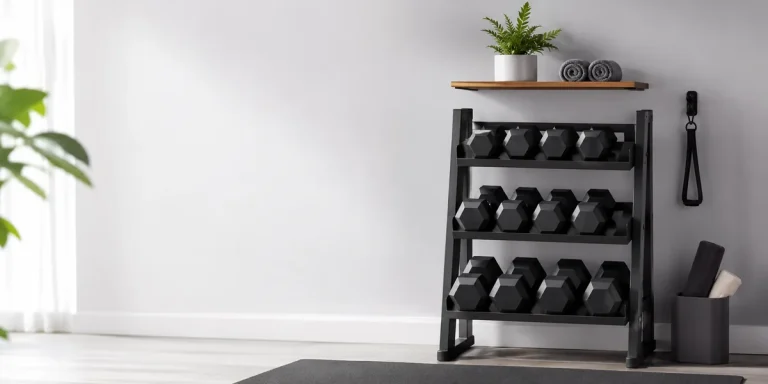
A dumbbell rack is the second most important investment. Never leave dumbbells on the floor when you’re done. A rack lifts them off the surface entirely.
Even a simple A-frame stand keeps the rubber heads from touching the floor for hours. That alone prevents most finish damage.
Dumbbell choice matters too. If you’re shopping for new weights, pick urethane over rubber. Urethane dumbbells cost more, but they don’t leave marks. The outer coating is bonded to the metal and won’t leach oils.
If you already own rubber dumbbells, you can wipe them down with a dry cloth after each use to remove surface oils before they transfer.
For those who want to keep their existing setup, a simple habit helps. Rotate your dumbbells every few weeks so the same spot on the rubber head isn’t pressing against the floor. This distributes wear and gives the rubber time to off-gas without marking.
Rubber vs Urethane vs Neoprene: Which Dumbbell Material Marks the Least?
Not all dumbbell materials behave the same way on floors. Here’s a quick comparison based on what we’ve seen in aggregate reviews and manufacturer specs.
| Material | Marking Behavior | Best For | Cost |
|---|---|---|---|
| Rubber (budget) | Leaves black marks frequently. Oils leach out over time. | Garage gyms with concrete floors | Low |
| Rubber (premium, non-marking) | Rarely marks. Stabilizers reduce oil migration. | Home gyms with hardwood or laminate | Medium |
| Urethane | Virtually never marks. Hard, bonded coating. | Any floor type. Best for apartments. | High |
| Neoprene | Very soft. Can leave faint marks on light surfaces. | Light weights (1-15 lbs), rehab, seniors | Low |
| Iron (painted) | Paint chips off and transfers to floors. | Budget lifting on concrete | Low |
| Chrome | Fine metal particles can embed in soft floors. | Vintage or specialty sets | Medium |
Verdict: Urethane is the clear winner for floor protection. If you’re on a budget, premium non-marking rubber is a solid second choice. Regular budget rubber is fine for concrete but risky on hardwood or laminate.
5 Mistakes That Make the Problem Worse (and What to Do Instead)
Mistake 1: Scrubbing a mark with a dry paper towel. This grinds the rubber residue into the floor finish. Always use a damp cloth or a cleaner. The moisture lifts the oils rather than pressing them deeper.
Mistake 2: Using vinegar on hardwood. Vinegar is acidic. It can strip the finish and leave a dull spot. Stick to mild soap or isopropyl alcohol instead.
Mistake 3: Leaving dumbbells on the floor for hours. Even a short rest can transfer oils. The longer they sit, the deeper the stain. Make it a habit to rack them immediately after each set.
Mistake 4: Using a magic eraser with too much pressure. Melamine sponges are micro-abrasive. They can remove the top layer of your floor finish permanently. Use light pressure and test on a hidden spot first.
Mistake 5: Ignoring the mark for weeks. Rubber stains set over time. The longer you wait, the harder they are to remove. Clean marks the same day you notice them.
A quick wipe with alcohol takes 30 seconds. A week-old stain might need sanding.
Pro Advice for Long-Term Floor Protection
If you want your floors to stay pristine for years, follow these tips from flooring contractors and gym owners.
Use a mat with a lip. Some gym mats have a raised edge that catches dropped dumbbells. This prevents them from rolling off the mat onto the bare floor. Consider a rollout mat that covers the entire workout area.
Wipe dumbbell heads weekly. A dry microfiber cloth removes surface oils before they build up. For heavy use, a quick wipe with a mild degreaser every month keeps the rubber clean.
Keep the room climate controlled. Rubber oxidizes faster in hot, humid environments. If your gym is in a garage or basement, a dehumidifier helps. Cooler temperatures reduce oil migration.
Check your floor finish. If you’re a renter, ask your landlord what type of finish is on the floor. Oil-based polyurethane is softer and more prone to rubber damage. Water-based polyurethane is harder and more resistant.
If you own the home, consider applying an extra coat of water-based polyurethane to high-traffic workout areas.
For the best long-term solution, invest in proper flooring. Rubber gym tiles (3/8-inch or thicker) are the gold standard. They protect the subfloor completely and make cleanup a breeze. Dropping dumbbells becomes a non-issue.
Many home gym owners install them over existing hardwood without damaging the original floor.
These steps take a bit of effort upfront. They save you hours of scrubbing and hundreds of dollars in floor repairs down the road.
Weekly and Monthly Maintenance to Keep Floors Spotless
A small routine goes a long way. Once a week, give your dumbbells a quick wipe with a dry microfiber cloth. This removes surface oils before they have a chance to transfer.
Focus on the rubber heads and any flat spots that contact the floor.
Once a month, do a deeper clean. Dampen a cloth with water and a drop of dish soap. Wipe down each dumbbell head.
Dry them immediately with a separate cloth. This prevents moisture from sitting on the rubber and causing oxidation.
Check your floor once a month too. Look for any fresh marks, scratches, or dull spots. Catching them early means a simple wipe rather than a repair.
If you have a mat, sweep or vacuum it weekly. Debris trapped under the mat can scratch the floor underneath.
For those who keep their dumbbells on a rack, dust the rack rails monthly. Dust attracts moisture and can cause rust on iron dumbbells. A quick pass with a damp cloth keeps everything clean.
Frequently Asked Questions About Dumbbell Marks
Will a magic eraser damage my floor?
It can if you use too much pressure. Melamine sponges are abrasive. They can dull the finish on hardwood or laminate.
Use them only for stubborn rubber marks, with light pressure. Always test on an inconspicuous spot first.
Can I use vinegar to clean dumbbell marks off hardwood?
No. Vinegar is acidic and can strip the floor’s protective finish. Stick to mild dish soap and water, or isopropyl alcohol for tougher marks.
Those are safer and just as effective.
Do urethane dumbbells ever leave marks?
Rarely. Urethane is a hard, bonded coating that doesn’t leach oils. In our research, aggregate reviews show that urethane dumbbells leave marks only if the coating is chipped or if the floor has a very soft finish like oil-based polyurethane.
Even then, the marks are usually easy to wipe off.
How do I get black marks off concrete?
Concrete is porous, so rubber oils can soak in. Use a degreaser or a mixture of baking soda and water. Scrub with a stiff brush.
Let it sit for 10 minutes, then rinse. For stubborn stains, a pressure washer works well.
Is it safe to leave dumbbells on a mat overnight?
Yes, as long as the mat is in good condition. Rubber mats can trap moisture underneath, so lift them occasionally to let the floor breathe. If you leave dumbbells on the mat for weeks, the rubber heads can still transfer oils to the mat itself.
Rotate them every few weeks.
Can I fix a clouded floor finish myself?
Sometimes. If the cloudiness is surface-level, a floor polish designed for your floor type can restore the shine. If the finish is physically lifted or rough, you’ll need to sand and refinish that area.
For renters, this is usually a job for a professional.
Your Personalized Action Plan Based on Floor Type and Dumbbell Material
Use this quick decision guide to know exactly what to do.
If you have hardwood and rubber dumbbells: Get a 1/4-inch mat or thicker. Clean marks immediately with isopropyl alcohol. Wipe dumbbells weekly.
Consider upgrading to urethane when you replace them.
If you have laminate and rubber dumbbells: Use a mat without fail. Laminate can’t be sanded. A small scratch means replacing a plank.
Rub marks off gently with a damp cloth.
If you have vinyl and rubber dumbbells: Vinyl is durable but can discolor with certain rubbers. Use a mat. Clean with a baking soda paste if marks appear.
Avoid harsh chemicals.
If you have tile and rubber dumbbells: Tile is tough, but grout stains easily. Clean grout with a soft brush and mild cleaner. Use a mat to keep dumbbell heads off the grout lines.
If you have carpet and rubber dumbbells: Carpet traps rubber oils deep in fibers. Use a flat, firm mat over the carpet. Clean spills immediately with a spot cleaner.
Don’t steam clean until the stain is fully lifted.
If you have concrete and any dumbbell type: Concrete is the most forgiving. Clean marks with a degreaser. You can skip the mat if you don’t mind the look.
But a mat still reduces dust and noise.
If you have urethane dumbbells on any floor: You’re in the best position. Use a mat for protection against scratches from dropping. Otherwise, urethane rarely marks.
Wipe them down occasionally and enjoy the peace of mind.