Step-by-step: What Muscles Does Dumbbell Row Work
What muscles does dumbbell row work? Far more than just your lats. This single movement pulls your entire posterior chain into action.
It’s a core stabilizer, a back builder, and an arm strengthener rolled into one.
Per the National Strength and Conditioning Association’s guidelines, keeping a neutral spine during loaded pulling movements is non-negotiable. As of 2026, the dumbbell row remains one of the most prescribed unilateral exercises for fixing muscle imbalances. If you’ve ever wondered why it feels so different from a barbell row, the answer begins with the anatomy.
Why Getting This Right Matters More Than You Think
The row looks simple. A dumbbell, a bench, a pull. But the moment your form breaks, the wrong muscles take over.
Your biceps start doing the work. Your lower back starts rounding. The tension disappears from your lats, and you’re one rep away from a strain.
Getting the mechanics right changes everything. You feel the pull deep in your back. You stop relying on momentum.
You build the kind of thickness that shows through a t-shirt. And you do it safely, rep after rep. That’s why we’re starting with the muscles themselves, not just the movement pattern.
Understanding the anatomy turns guessing into intentional training.
The Quick Answer: What Muscles Does a Dumbbell Row Work?
The one-arm dumbbell row works muscles across your entire back. It primarily targets your lats, rhomboids, and middle traps. Your posterior deltoids and biceps assist.
Your core and spinal erectors act as stabilizers.
Here’s the breakdown at a glance:
| Role | Muscles |
|---|---|
| Primary movers | Latissimus dorsi, rhomboids, middle trapezius |
| Secondary helpers | Posterior deltoids, biceps brachii, lower traps |
| Stabilizers | Core (transverse abdominis, obliques), erector spinae, glutes |
If you’re just starting out, this is also one of the best movements to learn which dumbbell weight feels appropriate for your back. You’ll notice the lats fatigue long before your arms if the load is right.
The Anatomy: Which Muscles Are Actually Pulling
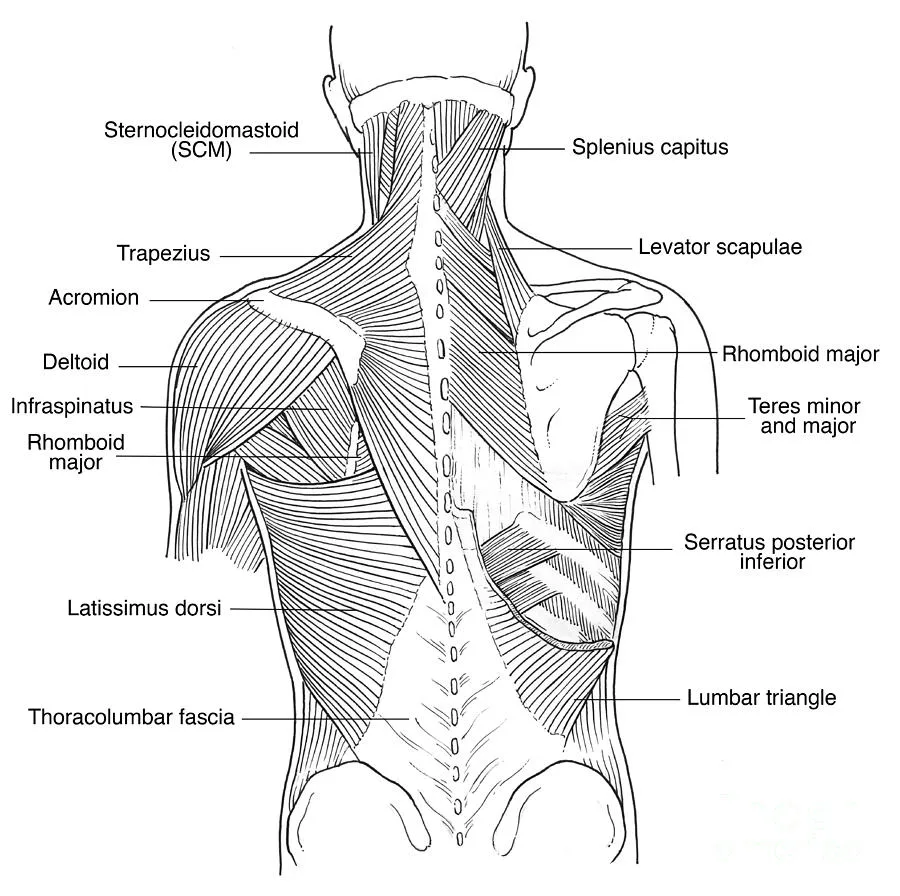
Let’s zoom in on the individual players. You don’t need a medical degree. Just a clear picture of where each muscle sits and what it does during the pull.
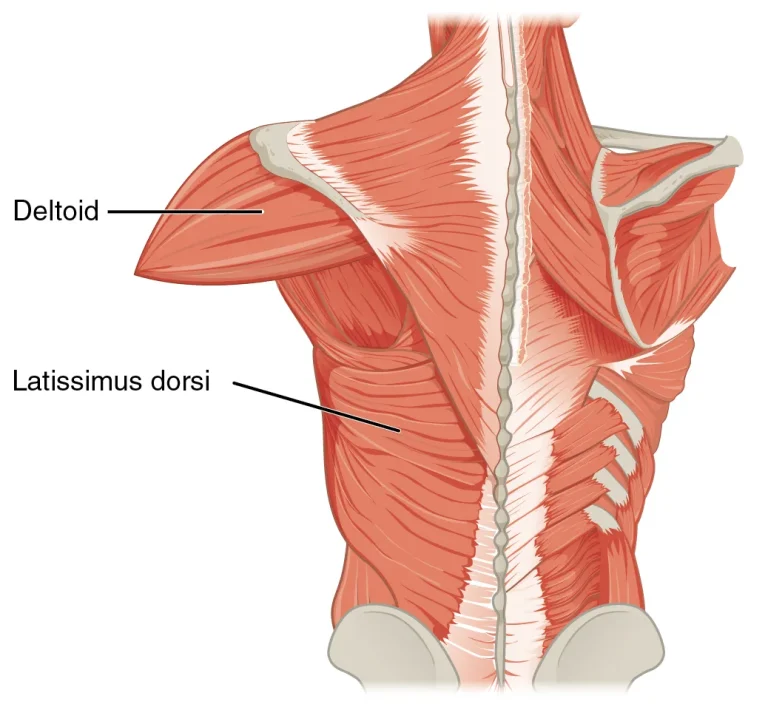
Latissimus Dorsi (The Lats)
These are the large wing-shaped muscles running from your mid-back down to your pelvis. They’re the prime movers in the row. When you pull the dumbbell toward your hip, the lats drive your elbow down and back.
They’re responsible for that V-taper look. If you want a wider back, this is your main target.
Rhomboids and Middle Trapezius
These sit between your shoulder blades. Their job is to pull the shoulder blade toward your spine, also known as scapular retraction. They’re the reason the row makes your back look thicker.
Without them, you’d have width but zero density.
Posterior Deltoids
The rear shoulders help lift the weight and keep the shoulder joint stable. They’re easy to ignore until they’re underdeveloped. The row hits them hard, especially when you pull to your ribcage at a steeper torso angle.
Biceps Brachii
Yes, the biceps are involved. They assist in bending the elbow. But they shouldn’t dominate.
If your arms give out before your back, the load is probably too heavy or your pull is starting with the arm instead of the elbow. Think of your arms as hooks. The back does the lifting.
Core and Spinal Erectors
These are your hidden stabilizers. Your abs and obliques contract isometrically to prevent your spine from rotating. Your erector spinae hold your torso in place.
This is why the row is a full-body exercise. One study published in the Journal of Strength and Conditioning Research noted that core activation during unilateral rows is significant enough to count as trunk training.
How Torso Angle Changes the Muscle Focus
The angle of your torso isn’t just a comfort thing. It changes which muscles carry the load.
Near-Parallel Torso (Around 90 Degrees)
When your back is nearly parallel to the floor, the row becomes a pure lat exercise. Your lats work through a long range of motion. The pull path goes straight to your hip.
This is the classic bodybuilding row, and it’s the best position for building back width.
Upright Torso (Around 45 Degrees)
When you stand up taller, the line of pull shifts. Your rhomboids and upper back take on more work. The pull goes toward your lower ribcage rather than your hip.
This variation is closer to a rear-delt row. It’s excellent for posture and back thickness.
Which Should You Use?
Use both. If your goal is a wider back, spend most of your time near parallel. If your goal is better posture and a thicker mid-back, use a more upright angle.
Varying your torso position across training weeks keeps your muscles adapting.
Grip Width and Elbow Path: Small Tweaks, Big Differences
You’ll hear people say grip doesn’t matter. They’re wrong. It matters, just less than torso angle.
Neutral Grip (Palm Facing In)
This is the standard dumbbell row grip. It’s the strongest position for your shoulder joint and the most natural for lat activation. Your elbow stays close to your body.
If you’re new to the movement, start here.
Pronated Grip (Palm Facing Backward)
This orientation is harder on the wrists and shoulders. It forces more upper back and rear delt involvement. Some lifters love it.
Others find it uncomfortable. It’s a useful variation, not a daily driver.
Elbow Flared vs. Elbow Close
The path of your elbow determines where the tension goes. Keep your elbow close to your torso to hammer the lats. Let it flare out slightly and you shift load toward the rear delts.
Neither is wrong. Just know which one you’re doing.
Common Errors That Turn It Into an Injury Risk
The row is safe when done right. These mistakes turn it into a trip to the chiropractor.
Rounding the Lower Back
This is the big one. When your spine rounds under load, the discs in your lower back take unwanted pressure. The fix is simple: brace your core and keep your chest up.
If you can’t hold a flat back, the weight is too heavy.
Using Momentum
Swinging the dumbbell up turns a back exercise into a physics lesson. You lose tension where it counts. Lower the weight with control and pause at the bottom of each rep.
Pulling with the Arm
If you feel the row entirely in your biceps, you’re curling the weight. Drive your elbow backward and squeeze your shoulder blade toward your spine at the top. The arm is just the connection.
Overextending the Shoulder
Letting your shoulder roll forward at the bottom of the movement is fine. Forcing it beyond neutral at the top is not. A small, controlled squeeze is enough.
Anything more risks impingement.
Step-by-Step: How to Perform the Dumbbell Row with Perfect Form
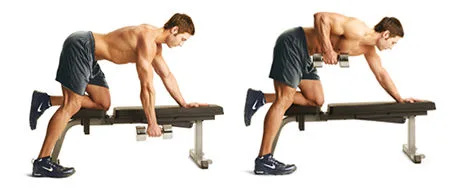
Here’s the setup I recommend to every lifter, from complete beginners to advanced gym-goers.
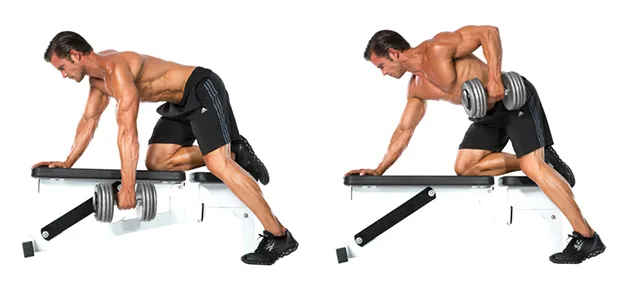
- Place your left knee and left hand on a flat bench. Your right foot stays on the floor for balance.
- Keep your back flat and your neck in a neutral position. Look at the floor, not ahead.
- Grab the dumbbell with your right hand using a neutral grip.
- Brace your core as if you’re about to take a punch.
- Pull the dumbbell toward your hip while driving your elbow backward.
- Squeeze your shoulder blade toward your spine for a full second at the top.
- Lower the weight under control until your arm is fully extended.
Breathing pattern: Exhale as you pull. Inhale as you lower. Never hold your breath.
That’s one rep. Complete all reps on one side before switching. This approach lets you focus on the working side without rushing.
Sets, Reps, and Load: How to Program It for Your Goal
Your rep scheme depends entirely on what you’re training for. This table covers the common goals.
| Goal | Reps | Sets | Rest | Load |
|---|---|---|---|---|
| Strength | 4–6 | 4–5 | 2–3 minutes | 80–85% of max effort |
| Hypertrophy | 8–12 | 3–4 | 60–90 seconds | 70–75% of max effort |
| Endurance | 15+ | 3 | 45–60 seconds | Lighter weight |
For most lifters, the hypertrophy range works best. It gives you enough time under tension to build muscle while keeping your form honest. If you’re not sure where to start with load, a good rule of thumb is to pick a weight you can row for 10 clean reps with two in reserve.
You can also use a simple rep range structure to guide your progression.
Fixing Muscle Imbalances: When One Side Is Stronger
Almost everyone has a stronger side. The dumbbell row is the perfect tool to correct that.
Start with your weaker side first. Match the reps and weight on the stronger side. This prevents your dominant side from taking over.
Over time, both sides become equal.
Another trick is slowing down the lowering phase on the weaker side. This increases time under tension and forces the smaller muscles to catch up.
Sample Dumbbell Row Workouts to Try
Here are two simple sessions to get you going.
Beginner Full-Back Session
- One-Arm Dumbbell Row: 3 sets of 10 reps per side
- Bodyweight Row or Lat Pulldown: 3 sets of 12
- Face Pull: 2 sets of 15
Rest 90 seconds between sets. Focus on form, not load.
Advanced Pull-Day Finisher
- One-Arm Dumbbell Row (torso near parallel): 4 sets of 8 per side
- Chest-Supported Row: 3 sets of 10
- Single-Arm Cable Row: 3 sets of 12
- Rear Delt Fly: 2 sets of 15
Use heavier weight on the row and drop it only if your lower back starts to arch.
These sessions pair well with a full dumbbell back routine if you want more structure.
Dumbbell Row vs. Other Back Exercises
How does the dumbbell row stack up against the alternatives? Let’s find out.
| Exercise | Range of Motion | Core Demand | Best For |
|---|---|---|---|
| Dumbbell Row | Long (each side independent) | High | Fixing imbalances, unilateral strength |
| Barbell Bent-Over Row | Shorter (bar hits torso) | Moderate | Heavy loading, overall back mass |
| Seated Cable Row | Medium (constant tension) | Low-Moderate | Controlled tension, easy progressive overload |
| Chest-Supported Row | Long (bench supports torso) | Very Low | Isolating the back without lower back strain |
If you’re deciding between dumbbells and a barbell for your back day, the dumbbell row gives you more stability in the shoulder and a longer stretch. A barbell row lets you load more weight. Many lifters do both.
Frequently Asked Questions
Why don’t I feel it in my back?
You’re probably pulling with your arms. Focus on driving your elbow backward and squeezing your shoulder blades together. Lower the weight and slow down the movement.
Does the dumbbell row work the lower back?
Yes, but indirectly. Your erector spinae contract isometrically to hold your torso in place. They don’t move the weight, but they work hard to keep you stable.
Is it safe for people with shoulder pain?
It can be, with the right set-up. Keep your elbow close to your torso, use a neutral grip, and avoid pulling too high. A more upright torso angle also reduces shoulder strain.
Ask a professional before training through pain.
Can I do dumbbell rows every day?
Not recommended. Your back muscles need time to recover. Two to three sessions per week is plenty.
Overtraining just leads to poor form and injury.
Final Verdict: Why the Dumbbell Row Deserves a Spot in Your Routine
The dumbbell row is one of the few exercises that builds width, thickness, and stability in one move. It’s scalable for beginners and challenging for advanced lifters. It fixes imbalances, protects your lower back when done right, and requires almost no equipment.
If you’re only doing one back exercise, make it this one. Master the form, vary your torso angle, and watch your back transform.