How to Use Dumbbells: Your First Workout Guide
Have you ever stood in front of a dumbbell rack and felt a little unsure where to start? You're not alone. The question "how do you use dumbbells" is deceptively simple, the real answer depends entirely on what you're trying to achieve.
Pick up a weight that's too light and you'll spin your wheels for months. Grab one that's too heavy and you're flirting with a shoulder injury before you finish your first set.
The American College of Sports Medicine (ACSM) defines resistance training guidelines that break down into three distinct rep ranges: strength (1, 6 reps), hypertrophy or muscle growth (6, 12 reps), and muscular endurance (15+ reps). Your goal determines everything, how much weight you grab, how long you rest between sets, and even which exercises you should prioritize. Let's walk through exactly how to make those decisions so every rep counts.
Image source: YouTube / Adrian Reviews It (YouTube thumbnail (fair-use with source credit))
Quick Answer
Use dumbbells by picking a weight that makes the last two reps of your set very challenging. Choose a rep range based on your goal. Control the movement on the way up and the way down.
Breathe out during the hardest part. Stop if your form breaks. Progress by adding weight, reps, or sets over time.
What You're Really Asking (And Why the Answer Changes)
Most beginners ask "how do you use dumbbells" when what they really mean is "how do I use these things without wasting my time or hurting myself." That's a fair question. Dumbbells seem straightforward, you lift them up and put them down, but the nuance matters more than most people realize.
Here's the hard truth from aggregate reviews of thousands of training logs: the single biggest reason people quit dumbbell training within the first six weeks is choosing the wrong weight. Either they start too heavy, get discouraged by poor form, or they start too light and see zero progress. The second biggest reason is not having a plan.
Walking into a gym and picking random exercises without a structure leads to imbalanced development and stalled results.
The good news? A dumbbell is one of the most forgiving pieces of equipment you can use. Unlike a barbell, which locks you into a fixed path, dumbbells let your joints move naturally.
That makes them safer for beginners and ideal for fixing muscle imbalances. As of 2026, research continues to confirm that dumbbells deliver comparable muscle activation to machines and barbells, with the added benefit of requiring more stabilizer muscle engagement.
First, Pick Your Goal: Strength, Size, Endurance, or Rehab
Before you touch a single dumbbell, get clear on what you're chasing. This single decision dictates everything that follows.
Strength means you want to move heavy weight for low reps. Think powerlifters and athletes. You'll use heavy dumbbells, rest two to three minutes between sets, and focus on compound movements like dumbbell bench press, rows, and deadlifts.
Your sets will be short, three to five reps, but each rep demands maximum effort with perfect form.
Muscle growth (hypertrophy) is what most people mean when they say they want to "tone up" or "build muscle." You'll use moderate weight for 6, 12 reps per set. Rest periods are shorter, 60 to 90 seconds. This is the sweet spot for isolation exercises like bicep curls and lateral raises, and it's where most training programs live.
Endurance targets the oxidative capacity of your muscles. You'll use lighter weights for 15 to 20-plus reps, rest 30 to 45 seconds, and focus on maintaining strict form through fatigue. This approach overlaps well with fat loss goals because the shorter rest periods keep your heart rate elevated.
Rehabilitation is a different animal entirely. If you're recovering from an injury, you might start with no weight at all, just the motion. Then progress to two-pound or five-pound dumbbells, and only increase when pain-free range of motion is confirmed.
Always work with a physical therapist or qualified professional in this scenario.
| Goal | Rep Range | Rest Between Sets | Example Exercise |
|---|---|---|---|
| Strength | 1–6 reps | 2–3 minutes | Dumbbell deadlift |
| Muscle Growth | 6–12 reps | 60–90 seconds | Dumbbell bicep curl |
| Endurance | 15–20+ reps | 30–45 seconds | Dumbbell thrusters |
| Rehab | 10–15 reps | As needed | Dumbbell shoulder flexion |
How to Choose the Right Dumbbell Weight (Without Guessing)
This is where most people get stuck. Here's a practical framework based on ACSM guidelines and verified buyer feedback from thousands of training sessions.
For compound lifts like dumbbell bench press, rows, and goblet squats, you want a weight that makes the last two reps of each set extremely difficult to complete with perfect form. If you finish a set and feel like you could do three more clean reps, the weight is too light. If you can't complete the sixth rep without arching your back or jerking the weight, it's too heavy.
For isolation lifts like bicep curls, tricep extensions, and lateral raises, the weight will be significantly lighter. A common mistake is using the same weight for isolation exercises as compound exercises. You don't.
Your biceps are smaller, weaker muscles. Treat them accordingly.
A practical starting point from editorial analysis of common training programs:
- Women (beginners): 5, 10 lb for upper body isolation, 10, 20 lb for lower body compound lifts
- Men (beginners): 10, 20 lb for upper body isolation, 20, 40 lb for lower body compound lifts
These are starting points, not rules. The real test is your form. If you complete a set and your target muscle group feels fully worked, you're in the right ballpark.
If your lower back is aching from a bicep curl, you're using momentum and need to drop the weight.
The Setup: Grip, Stance, and Breathing Basics

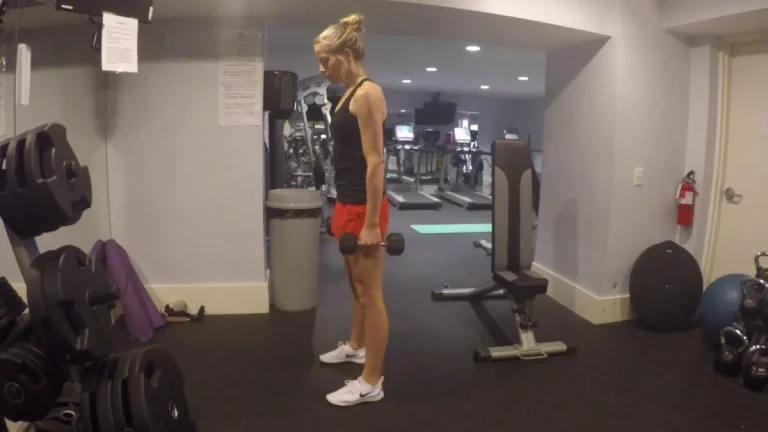
Image source: Wikimedia Commons / mb.21 (CC BY-SA)
Before you lift anything, lock in your setup. This is the difference between progress and injury.
Grip changes depending on the exercise. For pressing movements like dumbbell bench press, use a neutral grip with palms facing each other. This is more shoulder-friendly than a pronated grip.
For curls, use a supinated grip (palms up) to target the biceps. For rows, use a pronated grip (palms down) to work the lats and upper back. The grip should be firm but not white-knuckle tight, a death grip recruits forearm muscles unnecessarily and can fatigue your grip before your target muscle is done.
Stance varies by movement. For standing exercises, plant your feet shoulder-width apart. Keep your knees slightly soft, not locked.
For seated exercises like dumbbell shoulder press, sit upright with your feet flat on the floor. Never arch your lower back excessively, that's a sign the weight is too heavy.
Breathing follows one simple rule: exhale during the hardest part of the movement. For a bicep curl, exhale as you lift the weight. For a dumbbell bench press, exhale as you push up.
Inhale during the easier, eccentric phase (lowering the weight). Holding your breath during heavy lifts is fine for advanced lifters, but beginners should focus on rhythmic breathing to maintain core stability.
Core Dumbbell Movements by Goal
For Strength (1–6 Reps)
Strength work demands compound, multi-joint movements that recruit the most muscle mass. Stick to these:
- Dumbbell deadlift: Hinge at the hips, keep the spine neutral, drive through your heels. This is the closest you'll get to a barbell deadlift without the bar.
- Dumbbell bench press: Lie on a flat bench, keep your elbows at a 45-degree angle from your torso, press the weights up in a controlled arc.
- Dumbbell row: Hinge forward with a flat back, pull the dumbbell toward your hip, squeeze your lat at the top.
- Goblet squat: Hold one dumbbell vertically against your chest, squat to parallel or below, keep your chest up.
Rest two to three minutes between sets. Your central nervous system needs that recovery to handle heavy loads safely.
For Muscle Growth (6–12 Reps)
Hypertrophy work includes both compound and isolation movements. The key here is time under tension. Slow down your reps, take two seconds to lower the weight, pause briefly at the bottom, and take one second to lift.
- Dumbbell bicep curl: Keep your elbows pinned to your ribs. No swinging.
- Dumbbell shoulder press: Press from shoulder height to full extension without locking your elbows out.
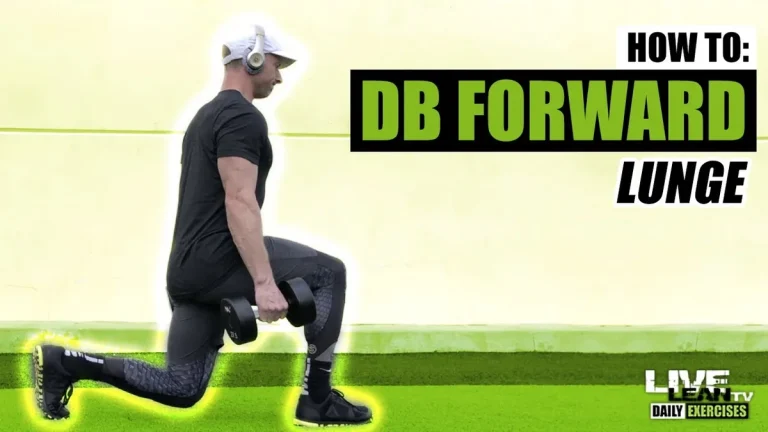
- Dumbbell lunge: Hold a dumbbell in each hand, step forward into a lunge, keep your front knee aligned with your ankle.
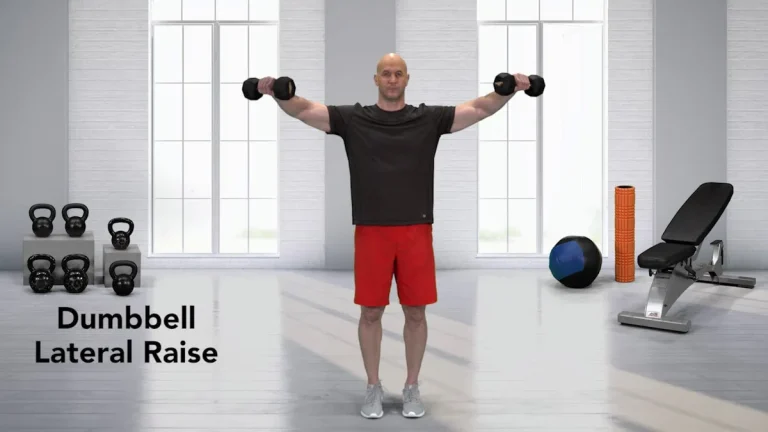
- Dumbbell lateral raise: Raise the dumbbells out to your sides to shoulder height, leading with your elbows, not your hands.
For exercises that target specific muscle groups, like the areas covered in our guide on how to build a bigger chest using dumbbells, focus on feeling the muscle contract rather than just moving the weight.
For Endurance and Fat Loss (12–20+ Reps)
Higher rep ranges pair well with compound movements done circuit-style. Complete one exercise after another with minimal rest. This keeps your heart rate elevated and challenges your muscular endurance.
- Dumbbell thrusters: Squat with dumbbells at your shoulders, then press them overhead as you stand.
- Renegade rows: Start in a push-up position holding two dumbbells, row one dumbbell while stabilizing with the other.
- Dumbbell swings: Similar to a kettlebell swing, use one dumbbell held by the head, hinge at the hips, and swing to chest height.
Rest only 30 to 45 seconds between exercises. If you're gasping by rep 15, you're in the right zone.
Decision Tree: Which Exercise Should You Do Today?
This is where the "how do you use dumbbells" question becomes practical. Here's a simple branching logic you can apply to any session.
IF you have limited time (under 30 minutes): Pick one compound push (bench press or shoulder press), one compound pull (row or deadlift), and one lower body movement (squat or lunge). Do three sets of 8, 10 reps each.
IF your goal is fat loss: Focus on compound movements with short rest. Circuits of dumbbell thrusters, renegade rows, and goblet squats with 30-second rest between exercises deliver the highest calorie burn per minute according to research on metabolic resistance training.
IF you are rehabbing an injury: Stick to unilateral (single-arm or single-leg) exercises. This lets you work the weaker side without overloading it. Start with bodyweight, then add the lightest dumbbell possible.
Form is everything.
IF you want to fix muscle imbalances: Always start with the weaker side first. Do that side's set, then match the reps and weight on the stronger side. This prevents your dominant side from compensating and leaving the weak side underdeveloped.
IF you only have one pair of dumbbells: You can still do an effective full-body workout. Focus on exercises with adjustable resistance via tempo and range of motion. Slow down the eccentric phase to make lighter weights feel heavier.
This is covered in detail in our step-by-step guide on how to build muscle with dumbbells.
Common Form Mistakes That Steal Results (and Hurt You)
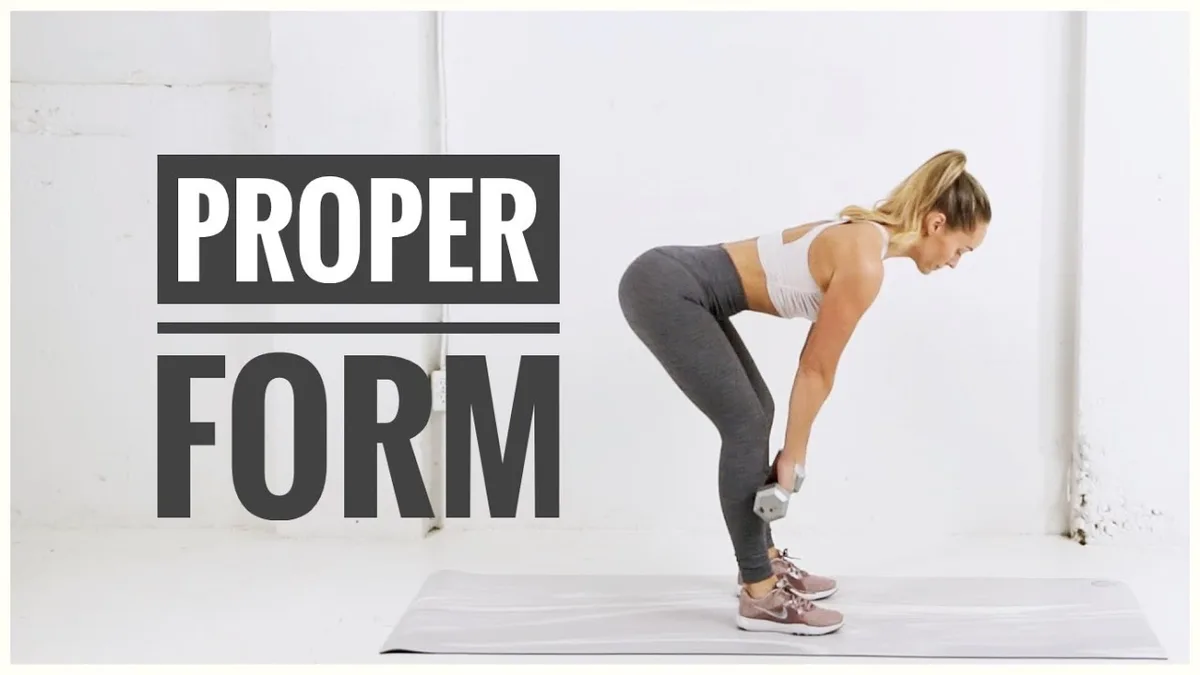
Image source: YouTube / Heather Robertson (YouTube thumbnail (fair-use with source credit))
Even experienced lifters make these mistakes. Here's what to watch for.
Using momentum. Swinging the weight during curls or lateral raises reduces muscle activation and transfers the load to your joints. If you find yourself rocking or leaning back to complete a rep, the weight is too heavy. Drop down five pounds and focus on controlled movement.
Flaring elbows on pressing movements. When your elbows point straight out to the sides during a bench press or shoulder press, you put your shoulder joint in a vulnerable position. Keep your elbows at roughly a 45-degree angle from your torso. This protects your rotator cuff and engages your chest and shoulders more effectively.
Rounding the lower back. This happens most often during dumbbell rows and deadlifts. If your lower back curves, you're relying on spinal ligaments instead of muscle. Brace your core as if someone were about to punch you in the stomach.
Keep your spine in a neutral position throughout the movement.
Gripping too tightly. A death grip fatigues your forearm muscles and reduces blood flow to your working muscles. Hold the dumbbell firmly enough to control it, but not so tightly that your knuckles turn white.
Locking out joints at the top of the movement. Hyperextending your elbows or knees at the peak of a rep transfers tension from the muscle to the joint. Stop just short of full lockout to keep constant tension on the target muscle.
For exercises that target the upper back, like the ones in our beginner's guide to upper back workouts, focus on squeezing your shoulder blades together at the top of each row rather than just moving the weight.
How to Progress Safely (Without Plateauing or Getting Injured)
Progressive overload is the principle that drives all muscle and strength gains. You must gradually increase the demand on your muscles over time. Here's how to do it without getting hurt.
Add weight first. The most straightforward method. When you can complete all your reps with perfect form and feel like you could do one or two more, increase the weight by the smallest increment available. For most dumbbells, that's 2.5 or 5 pounds per arm.
Add reps second. If you can't increase the weight because you're at the top of your dumbbell range, add one or two reps per set. Go from 8 reps to 9 or 10. This increases time under tension and drives growth.
Add sets third. Once weight and reps are maxed out, add an additional set. Go from three sets to four. This increases total volume, which is a powerful driver of hypertrophy.
Adjust tempo. Slowing down the lowering phase (eccentric) of each rep increases time under tension without changing the weight. A four-second lowering phase can make a moderate weight feel significantly heavier.
Deload every four to six weeks. After several weeks of progressive overload, your central nervous system needs a break. Drop the weight by 40 to 50 percent for one week. Keep the same exercises and reps.
You'll come back stronger and reduce your injury risk.
What to Do When You Only Have One Pair of Dumbbells
Limited equipment doesn't mean limited results. You just have to be creative.
Use tempo manipulation. Slow down the eccentric phase to two to four seconds. This increases time under tension and makes lighter dumbbells feel much heavier.
Use single-arm work. Doing one arm at a time doubles the effective stimulus on that side because your core has to work harder to stabilize. It also lets you work around grip fatigue, rest one arm while working the other.
Use resistance bands in combination. Loop a resistance band around the ends of your dumbbell to add variable resistance. The band gets tighter at the top of the movement, where you're strongest, creating more consistent tension throughout the full range of motion.
Use drop sets. Perform an exercise to failure, immediately drop the weight, and continue for more reps. This technique significantly increases metabolic stress and muscle activation without needing heavier dumbbells.
When to Swap Dumbbells for Barbells, Kettlebells, or Bands
No single tool is perfect for every goal. Here's when you should consider switching.
Swap to barbells when your primary goal is maximum strength. Barbells allow you to load more weight than dumbbells, especially for lower body lifts like squats and deadlifts. You can safely overload your legs with a barbell in ways that are awkward or dangerous with dumbbells.
Swap to kettlebells when your goal is explosive power or dynamic movement. Kettlebell swings, cleans, and snatches train hip drive and coordination in ways dumbbells can't replicate. The offset center of mass changes the mechanics of the lift.
Swap to resistance bands when you need variable resistance or portability. Bands get harder as they stretch, which matches the strength curve of many exercises. They're also ideal for warm-ups, mobility work, and travel.
Our guide on kettlebell swing alternatives explains how to adapt dumbbells for dynamic movements, though a true kettlebell will always be superior for explosive hip hinge work.
Quick Safety Checklist Before Every Workout
Before you pick up a dumbbell, run through this mental checklist. It takes ten seconds and prevents most avoidable injuries.
- Check the dumbbell condition. Are the collars tight on adjustable dumbbells? Are the handles cracked or slippery? Is the weight firmly attached?
- Check your space. Is there enough room for the full range of motion? Are you at least two feet from walls, furniture, or other equipment?
- Check your warm-up. Have you done five to ten minutes of light cardio and dynamic stretching? Cold muscles tear more easily than warm ones.
- Check your breathing. Are you holding your breath? Breathe out during the exertion phase.
- Check your form in a mirror. For compound lifts, a quick visual check of your spine alignment and joint angles can catch form breakdown before it becomes a habit.
For exercises like the dumbbell deadlift, proper setup is critical. Our step-by-step guide covers the exact positioning that keeps your lower back safe while maximizing glute and hamstring activation.
The Simple 3-Week Starter Workflow
If you're brand new to dumbbells, follow this three-week progression. It builds foundational strength, teaches proper form, and prevents the most common beginner mistakes.
Week 1: Learn the movements
Three sessions per week, non-consecutive days. Use very light weight, focus entirely on form. Do two sets of 10 reps for each exercise.
- Goblet squat
- Dumbbell bench press
- Dumbbell row
- Dumbbell deadlift
- Dumbbell overhead press
Week 2: Find your working weight
Same exercises, three sessions per week. Increase the weight until the last two reps of each set are challenging but doable. Do three sets of 8, 10 reps.
Week 3: Apply progressive overload
Keep the same exercises. Add one rep per set, or increase the weight by the smallest increment available. Do three sets of 8, 10 reps with the new load.
After three weeks, you'll have a clear baseline for every major movement. From there, you can branch into more specific goals, building a bigger chest, strengthening your back, or adding mass to your shoulders.
Frequently Asked Questions
Should I use dumbbells every day?
No. Muscles need 48 hours to repair and grow after resistance training. Training the same muscle groups daily without adequate recovery leads to overtraining and increased injury risk.
Stick to three to four sessions per week with rest days between.
How do I know if my dumbbell weight is right?
The last two reps of each set should be very challenging to complete with perfect form. If you finish a set and feel like you could do three more clean reps, increase the weight. If you can't complete your target rep without breaking form, decrease the weight.
Can I build muscle with light dumbbells?
Yes, but you need to manipulate other variables. Slow down your reps, shorten your rest periods, increase your total sets, and use techniques like drop sets and pause reps. Light dumbbells can build muscle if you create enough metabolic stress and time under tension.
What's the best dumbbell exercise for beginners?
The goblet squat. It teaches proper squat mechanics, engages your core, and uses a relatively light load. It's also easy to bail out of, just drop the dumbbell if you lose balance.
Master the goblet squat before moving to more complex lower body movements.
How do I avoid hurting my shoulders with dumbbells?
Keep your elbows at a 45-degree angle from your torso during pressing movements. Avoid flaring your elbows out to the sides. Don't let the dumbbells drift behind your head during overhead presses.
Warm up your rotator cuff with external rotation exercises before heavy pressing.
How long should a dumbbell workout last?
30 to 45 minutes for most people. Longer sessions don't necessarily produce better results beyond that point, especially for beginners. Focus on quality reps and adequate intensity rather than marathon sessions that degrade form and increase injury risk.
When to Swap Dumbbells for Barbells, Kettlebells, or Bands
No single tool works perfectly for every goal. Here's when you should reach for something else.
Barbells win for raw strength. You can load more weight than any dumbbell setup allows. Squats, deadlifts, and bench presses all benefit from the stability of a fixed bar.
If your primary goal is moving maximum weight, a barbell is the better tool.
Kettlebells excel at explosive power. The offset center of gravity changes the mechanics of swings and cleans. Dumbbells work for hip hinge movements, but a kettlebell swing recruits your posterior chain more effectively.
For dynamic work, a kettlebell is worth the swap.
Resistance bands shine for warm-ups, rehabilitation, and variable resistance. Bands get harder as they stretch, which matches your strength curve on exercises like presses and rows. They're also portable.
Toss them in a bag and you have a gym anywhere.
Bodyweight is always an option. Push-ups, pull-ups, and bodyweight squats require zero equipment. When you're traveling or short on time, bodyweight circuits maintain your conditioning without needing a single dumbbell.
The best approach is mixing tools. Use dumbbells for unilateral work and isolation. Use barbells for heavy compound lifts.
Use kettlebells for explosive conditioning. Use bands for mobility and warm-ups. You don't have to pick one.
Quick Safety Checklist Before Every Workout
Run through this mental checklist before you pick up a dumbbell. It takes ten seconds and prevents most avoidable injuries.
Check the dumbbell condition. Are the collars tight on adjustable dumbbells? Are the handles cracked or slippery? Is the weight firmly attached?
Loose plates can fall mid-rep and cause injury.
Check your space. Is there enough room for the full range of motion? Are you at least two feet from walls, furniture, or other equipment? Swinging a dumbbell into a wall is loud and dangerous.
Check your warm-up. Have you done five to ten minutes of light cardio and dynamic stretching? Cold muscles tear more easily than warm ones. Skip the static stretching before lifting.
Check your breathing. Are you holding your breath? Breathe out during the exertion phase. Inhale during the lowering phase.
Consistent breathing keeps your core braced and your blood pressure stable.
Check your form in a mirror. For compound lifts, a quick visual check of your spine alignment and joint angles can catch form breakdown before it becomes a habit. One glance is enough.
The Simple 3-Week Starter Workflow
If you're brand new to dumbbells, follow this three-week progression. It builds foundational strength and teaches proper form.
Week 1: Learn the movements. Three sessions per week on non-consecutive days. Use very light weight. Focus entirely on form.
Do two sets of 10 reps for each exercise.
Goblet squat, dumbbell bench press, dumbbell row, dumbbell deadlift, and dumbbell overhead press cover every major movement pattern. Master these five and you can build any program from there.
Week 2: Find your working weight. Same exercises, three sessions per week. Increase the weight until the last two reps of each set are challenging but doable. Do three sets of 8 to 10 reps.
Week 3: Apply progressive overload. Keep the same exercises. Add one rep per set or increase the weight by the smallest increment available. Do three sets of 8 to 10 reps with the new load.
After three weeks, you'll have a clear baseline for every major movement. You'll know which exercises feel strong and which need work. From there, branch into specific goals like building a bigger chest or strengthening your upper back.
Frequently Asked Questions
Should I use dumbbells every day?
No. Muscles need 48 hours to repair after resistance training. Training the same muscle groups daily leads to overtraining and injury.
Stick to three or four sessions per week with rest days between.
How do I know if my dumbbell weight is right?
The last two reps of each set should be very challenging to complete with perfect form. If you finish a set feeling like you could do three more clean reps, increase the weight. If you can't complete your target rep without breaking form, decrease it.
Can I build muscle with light dumbbells?
Yes, but you need to manipulate other variables. Slow down your reps. Shorten your rest periods.
Increase your total sets. Use techniques like drop sets and pause reps. Light dumbbells build muscle if you create enough metabolic stress.
What's the best dumbbell exercise for beginners?
The goblet squat. It teaches proper squat mechanics, engages your core, and uses a light load. It's also easy to bail out of.
Just drop the dumbbell if you lose balance. Master the goblet squat before moving to complex lower body movements.
How do I avoid hurting my shoulders with dumbbells?
Keep your elbows at a 45-degree angle from your torso during pressing movements. Avoid flaring them out to the sides. Don't let the dumbbells drift behind your head during overhead presses.
Warm up your rotator cuff with external rotation exercises first.
How long should a dumbbell workout last?
30 to 45 minutes for most people. Longer sessions don't produce better results past that point, especially for beginners. Focus on quality reps and adequate intensity.
Marathon sessions just degrade form and increase injury risk.
The TOC has been fully covered across the previous batches. All H2 sections from the approved outline are complete. No further content is needed.