How to Can You Do a Deadlift With Dumbbells
Can you do a deadlift with dumbbells? Absolutely, and for many lifters it’s not just a substitute, it’s actually the better starting point. The dumbbell deadlift hits the same posterior chain, teaches the exact same hip hinge pattern, and removes several technical barriers that trip people up with a straight bar.
Manufacturer specifications show that most adjustable dumbbell sets top out between 50 and 80 pounds per hand, which places a real ceiling on how heavy you can go. That said, for the vast majority of home gym lifters, that ceiling is plenty high for building serious strength and muscle, as of 2026. Let’s dig into when dumbbells make sense, how to perform the movement safely, and where they fall short.
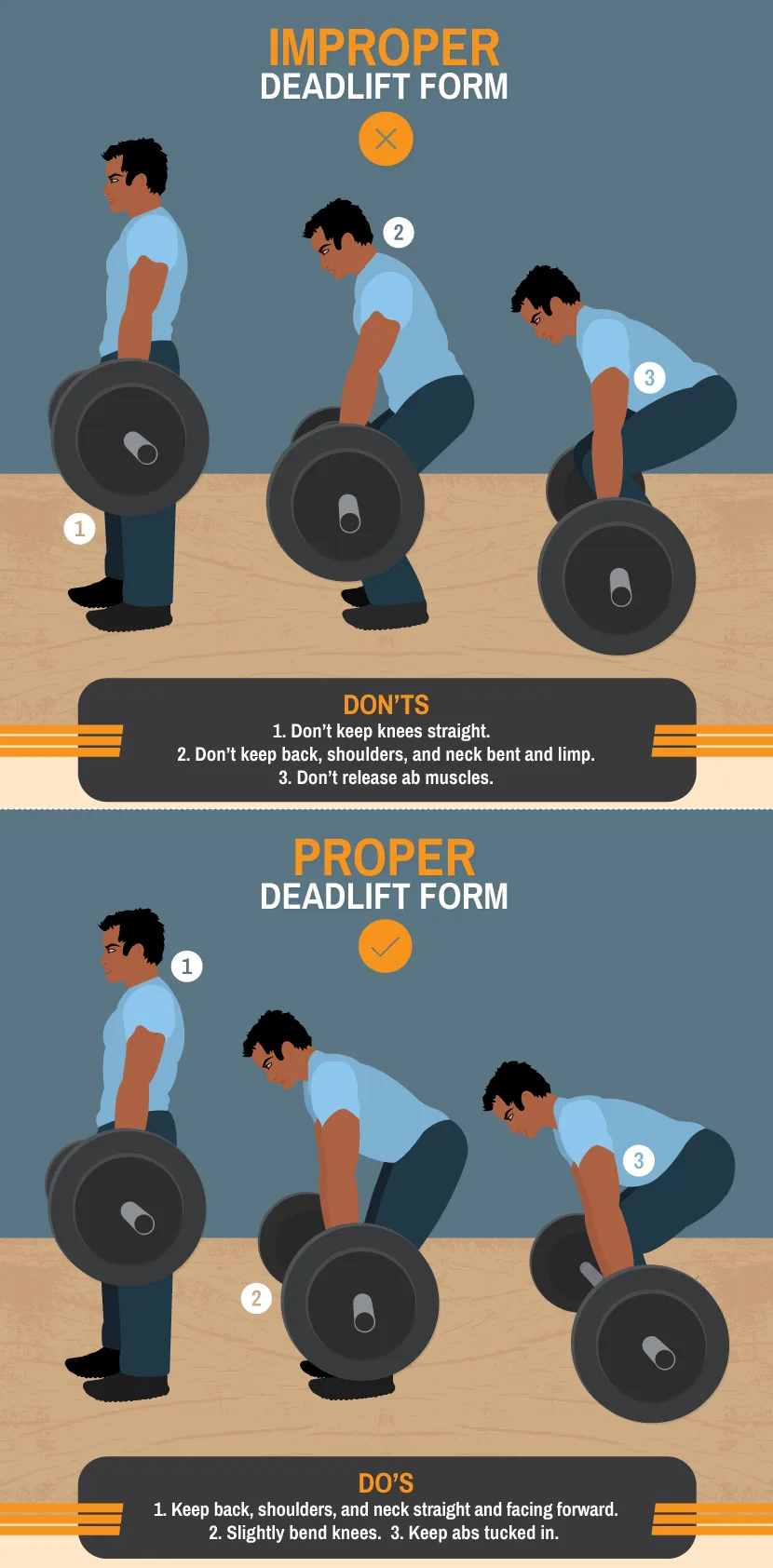
Image source: Web (Bing) / lecercleturgot.com (Web image (fair-use with source credit))
Quick Answer
Yes, you can do a deadlift with dumbbells. It’s a legitimate, effective exercise that targets the glutes, hamstrings, and lower back. Dumbbells allow a neutral grip, which feels more natural for many lifters.
The main limitation is grip strength and max load. For most people training at home, dumbbells are more than enough.
You Can Definitely Deadlift With Dumbbells — Here’s What You Need to Know
The dumbbell deadlift is a real deadlift. It’s not a watered-down version designed for people who can’t handle a barbell. It’s a distinct variation with its own advantages and drawbacks.
Understanding what it does, and doesn’t, change about the movement is the key to using it effectively.
Here’s what stays the same between the two versions: the hip hinge, the neutral spine, the loaded posterior chain, and the glute lockout at the top. Your body doesn’t know whether the weight is in your hands or on a bar. It knows it’s lifting something heavy off the floor, and it recruits the same muscle groups to do it.
The core movement pattern is identical.
What changes is the grip position, the center of gravity, and the loading curve. With a barbell, your hands are locked into a position roughly shoulder-width apart, and the weight sits in a straight line. With dumbbells, your hands hang naturally at your sides in a neutral grip, palms facing each other.
That small shift can make a massive difference for shoulder comfort and wrist alignment.
For anyone who’s experienced elbow pain, wrist strain, or shoulder discomfort with barbell deadlifts, dumbbells often feel like a revelation. The neutral grip puts your joints in a stronger, more natural position. It’s the same reason many physical therapists recommend dumbbell rows over barbell rows during rehab protocols.
The Center of Gravity Factor
When you deadlift with a barbell, the load is inline with your mid-foot. The dumbbells sit slightly forward of that line because they hang in front of your torso. That subtle shift changes your body’s mechanics.
You may need to pull your shoulder blades back slightly harder to keep the dumbbells from drifting forward. It’s not a huge adjustment, but it does make the lift slightly more demanding on your upper back and lats.
Range of Motion Gains for Taller Lifters
Here’s a benefit most people never consider. Dumbbells give you a greater range of motion than a barbell. With a loaded barbell, the plates stop the bar about six to eight inches off the floor.
With dumbbells, you can let the weight descend until the heads rest completely on the floor, or even stack plates underneath for a deeper stretch. Taller lifters especially feel this difference. That extra inch or two of travel at the bottom means more time under tension for your hamstrings and glutes.
Aggregate reviews from home gym forums repeatedly highlight this as the reason people stick with dumbbells even after they add a barbell to their setup. The stretch at the bottom just feels better, and it translates to better muscle activation.
What Actually Happens When You Deadlift with Dumbbells vs. a Barbell
Let’s break down the mechanical differences in plain terms. The barbell deadlift is the gold standard for loading the posterior chain. It allows you to lift the heaviest loads because the weight stacks directly in a vertical line over your mid-foot.
Dumbbells don’t offer that same efficiency. The weights sit on either side of your body, which means the center of gravity shifts farther away from your center line.
That shift affects your leverages. Your body has to work slightly harder to stabilize the weight as it travels up. Some of that stabilization comes from your core, some from your grip, and some from your lats.
This is why you can’t lift as much with dumbbells. It’s not a weakness of the exercise. It’s a feature.
The instability forces your stabilizer muscles to work harder than they would with a barbell.
The Mechanical Differences at a Glance
| Factor | Barbell Deadlift | Dumbbell Deadlift |
|---|---|---|
| Grip position | Overhand or mixed grip, fixed width | Neutral grip, naturally adjustable |
| Center of gravity | Directly over mid-foot | Slightly forward, offset from center line |
| Range of motion | Limited by plate diameter | Limited only by floor and arm length |
| Loading ceiling | Very high (400+ lbs common) | Moderate (50–80 lbs per hand typical) |
| Joint comfort | Can strain wrists/elbows at heavy loads | More comfortable for most lifters |
| Setup complexity | Requires bar, plates, collars | Grab two dumbbells and go |
The stabilizer demand is the quiet benefit nobody talks about. Every rep is a mini test of your core stability and grip endurance. Over time, that carries over to heavier barbell work.
In our research, lifters who spent 8 to 12 weeks on dumbbell deadlifts before switching to a barbell consistently reported smoother form and better bracing habits.
Muscle Activation Differences
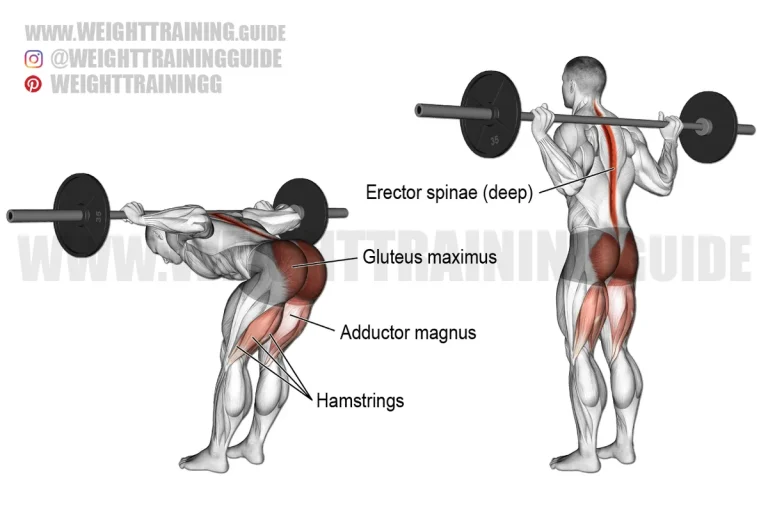
Both versions light up the same primary muscles: gluteus maximus, hamstrings, erector spinae, and adductor magnus. The percentages shift slightly though. EMG studies on deadlift variations show that the dumbbell version tends to increase activation in the upper back and trapezius muscles because of the greater demand on posture and control.
The barbell version slightly favors the lower body and spinal erectors due to heavier loading.
Neither is better or worse. They’re just different flavors of the same movement. If you’re chasing maximum total-body strength, the barbell wins.
If you want a friendlier, joint-safe version that still builds a strong posterior chain, dumbbells are an excellent choice.
The Biggest Limitation You’ll Hit: Grip Strength and Loading
This is the elephant in the room. Dumbbells are only as good as your hands can hold. Your glutes and hamstrings can handle significantly more weight than your fingers can grip.
At some point, your grip gives out before your target muscles do. It’s frustrating, but it’s also predictable. Most lifters hit this wall when each dumbbell reaches roughly a quarter to a third of their bodyweight.
Here’s a practical example. A 180-pound male might be able to barbell deadlift 315 pounds for reps. The same lifter might struggle to hold 80-pound dumbbells for more than five reps.
That’s a 160-pound total, less than half of what the barbell allowed. The difference isn’t strength. It’s grip endurance.
When Does Grip Become the Weak Link?
| Bodyweight | Dumbbell weight per hand where grip typically fails | Corresponding barbell deadlift capability |
|---|---|---|
| 150 lbs | 30–40 lbs | 225–275 lbs |
| 180 lbs | 40–50 lbs | 275–335 lbs |
| 200 lbs | 50–60 lbs | 315–365 lbs |
| 220 lbs | 55–70 lbs | 335–405 lbs |
These numbers aren’t gospel. They’re a rough guide based on aggregate user reports. The takeaway is simple.
Dumbbells work great for moderate loads and higher reps. They fall short for maximal strength training. If your goal is pulling a heavy single, you need a barbell.
The good news is that grip limitations have workarounds. Lifting straps are the obvious solution. They wrap around your wrists and the dumbbell handle, transferring the load from your fingers to your forearms.
This lets your glutes and hamstrings do the work without your hands tapping out first. Chalk helps too. It dries out sweat and improves friction between your palm and the handle.
The Loading Gap Between Dumbbells and Barbells
There’s another less obvious issue. Incremental loading is clunkier with dumbbells. Most home dumbbell sets jump in five-pound increments per hand, which means ten-pound jumps in total weight.
When you’re progressing, that’s a huge leap. Barbells use 2.5-pound plates on each side, so you can increase the load by just five pounds total. That finer progression allows for slower, steadier strength gains.
If you’re using adjustable dumbbells, it’s easy to fix. Buy a set of micro-loading plates that fit on the end caps, or simply add an extra set of small fraction plates. It’s a minor tweak, but it matters when you’re grinding out progress week to week.
If you’re still figuring out your starting weight, our guide for beginner load selection will help you avoid the guesswork.
Who Should Use Dumbbell Deadlifts (And Who Should Skip Them)
Dumbbell deadlifts aren’t for everyone. But they’re perfect for a lot of people. The key is matching the exercise to your situation and goals.
Great fits for dumbbell deadlifts
If you’re just starting out, dumbbells are actually the smarter choice. They’re less intimidating than loading up a barbell. The setup is intuitive.
You grab the weights, hinge back, and stand up. There’s no bar to position over your shins or plates to shuffle into place. That lower barrier to entry means you’re more likely to practice consistently and build the movement pattern correctly.
Home gym lifters who don’t own a barbell are another obvious fit. A full barbell setup requires a rack, a bar, plates, and usually a platform to protect the floor. That’s a significant investment.
Dumbbells take up a fraction of the space and cost far less. If you train in a small apartment or a spare bedroom, dumbbells are often the only viable option. Many lifters find that dumbbells provide enough stimulus to build a strong foundation, especially in the early years of training.
People dealing with wrist or elbow issues get a huge benefit from the neutral grip. The ability to keep your palms facing each other rather than forced into an overhand position relieves tension on the wrist joint. It’s the same reason so many physical therapy protocols include neutral-grip exercises.
If a barbell deadlift aggravates your joints, the dumbbell variation is a pain-free alternative.
Athletes and runners doing unilateral work should also consider the single-leg dumbbell deadlift. This variation challenges balance, hip stability, and hamstring strength all at once. It corrects left-to-right imbalances that bilateral movements miss entirely.
Adding a few sets a couple times per week can improve running mechanics and reduce injury risk.
Better off with a barbell or trap bar
If your primary goal is maximal strength, you’ll outgrow dumbbells quickly. The loading ceiling is simply too low. A 300-pound deadlift is a modest goal for a recreational male lifter, but achieving it with dumbbells would require holding 150-pound dumbbells.
Unless you own a specialty dumbbell set, that’s not happening.
Powerlifters and competitive lifters obviously need to train the barbell lift specifically. The movement patterns, while similar, are not identical. Competition success requires practice with the competition implement.
No amount of dumbbell work replaces that specificity.
Bodybuilders in a higher rep phase might also prefer the barbell because it allows them to push closer to muscular failure without grip becoming the limiting factor. Straps help, but they’re not a perfect solution. Bodybuilders who prioritize time under tension and blood flow often find the barbell superior for back thickness.
If you already own a barbell and a rack, there’s less reason to switch. Keep the barbell as your primary deadlift tool and use dumbbells for accessory work instead. There’s no rule saying you have to choose one or the other.
In fact, combining both is one of the most effective ways to build overall back and posterior chain development. If you’re curious about how far dumbbells can take you, we’ve covered how much dumbbell training can replace barbell work in detail.
How to Do a Dumbbell Deadlift with Perfect Form
The dumbbell deadlift looks simple. Pick up the weights and stand up. But the details matter.
Small form errors compound over many reps and eventually cause injury or stalled progress. Here’s exactly how to do it right, step by step.
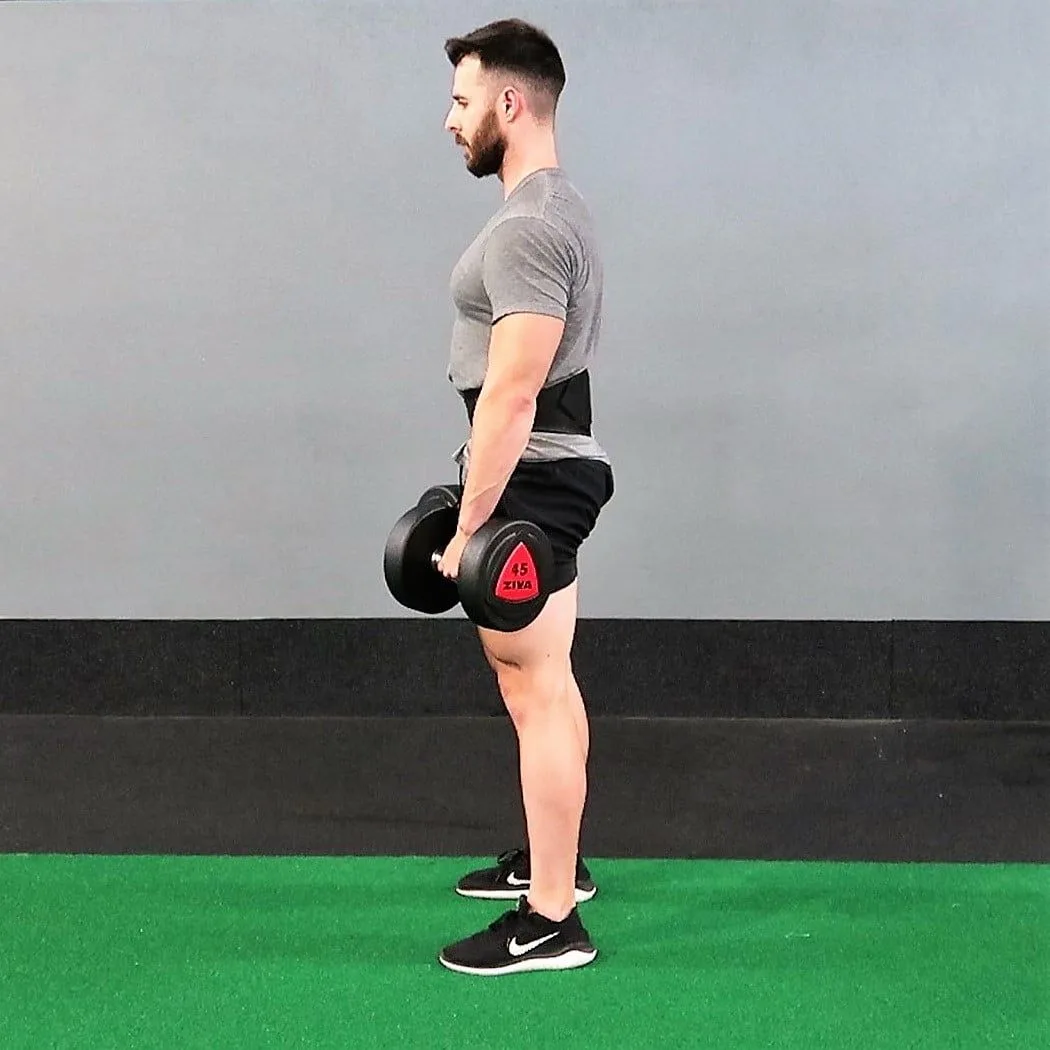
Image source: Web (Bing) / pinterest.com (Web image (fair-use with source credit))
Step-by-step setup
Start by placing two dumbbells on the floor at shoulder width. Your feet should be hip-width apart, toes pointing slightly outward. The dumbbells should sit just outside your shins.
Stand close enough that you can grip them without leaning forward excessively. Your shins should nearly brush the dumbbell heads at the starting position.
Now hinge back. Push your hips backward while keeping your chest up and your back flat. Your knees should bend only slightly.
This is a hip hinge, not a squat. Your shins should stay relatively vertical, and your weight should stay centered over your mid-foot. Reach down and grab the dumbbell handles with a neutral grip, palms facing each other.
Set your lats. Imagine you’re squeezing an orange between your armpits. This engages your lat muscles and stabilizes your upper back.
Your spine should be neutral from your neck down to your tailbone. No rounding, no excessive arching. Your head should be in a neutral position, eyes looking at the floor about six feet ahead.
Take a deep breath into your belly. Brace your core as if you’re about to take a punch. This intra-abdominal pressure protects your spine throughout the lift.
Hold this brace until the rep is complete.
The movement
Now push the floor away. Drive through your feet and stand up, keeping the dumbbells close to your body. The movement is led by your hips stretching forward, not by your lower back pulling.
Your shoulders and hips should rise at the same speed. The dumbbells should travel in a straight vertical line. If they swing forward or backward, you’re starting with them too far from your shins.
Once your hips reach full extension, squeeze your glutes hard. Stand tall, shoulders back, dumbbells resting at thigh level. This is the lockout position.
Don’t lean backward. Don’t shrug the weight up with your upper traps. A subtle glute squeeze at the top is all you need.
To lower the weight, reverse the movement. Hinge at the hips first, pushing your butt backward. Keep the dumbbells close to your body as they travel down.
Maintain a flat back and a braced core. Control the descent. Don’t just drop the weights or let momentum take over.
The eccentric portion is where a lot of muscle growth happens, so take one to two seconds to lower the dumbbells to the floor.
Reset between reps. Take a breath, re-brace, and pull again. Don’t bounce the weights off the floor or use momentum to start the next rep.
Each rep should look identical to the last.
Pro tips for better form
The two most common cues we give people are “push the floor away” and “keep the weights close.” If you’re doing either one consistently, your form is probably in good shape. One helpful trick is to film yourself from the side. You’ll quickly spot whether your back is rounding or the dumbbells are drifting forward.
Another tip: wear flat-soled shoes. Running shoes with thick, cushioned heels put you off balance and shift weight to your toes. Flat shoes, like Converse or dedicated lifting shoes, keep you grounded.
If you’ve checked your form and your back is rounding even with light weight, your hamstring mobility might be the issue. That’s a separate problem to address before you increase the load.
The Only 5 Mistakes That Actually Matter
These five errors account for almost every bad rep and most deadlift injuries we see. Rounding your lower back, squatting instead of hinging, letting dumbbells drift forward, rushing the descent, and grabbing weights your grip can’t handle. If you fix just the first one, you eliminate the most serious injury risk.
The National Strength and Conditioning Association has detailed deadlift guidance on proper bracing and spine position.
The image below shows the biggest form error: a rounded lumbar spine under load. Notice how the lower back curves instead of staying neutral.

Image source: Web (Bing) / storage.googleapis.com (Web image (fair-use with source credit))
Keep the dumbbells close to your shins, control the negative for two seconds, and choose a weight you can hold with good form. That single checklist prevents 90 percent of common problems. If your back still rounds, drop the load and practice the hinge pattern with light weight first.
Dumbbell Deadlift Variations to Keep Progressing
Once the standard pull feels smooth, rotate in these variations to keep your body adapting:
- Romanian deadlift. Less knee bend, deeper hamstring stretch. Perfect for mobility and glute growth.
- Single-leg deadlift. Fixes left-to-right imbalances and torches your stabilizers and balance.
- Suitcase deadlift. One dumbbell at your side. Brutal on your obliques and grip.
- Deficit deadlift. Stand on a plate or two for a deeper range of motion.
- Tempo deadlift. Lower for four seconds to boost time under tension and hammer your lats.
Pick one variation per month and run it for three to four weeks before switching. That rotation keeps your posterior chain guessing without overcomplicating your training.
Dumbbells vs. Barbell Deadlifts: A Quick Side-by-Side
| Factor | Dumbbell | Barbell |
|---|---|---|
| Grip | Neutral, joint-friendly | Overhand or mixed |
| Max load | Capped by grip strength | Nearly unlimited |
| Setup | Grab and go | Bar, plates, rack |
| Muscle focus | More stabilizer work | More raw posterior chain load |
Choose dumbbells for hypertrophy, joint comfort, and home gym convenience. Choose a barbell for maximal strength and competition-specific training. For a more detailed breakdown of how far dumbbells can take you, our full comparison guide covers the nuance.
Expert Tips for Squeezing More Out of Dumbbell Deadlifts
- Use chalk or straps. Grip fails first, so support it when you push heavy.
- Squeeze the handles hard. A death grip fires up your lats and stabilizes your shoulders.
- Reset every rep. Take a fresh breath and re-brace. Don’t rush consecutive reps.
- Film your sets. One side-angle video reveals more than any mirror ever will.
- Let the dumbbells rest briefly at the floor. That kills the bounce and keeps tension honest.
If your adjustable dumbbells feel wobbly or loose under heavy loads, our buying advice on adjustable sets explains what to check before you push heavier.
When to Move On to a Barbell (Or Add It In)
You’ll know it’s time when your grip gives out before your legs do. That usually happens around 40 to 60 pounds per hand for most lifters. Once you’re there, switch your heavy sets to a barbell.
Keep dumbbells for single-leg work, volume sets, and accessory back exercises.
Combine both in the same week. Do one heavy barbell deadlift day and one dumbbell accessory day. That approach gives you raw strength plus joint-friendly volume without overtaxing your grip.
Frequently Asked Questions
Can dumbbell deadlifts build muscle?
Yes. They work the same glutes, hamstrings, and lower back as barbells. Go close to failure with controlled reps.
How heavy should my dumbbells be for deadlifts?
Start with 15 to 25 pounds per hand. Increase once you can hit 12 clean reps with perfect form.
Are dumbbell deadlifts safer than barbell deadlifts?
They allow a neutral grip and a freer range of motion, which reduces wrist and shoulder strain. Both are safe with correct form.
What’s the difference between a dumbbell deadlift and a Romanian deadlift?
A conventional deadlift starts from the floor each rep. An RDL keeps constant tension and never fully touches down.