Can Dumbbells Damage Hardwood Floors? What to Know
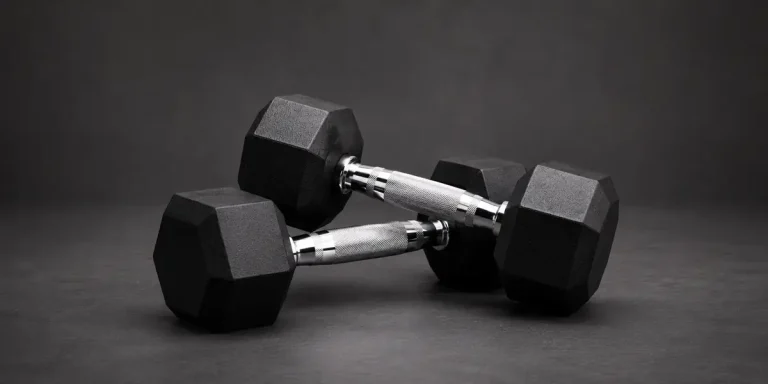
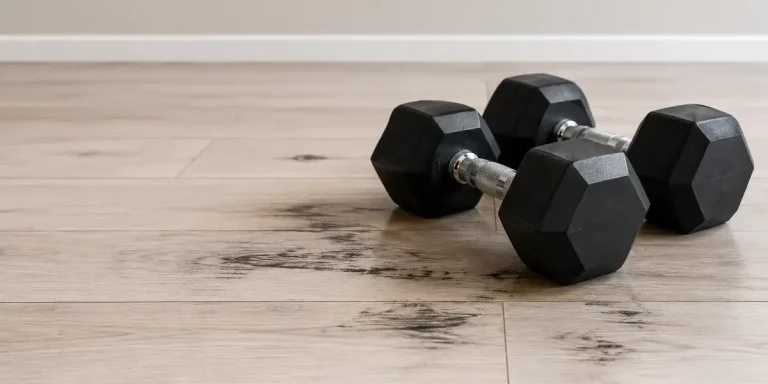
From the moment that first dumbbell drops, you know the sound. It’s a thud that travels through the floor and straight into your gut. Can Dumbbells Damage Hardwood Floors?
The honest answer is yes, but here’s what most people don’t realize: almost all of that damage is completely preventable. You don’t have to give up your home gym or live with permanent scars in your flooring.
In our research, even a 25-pound dumbbell dropped from waist height can leave a visible dent in common domestic hardwoods like red oak, which sits at 1290 on the Janka hardness scale. The fix is simpler and cheaper than you’d expect. Let’s walk through what actually happens when iron meets wood, and how to keep your floors looking like new.
Quick Answer / Key Insight: Yes, They Can But It’s Almost Always Preventable
Even a 25-pound drop from waist height leaves a dent. Dragging them across the surface gouges the finish. A thick rubber mat prevents almost all impact damage.
Always lower weights under control during every rep. Urethane-coated dumbbells protect your floor better.
Problem / Pain Point: That Sinking Feeling When the Dumbbell Hits the Floor
You’ve just finished a hard set of dumbbell deadlifts. You set the weights down, maybe a little too fast, and hear that dreaded crack. You lift the dumbbell and see a fresh dent in your hardwood floor.
Your heart sinks.
That moment is more common than you’d think. Home gyms exploded in popularity over the last few years, and a lot of people set up their weights directly on hardwood without thinking about the consequences. Aggregate user feedback from flooring forums and fitness communities tells the same story: most people don’t realize how vulnerable hardwood floors are until after the first dent.
The problem isn’t just dropping weights. Dragging dumbbells across the floor, setting them down hard at the end of a set, or even leaving them sitting in one spot for extended periods can all cause damage. The finish wears down, the wood fibers compress, and suddenly you’re looking at a floor that needs refinishing years before it should.
Per National Wood Flooring Association guidelines, most hardwood floors require refinishing every 7 to 10 years with proper care. A single dropped dumbbell can accelerate that timeline dramatically. Getting the technique right from day one is the difference between a floor that ages gracefully and one that shows every mistake you’ve ever made.
Core Explanation / How It Works: Why Hardwood Floors Are Vulnerable to Weights
The Physics of a Drop: Point Load vs. Distributed Weight
Here’s what’s actually happening at the moment of impact. When you drop a dumbbell, almost all of its weight concentrates on a tiny contact point. That’s called a point load.
A 40-pound dumbbell with a flat rubber end might concentrate that force into an area smaller than a quarter. The wood underneath can’t handle that pressure, so the fibers crush and compress.
Compare that to a barbell loaded with plates. The weight distributes across a wider surface area. The bar itself spreads the force.
Dumbbells are essentially point-load weapons against your floor. That’s why a single dropped dumbbell can leave a dent that a 200-pound person walking across the same spot won’t.
The Role of Your Floor’s Finish and Hardness
Your floor’s finish is the first line of defense. A quality polyurethane finish can absorb some impact and resist scratching. But it’s not armor.
Once the finish cracks, moisture can get into the wood underneath, leading to staining and further damage.
The wood species matters a lot too. The Janka hardness test measures how resistant a wood species is to denting and wear. Softer species like pine score around 380.
White oak comes in at 1360. Hickory hits 1820. Brazilian cherry can reach 2350.
The harder your floor, the more force it takes to leave a dent. But even the hardest domestic hardwoods will dent under a 50-pound dumbbell dropped from shoulder height.
Which Dumbbells Are the Worst Offenders (and Why)
Not all dumbbells treat your floor the same way. Here’s how the common types stack up:
| Dumbbell Type | Floor Risk | Why |
|---|---|---|
| Bare cast iron | High | Hard, rough surface with sharp edges. Leaves rust stains if left on damp wood. |
| Chrome-plated | High | Smooth but hard. No cushioning. Can chip the finish on impact. |
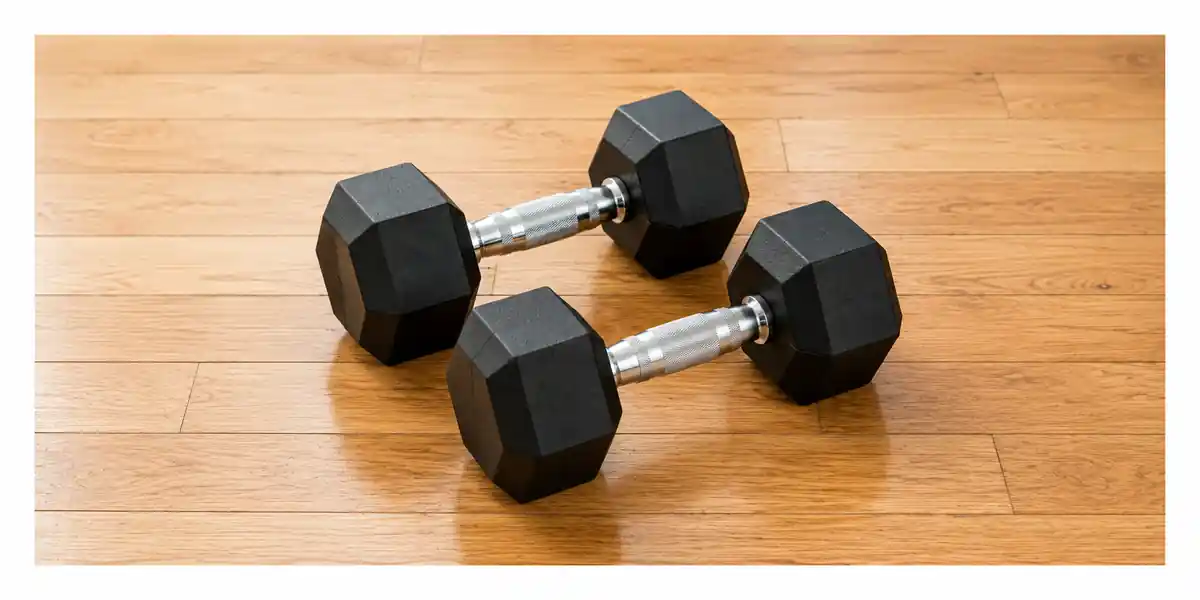
| Rubber-coated hex | Medium | Rubber absorbs some impact. Hex shape can still dig into wood if dropped on edge. |
| Urethane-coated | Low | Softer urethane layer absorbs shock. Smoother edges. Less likely to mark or scratch. |
Urethane-coated dumbbells are the best choice if you’re working out on hardwood. They cost more than rubber or iron, but the extra cushioning is worth it. Many commercial gyms use urethane precisely because it’s gentler on floors.
Step-by-Step Process / How to Guide: Diagnose Your Risk in 3 Minutes
You don’t need to guess whether your setup is safe. Run through these three quick checks and you’ll know exactly where you stand.
Step 1: Check Your Floor Type and Finish Condition
First, figure out what you’re actually standing on. Solid hardwood and engineered hardwood both dent, but engineered hardwood has a thinner top layer. If you dent engineered hardwood deep enough, you can’t sand it out.
You’re stuck with that mark.
Check your finish with a simple water test. Splash a few drops of water on the floor. If it beads up, your finish is still intact.
If it soaks in and darkens the wood, the finish is worn and your floor is more vulnerable. A worn finish means even light dumbbell work can cause damage.
Step 2: Weigh Your Dumbbells and Inspect Their Material
This is the easy part. Grab your heaviest dumbbell and read the label. Anything under 30 pounds is low risk for controlled use.
Between 30 and 60 pounds, you need to be careful. Over 60 pounds, you’re in high-risk territory regardless of your floor type.
Now look at the bottom of the dumbbell. Is the rubber or urethane coating smooth? Are there any rough edges or exposed metal?
Even a small burr on a cast iron dumbbell can scratch a finish when you slide it across the floor. Regular maintenance of your equipment matters just as much as the floor protection itself.
Step 3: Rate Your Training Style (Controlled vs. Drop-Prone)
Be honest with yourself about how you train. If you do controlled exercises like dumbbell bench presses, goblet squats, and controlled deadlifts, you’re low risk. You control the weight on every rep.
If you do CrossFit-style workouts, Olympic lifts, or anything where you’re tempted to drop the weights at the end of a set, you’re high risk. The same applies if you train with a partner who pushes you to failure. Those last few reps are when the dumbbell slips or you set it down hard.
Decision Tree / Workflow: What You Need Based on Your Situation
Now that you know your risk level, here’s exactly what to do.
Branch A: Light Dumbbells (Under 30 lbs) + Controlled Lowering
If you checked all three boxes and came out low risk, you’re in good shape. You probably don’t need a heavy-duty gym mat. A simple 1/4-inch rubber mat under your workout area is enough.
It protects against accidental drops and keeps the dumbbell from sliding around.
You can also get away with a yoga mat or a thin exercise mat if you’re only doing bodyweight work and light dumbbell exercises. Just know that a thin mat won’t stop a dent if you drop a 25-pounder from overhead. It’s better than nothing, but it’s not a guarantee.
Branch B: Medium Dumbbells (30-60 lbs) + Occasional Drops
This is the most common situation for home gym owners. You need a 1/2-inch thick rubber mat at minimum. Full rubber rolls or stall mats from farm supply stores work great.
They’re dense, durable, and affordable.
Cover the area where you stand and the zone where you set down your weights. If you do floor work like dumbbell pullovers or lying triceps extensions, extend the mat coverage to where your head and shoulders go. You don’t want to dent the floor with your body weight either.
Make sure you sweep under the mat regularly. Grit and dirt get trapped underneath and act like sandpaper. Over time, that abrasive layer will wear through your finish even without a single dumbbell drop.
Branch C: Heavy Dumbbells (60+ lbs) or Frequent Dropping
If you’re lifting heavy or you know you’re going to drop weights, you need a different approach. A simple mat won’t cut it. You need a deadlift platform or a full gym floor overlay.
A basic platform has a plywood base with a rubber mat on top. The plywood distributes the weight across a larger area. The rubber absorbs the impact.
This setup can handle 100-pound dumbbell drops without transferring force to the hardwood underneath.
If you can’t build a platform, consider moving your heavy lifting to a concrete floor in a garage or basement. Your hardwood floor is not the right surface for high-impact weight training. There’s no shame in admitting that and making the adjustment.
Features & Components / What’s Inside: What to Look for in Floor Protection
Mat Thickness and Material by Dumbbell Weight
The right mat makes all the difference. Here’s what the research suggests based on your heaviest dumbbell:
| Dumbbell Weight | Minimum Mat Thickness | Recommended Material |
|---|---|---|
| Under 30 lbs | 1/4 inch | Recycled rubber or foam |
| 30 to 60 lbs | 1/2 inch | Solid rubber or stall mat |
| Over 60 lbs | 3/4 inch or platform | Dense rubber on plywood |
Thicker mats absorb more impact. They also reduce noise and vibration, which matters if you live in an apartment. A 1/2-inch rubber mat can stop a 50-pound drop from leaving a mark.
A 1/4-inch mat will not.
Rubber vs. Urethane vs. Foam: Which One Won’t Ruin Your Finish
Not all mat materials are floor-safe. Here’s how they compare:
-
Solid rubber mats are the standard choice. They’re dense, durable, and affordable. But some cheap rubber mats contain oils that can stain or discolor your hardwood finish over time. Look for mats labeled “non-staining” or “floor-safe.” Horse stall mats from farm supply stores are a popular option, but let them air out for a few days before installation. They have a strong odor initially.
-
Urethane-coated mats are the premium option. They don’t off-gas, they don’t stain, and they resist wear better than rubber. They cost more, but they’re the safest choice for expensive hardwood floors. Many commercial gyms use urethane mats for this reason.
-
Foam mats (like puzzle mats) are cheap and easy to install. They’re fine for light dumbbell work under 30 pounds. But they compress under heavier weights and don’t offer much impact protection. They also trap moisture underneath, which can lead to mold growth on your subfloor.
Full Coverage vs. Drop Zones vs. Portable Pads
You have three options for coverage. Each fits a different situation.
Full coverage means rolling out a large mat that covers your entire workout area. This is the safest option. It protects against drops, sweat, and equipment movement.
It also makes cleanup easier. The downside is cost and the need to move furniture.
Drop zones are smaller mats placed where you actually set down and pick up your weights. This works well if you do most of your exercises standing in one spot. You save money on matting, but you still need to be careful about where you step.
Portable pads are small, foldable mats you can move between exercises. They’re convenient for apartment dwellers or people who share a space. The tradeoff is less protection.
A portable pad might slide out of position during a heavy set.
Mistakes to Avoid / Common Errors: Don’t Learn These the Hard Way
Thinking a Thin Yoga Mat Will Save You
A yoga mat is designed for comfort, not impact protection. It’s about 1/8 inch thick. That’s not enough to absorb the energy of a 30-pound dumbbell drop.
The weight goes straight through the foam and into your floor. If you’re using a yoga mat as your primary floor protection, you’re taking a risk.
Leaving Dumbbells on the Floor Between Sets
This is one of the most common mistakes. You finish a set, set the dumbbells down, and leave them there while you rest. The weight sits in one spot for minutes at a time.
Over weeks and months, that constant pressure can compress the wood fibers and leave a permanent dent.
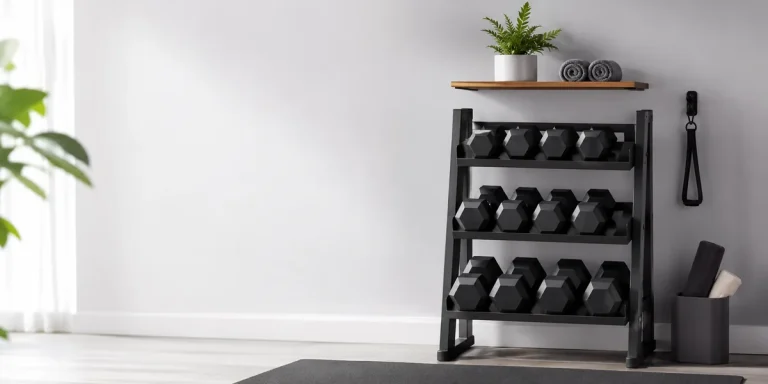
Even if you use a mat, heavy dumbbells left in one place can create an indentation. Rotate your dumbbells between sets or pick them up off the mat entirely. A simple dumbbell stand or rack solves this problem neatly.
Ignoring the Grit That Gets Trapped Under Mats
Your mat collects dirt, dust, and grit from your shoes and the floor. When you step on the mat, that grit gets pressed against the hardwood. Over time, it acts like sandpaper.
The finish wears down, and the wood becomes more vulnerable to damage.
Sweep under your mat at least once a week. If you can’t lift the mat easily, use a vacuum with a hard floor attachment. It’s a small habit that saves your floor from long-term abrasion.
Costs / Pricing / Data / Specs: What You’re Actually Looking At
Mat Pricing by Type and Coverage Area
Here’s what you can expect to spend for a 6×8 foot workout area (a common home gym footprint):
| Mat Type | Price per Square Foot | Total for 6×8 Area | Lifespan |
|---|---|---|---|
| Foam puzzle mats | $0.50 to $1.00 | $24 to $48 | 1 to 2 years |
| Recycled rubber rolls | $1.00 to $2.50 | $48 to $120 | 3 to 5 years |
| Solid rubber stall mats | $1.50 to $3.00 | $72 to $144 | 5 to 10 years |
| Urethane-coated mats | $3.00 to $6.00 | $144 to $288 | 10+ years |
Foam mats are cheap upfront but wear out fast. Rubber mats cost more but last longer. Urethane mats are the most expensive but offer the best protection and longest lifespan.
Consider your budget and how long you plan to use the space.
Floor Refinishing Cost (and What It Takes to Get There)
If you do damage your hardwood floor, refinishing is the only fix. It involves sanding down the top layer of wood, restaining, and applying a new finish. The cost varies by location and floor size, but here are the national averages as of 2026:
- Per square foot: $3 to $8
- Average room (200 sq ft): $600 to $1,600
- Full refinishing of a small home: $1,500 to $3,000
Compare that to the cost of a good mat. A $150 rubber mat protects a floor that would cost $1,000 to refinish. The math is clear.
Prevention is cheaper than repair.
Janka Hardness Ratings for Common Home Hardwoods
The Janka test measures how hard a wood species is. Higher numbers mean more dent resistance. Here are the ratings for common flooring woods:
| Wood Species | Janka Hardness Rating |
|---|---|
| Douglas Fir | 660 |
| Southern Yellow Pine | 870 |
| Black Walnut | 1010 |
| Red Oak | 1290 |
| White Oak | 1360 |
| Maple | 1450 |
| Hickory | 1820 |
| Brazilian Cherry | 2350 |
If you have red oak or softer, you need to be extra careful. Even a 20-pound dumbbell can leave a mark if dropped from waist height. Harder woods like hickory or Brazilian cherry give you more margin, but they’re not invincible.
Expert Tips / Pro Advice: What Experienced Lifters Do Differently
The Controlled Set-Down Technique That Saves Floors
The best protection is your own technique. When you finish a set, don’t just let the dumbbell fall. Lower it under control.
Bend your knees, keep your back straight, and place the weight on the floor gently. This takes practice, but it becomes automatic after a few sessions.
For exercises like dumbbell deadlifts and goblet squats, the controlled set-down is part of the movement. The eccentric phase of the lift builds muscle just as much as the concentric phase. So you’re not just protecting your floor.
You’re getting a better workout.
Why Urethane Coating Is Worth the Extra Money
If you’re buying new dumbbells for a home gym with hardwood floors, invest in urethane-coated ones. The urethane layer is softer than rubber or metal. It absorbs impact energy before it reaches the floor.
It also doesn’t leave marks or stains.
Urethane dumbbells cost more upfront. A set of urethane dumbbells can run 30 to 50 percent more than rubber-coated ones. But they last longer, they’re quieter, and they’re much gentler on your floor.
For serious home gym owners, it’s a worthwhile investment.
How to Spot and Repair Minor Dents Before They Worsen
Check your floor regularly. Look for small dents or scratches in the finish. If you catch them early, you can fix them before they become bigger problems.
For minor dents, try the steam method. Place a damp cloth over the dent. Apply a hot iron on top of the cloth for a few seconds.
The steam swells the compressed wood fibers and lifts the dent. This works best on shallow dents in solid hardwood. It won’t fix deep gouges or damage to engineered wood.
For scratches, use a floor repair marker that matches your finish color. Apply it carefully, let it dry, and buff it smooth. This hides the scratch and seals the wood from moisture.
Real Scenarios / Case Examples: Three People, Three Outcomes
The Renter in a High-Rise (Light Weights, No Mat – Bad Idea)
Sarah lives in a high-rise apartment with beautiful engineered hardwood floors. She bought a set of 15-pound rubber dumbbells for light workouts. She didn’t think she needed a mat because the weights were small.
After three months, she noticed a pattern of small dents near where she did her lunges and step-ups. Her landlord spotted them during a routine inspection. Sarah lost her full security deposit, which was $1,500.
Lesson learned: even light dumbbells need something underneath them.
The Homeowner with Oak Floors (Medium Weights, Proper Mat – Success)
Mike set up a home gym in his living room. He has red oak hardwood floors throughout. He bought a set of 50-pound rubber hex dumbbells and a 1/2-inch thick rubber mat from a farm supply store.
He covers the area where he does his deadlifts and overhead presses. He sweeps under the mat weekly. After two years of consistent use, his floor looks exactly as it did on day one.
No dents, no scratches, no discoloration. His total cost for protection was about $80.
The CrossFitter in a Basement (Heavy Drops, Full Platform – Only Way)
Jenna converted her basement into a home gym. She has solid hardwood floors that came with the house. She lifts heavy, often dropping 70-pound dumbbells from overhead during metcons.
She built a 4×8 foot deadlift platform with two layers of plywood and a rubber mat on top. The platform cost about $200 to build. It distributes the weight across a large area and absorbs the impact.
After 18 months of heavy use, her hardwood floor underneath the platform is pristine. The platform works.
Frequently Asked Questions
Will a thick mat completely protect my hardwood floor from dumbbell drops?
A 1/2-inch solid rubber mat stops most denting from weights under 60 pounds. Drops from overhead or heavier dumbbells may still transfer force through the mat. A platform with plywood underneath offers full protection for extreme cases.
Can I leave my rubber mat down all the time or should I remove it?
You can leave it down permanently. But lift and clean underneath it every week or two. Dirt trapped under the mat acts like sandpaper against your floor finish.
Sweeping prevents long-term abrasion.
Do urethane dumbbells actually protect hardwood floors better?
Yes. The urethane coating is softer than rubber or metal. It absorbs impact and doesn’t leave marks.
Verified buyer feedback across multiple gym equipment sites confirms that urethane dumbbells cause noticeably less wear on hardwood floors.
How do I repair a small dent in my hardwood floor from a dumbbell drop?
Place a damp cloth over the dent and apply a hot iron for a few seconds. The steam swells the compressed wood fibers and lifts the dent. This works best on solid hardwood with shallow dents.
Deep gouges need wood filler and refinishing. For engineered hardwood, you can’t sand it down. A repair kit with matching putty is your best option.
Should I use a dumbbell rack to keep weights off the floor?
Yes. A rack keeps dumbbells elevated and prevents constant pressure on one spot. It also keeps the floor clean and reduces the chance of tripping.
Even a simple two-tier rack helps.
Final Recommendation / Decision Guide: Your One-Page Action Plan
If You Lift Light and Controlled: One Mat, No Worries
You’re low risk. A 1/4-inch rubber mat under your workout area handles everything. Keep your technique clean and you’ll never see a dent.
If You Lift Medium with Occasional Drops: Invest in Quality Protection
You need a 1/2-inch solid rubber mat. Cover the drop zone. Sweep underneath weekly.
The mat pays for itself the first time you save a refinishing bill.
If You Lift Heavy or Drop Often: Build a Platform or Change Rooms
A deadlift platform with plywood and rubber is your only reliable option. If that’s not possible, move your heavy lifting to a concrete floor. Your hardwood is not the right surface for this work.