
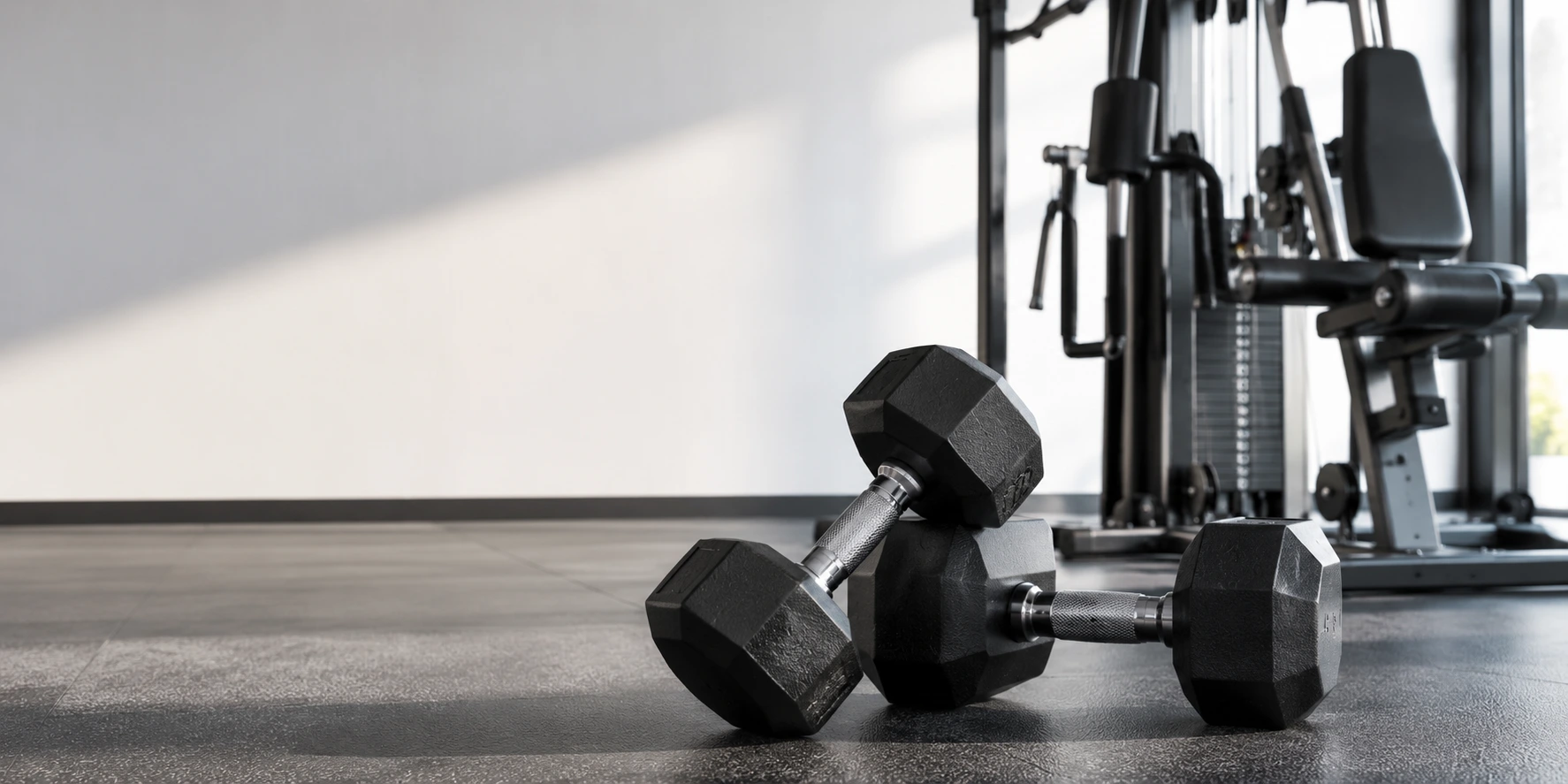
Should Beginners Buy Adjustable Dumbbells? A Guide
Should beginners buy adjustable dumbbells? It’s a question that comes up a lot, and for good reason. You’re starting a home gym, you don’t want to clutter your space, and you’re trying to figure out the smartest first purchase.
The answer isn’t a simple yes or no, because it really depends on your situation.
According to the CDC, adults need at least two days of muscle-strengthening activity per week. Adjustable dumbbells can help you hit that target without taking over your living room. But before you pull the trigger, let’s look at why so many beginners hesitate in the first place.
The Problem: Why Beginners Hesitate on Adjustable Dumbbells
Walk into the adjustable dumbbell section of any fitness forum, and you’ll see the same worries pop up again and again. The price tag is the first shock. A decent pair runs $300 to $600, which is a lot more than a set of fixed dumbbells from a big box store.
Then there’s the fear of buying something that ends up as a clothes rack. Will you actually use them? What if you’re not sure you’ll stick with lifting?
The biggest concerns we hear from beginners include:
- Cost per pound. You’re paying for convenience, not just metal. The mechanism adds engineering cost.
- Space commitment. Even compact models take up a corner of a room. They’re not invisible.
- Mechanical questions. What happens if the dial jams? Can you drop them? (Spoiler: you can’t.)
- Weight limitations. Most beginner models top out at 50 or 52.5 pounds per dumbbell. That’s fine for curls and presses, but it’s not enough for heavy deadlifts or rows.
These are valid concerns. But they’re also solvable. The key is knowing which ones apply to your specific situation.
That’s what we’ll help you figure out today. If you’re worried about staying consistent, check out our guide on building a consistent habit for some practical tips.
Quick Answer: The One-Sentence Decision Rule
Should beginners buy adjustable dumbbells? Yes, if you have a dedicated workout space and a budget of at least $300. No, if you’re unsure about consistency or working out in a tight space.
The right choice depends on your specific situation.
If you’re ready to commit to a regular routine and have a corner to store them, they’re a smart investment. If you’re still testing the waters, start with bodyweight or resistance bands. That keeps your options open and your wallet safe.
How Adjustable Dumbbells Actually Work (The Core Mechanism)
Adjustable dumbbells are simple in concept but clever in execution. Instead of owning a full rack of fixed weights, you get one handle that holds different amounts of weight. You change the load by moving a selector pin, turning a dial, or sliding a mechanism.
There are three main types of change mechanisms:
| Mechanism | How It Works | Typical Examples | Speed |
|---|---|---|---|
| Dial | You turn a dial on the end of the handle to your desired weight. The internal mechanism locks the chosen plates. | Bowflex SelectTech | Fast |
| Pin | You insert a selector pin into the desired weight stack on the storage tray. | PowerBlock | Moderate |
| Sliding | You slide a weight collar along the handle to lock plates in place. | Spin-lock designs | Slow |
Each has trade-offs. Dial systems are fastest but have more mechanical parts that can fail. Pin systems are reliable but the dumbbell shape is often blocky and awkward for certain exercises.
Sliding systems are cheap but slow and imprecise.
For a beginner, the pin system is often the most forgiving. It’s simple, durable, and you can see exactly what you’re doing. If you pick up a PowerBlock set, you’ll want to follow brand-specific instructions for setup and use.
The Decision Tree: Should You Buy Them?
Branch 1: You Have a Dedicated Workout Space
If you have a spare room, garage corner, or basement area that’s yours alone, adjustable dumbbells are an excellent choice. You have room to store them properly, and you’re not moving them around. The space isn’t shared with a living area, so noise and aesthetics matter less.
Go ahead and buy.
Branch 2: You’re Working Out in a Small Apartment or Dorm
Tight spaces are where adjustable dumbbells really shine. A single pair replaces an entire rack of fixed weights. But you need to be careful about noise and storage.
Look for models with rubber or urethane plates to protect your floors. Avoid dropping them, even on carpet. If you’re in a dorm, check with your RA about gym equipment policies.
Branch 3: You’re on a Tight Budget
A good pair of adjustable dumbbells costs $300 minimum. If you have less than that, you have two options. Save up until you can afford a quality pair, or buy a cheap spin-lock set from a local store.
Spin-locks are slower and less precise, but they’ll get you started for under $100. Just know you’ll likely upgrade within a year.
Branch 4: You’re Not Sure You’ll Stick With Lifting
This is the most common hesitation. If you’re not sure about consistency, don’t spend $400 on equipment you might not use. Start with bodyweight exercises, resistance bands, or a single pair of fixed dumbbells at a moderate weight.
Once you build a consistent habit for 8 weeks, then consider investing in adjustable dumbbells. Focus on good lifting form first, and the equipment decision becomes easier.
Who Adjustable Dumbbells Are Right For (Use Cases)
Best for: Space-Savers and Frequent Movers
If you live in a small apartment, share a house with roommates, or move every year or two, adjustable dumbbells are a game-changer. One pair takes up less space than a single chair. You can store them in a closet or under a bed.
When you move, they’re easy to transport. That’s hard to beat.
Best for: Couples or Shared Households
If you and your partner or roommate both lift, adjustable dumbbells are more cost-effective than buying two full sets. You can share the same pair, adjusting the weight between sets. Just make sure you both agree on a starting weight range that works for both of you.
Using lifting accessories like wrist straps can also help you get the most out of your shared equipment.
Best for: Progressive Overload Beginners
If you’re serious about building muscle, you need to gradually increase the weight over time. Adjustable dumbbells make this easy. You can add 2.5 or 5 pounds per session without buying new equipment.
That’s the foundation of progressive overload, and it’s why adjustable dumbbells are a smart investment for committed beginners. Just keep an eye on keeping them in working order to ensure they last.
Who Should Skip Them (Alternatives to Consider)
Fixed Dumbbells: Better for Heavy Lifters
If you plan to lift heavy from day one, fixed dumbbells are a better choice. A full set from 5 to 50 pounds costs more upfront and takes up a lot of space. But it also gives you instant access to any weight without fiddling with a mechanism.
You grab and go.
The downside is clear. You need a dedicated rack and a lot of floor space. If you live in a small apartment, this option is probably off the table.
But if you have a garage gym and you know you want to lift heavy, fixed dumbbells are hard to beat. They also last forever with no mechanical parts to break.
Spin-Lock Dumbbells: Cheaper but Slower
Spin-lock dumbbells are the budget option. You buy a pair of handles and a set of plates. You screw a collar on each end to hold the plates in place.
Total cost is often under $100 for a basic set.
The trade-off is speed. Changing weights takes 30 to 60 seconds per dumbbell. That kills the pace of a circuit workout.
The collars can also loosen during a set, which is annoying and slightly dangerous. For a beginner on a tight budget, spin-locks are better than nothing. But most people upgrade within a few months.
Resistance Bands and Bodyweight: Zero Cost, Real Results
If you are not sure about consistency, skip the dumbbells entirely. Bodyweight exercises and resistance bands can build muscle and strength for months. Squats, push-ups, rows, and lunges all work without any equipment.
Bands cost $10 to $30 for a set. They take up almost no space. You can take them anywhere.
Our research shows that many beginners start with bands and progress to dumbbells once they are committed. That is a smart, low-risk approach. If you want to build a full routine, our guide on building upper back strength offers a progression path that works with bands too.
Common Mistakes Beginners Make When Buying
Mistake 1: Buying Too Heavy (or Too Light)
It is the most common error we see. A beginner buys a 50-pound set thinking they will grow into it. Then they cannot do a proper curl with 20 pounds.
The weight sits unused.
The opposite problem is buying a 25-pound max set. Six months later, you need more weight and you have to buy again. The sweet spot for most beginners is a set that goes from 5 to 50 pounds per dumbbell.
That covers curls, presses, rows, and lunges for a solid year of progress.
Mistake 2: Ignoring the Weight Increment
Not all adjustable dumbbells let you add 2.5 pounds at a time. Many models jump in 5-pound increments. That can be a problem for smaller exercises like lateral raises or bicep curls.
A 5-pound jump on a curl is a 20 percent increase at 25 pounds. That is too much for many people. Look for models that offer 2.5-pound increments in the lower range.
A few brands even offer micro-adjustment plates for 1-pound jumps. That extra precision helps you keep progressing without injury.
Mistake 3: Forgetting About the Handle Length
Adjustable dumbbells are longer than fixed ones. The handle plus the weight plates creates a longer lever arm. That changes how the dumbbell balances in your hand.
For some exercises, like a goblet squat or a skull crusher, a longer handle is awkward. If you have small hands, a long handle might feel unstable. Try to find a model with a handle length of 14 inches or less.
That is about the same as a standard fixed dumbbell.
Mistake 4: Skipping the Safety Check
Every adjustable dumbbell has a locking mechanism. It can be a dial, a pin, or a collar. Beginners often skip the safety check before each set.
Make sure the weight is fully locked before you lift. A loose plate can slide off mid-rep and hit your foot or the floor. That is a serious safety risk.
Spend five seconds checking the mechanism every time you change weight. It becomes a habit quickly.
What to Look For: Key Features and Specs
Weight Range and Increment
The most important spec is the weight range. For a beginner, 5 to 50 pounds is the sweet spot. That covers most exercises for the first year.
If you are a woman or a lighter person, 5 to 40 pounds might be enough. If you are a larger man, look for a set that goes to 60 or 70 pounds.
The increment matters just as much. Look for 2.5-pound jumps in the lower range. Some models offer 1-pound micro-adjustments.
That is ideal for slow, steady progress.
Change Mechanism (Dial vs. Pin vs. Sliding)
We covered this in the core mechanism section. The quick summary is:
- Dial: Fastest, most convenient, but more mechanical parts that can break.
- Pin: Reliable, simple, but the dumbbell shape can be blocky.
- Sliding: Cheapest, slowest, and least precise.
For a beginner, a pin system is often the best balance of cost and reliability. You can see exactly what you are doing. There is no guesswork.
Handle Knurling and Grip
Knurling is the texture on the handle. Good knurling gives you a secure grip without tearing up your hands. Some models have aggressive knurling that is too rough for beginners.
Others have smooth handles that get slippery when you sweat.
Look for medium knurling. It should feel grippy but not painful. If you are unsure, read verified buyer feedback about the grip comfort.
It is a small detail that makes a big difference in your workout experience.
Storage and Footprint
Most adjustable dumbbells come with a storage tray. The tray keeps the weights organized and makes changing weight easy. But the tray takes up floor space.
Measure your space before you buy.
A typical storage tray is about 24 inches long and 18 inches wide. That is about the size of a small coffee table. If you plan to store the dumbbells under a bed or in a closet, make sure the tray fits.
Some models can be stored vertically, which saves space.
Pricing and Data: What You’ll Actually Pay
| Price Tier | Typical Cost | What You Get | Best For |
|---|---|---|---|
| Budget | $100 to $200 | Spin-lock or basic dial system, 5 to 25 pounds | Beginners on a tight budget |
| Mid-Range | $200 to $400 | Reliable pin or dial system, 5 to 50 pounds | Most beginners |
| Premium | $400 to $600 | High-quality materials, smooth mechanism, 5 to 70+ pounds | Serious lifters who want longevity |
The mid-range tier is the sweet spot for most beginners. You get a durable mechanism, a useful weight range, and reasonable build quality. Aggregated reviews indicate that the average user keeps a mid-range set for 3 to 5 years before upgrading.
Be cautious of super cheap models under $100. The plastic parts often break within a year. The weight increments are usually 5 pounds or more.
You end up spending more in the long run when you replace them.
Safety and Maintenance: Keeping Them Working
Adjustable dumbbells need some basic care. The good news is that maintenance is simple. You just need to do it regularly.
First, keep the mechanism clean. Dust and sweat can gum up the dial or pin. Wipe down the dumbbells after each use.
Use a dry cloth. Avoid oil or lubricant unless the manufacturer recommends it.
Second, check the locking mechanism before every workout. Turn the dial or push the pin. Make sure it clicks into place.
A loose mechanism is a safety hazard.
Third, store the dumbbells on the tray. Never leave them on the floor where someone can trip over them. The tray also keeps the weight plates aligned and reduces wear on the mechanism.
Fourth, do not drop them. Adjustable dumbbells are not designed for heavy drops. The impact can crack the plastic casing or bend the metal rails.
If you need to drop weights, use fixed dumbbells on a rubber mat.
Finally, inspect the screws and bolts every few months. Some models use hex bolts that can loosen over time. Tighten them with a hex key.
It is a five-minute check that prevents bigger problems. If you own a Bowflex model, we have a detailed guide on common repairs that covers the most frequent issues.
If you follow these steps, a quality set of adjustable dumbbells will last you 5 to 10 years. That is a solid return on investment.
Real Scenarios: Three Beginners, Three Outcomes
Scenario A: The Consistency Wins
Sarah lives in a one-bedroom apartment. She has a corner of her living room for workouts. She bought a mid-range adjustable set from 5 to 50 pounds.
She followed a simple full-body routine three times per week.
After six months, she increased her curl from 15 to 30 pounds. Her press went from 20 to 40 pounds. The dumbbells fit under her bed.
She never regretted the purchase. She is a perfect match for the decision tree.
Scenario B: The Buyer’s Remorse
Mike got excited about home fitness. He spent $400 on a premium set. He used them twice in the first month.
Then life got busy. The dumbbells sat in the corner collecting dust.
He tried to sell them used and got $200 back. He lost $200 on the experiment. He should have started with bodyweight or bands.
He would have saved money and avoided the guilt.
Scenario C: The Smart Pass
Jenna wanted to start lifting. She was not sure she would stick with it. She bought a set of resistance bands for $25.
She followed a beginner bodyweight routine for two months.
After eight weeks of consistent training, she knew she wanted more. She bought a spin-lock set for $80. She used that for three months.
Then she upgraded to a proper adjustable set. She never wasted money because she took it step by step.
Final Verdict: Your Decision Guide in 4 Steps
Follow these four steps to decide. They are simple and direct.
Step 1: Assess your space. Do you have a dedicated corner or storage area? If yes, move to step 2. If no, skip to step 4.
Step 2: Assess your budget. Can you spend $300 or more? If yes, move to step 3. If no, buy a spin-lock set or use bands.
Step 3: Assess your commitment. Have you been consistent with exercise for at least eight weeks? If yes, buy the adjustable dumbbells. If no, start with bodyweight or bands for two months.
Step 4: Choose the alternative. If you lack space or budget, pick one option. Fixed dumbbells for garage gyms. Spin-locks for low budgets.
Bands for testing consistency.
That is the whole decision framework. It saves you from buying equipment you will not use. It also ensures you get the right tool when you are ready.
Frequently Asked Questions
How much weight do beginners need for adjustable dumbbells?
Most beginners need a range of 5 to 50 pounds per dumbbell. That covers curls, presses, rows, and lunges for the first year. Lighter individuals can start with 5 to 40 pounds.
Heavier lifters may want 60 pounds.
How long do adjustable dumbbells last?
A quality set lasts 5 to 10 years with proper maintenance. The mechanism is the most common failure point. Keep it clean and check the locking mechanism regularly.
You can extend the life significantly with basic care.
Can you drop adjustable dumbbells?
No, you should not drop them. The impact can crack the plastic casing or bend the metal rails. If you need to drop weights, use fixed dumbbells on a rubber mat.
Always lower adjustable dumbbells under control.
Are adjustable dumbbells worth the money?
They are worth it if you have the space, budget, and consistency. They save space compared to a full rack of fixed dumbbells. They cost more upfront but less than a full set over time.
For the right person, they are a smart investment.
What is the difference between dial and pin mechanisms?
Dial mechanisms are faster but have more mechanical parts. Pin mechanisms are more reliable but the dumbbell shape can be blocky. For beginners, a pin system is often the best balance of cost and reliability.
Can two people use the same adjustable dumbbells?
Yes, they work well for couples or shared households. You can adjust the weight between sets. Just make sure both users agree on a starting weight range.
The mid-range sets from 5 to 50 pounds work for most people.



2 Comments