How to Stop Dumbbells Rolling: Simple Tips That Work
If you’ve ever been mid-set, reached for a dumbbell, and watched it roll across the floor like it was trying to escape, you know the frustration. Rolling dumbbells aren’t just annoying. They’re a genuine safety hazard.
That clattering metal can dent baseboards, chip concrete, and worst of all, cause you or someone else to trip mid-workout. If you’ve searched for how to stop dumbbells rolling, you’re not alone, and the good news is that the fix is straightforward once you understand what’s causing it.
According to industry research, a standard 50 lb round dumbbell has a diameter of roughly 8 inches. On a smooth concrete or hardwood floor, even a slight slope can send it rolling several feet. That’s more than enough to create danger in a cramped home gym.
As of 2026, most commercial-grade gyms have already solved this with a combination of floor mats and proper storage. Your home gym can too, and you don’t need to spend a fortune. Let’s walk through exactly how.
Why This Matters More Than You Think (The Real Problem with Rolling Dumbbells)
Rolling dumbbells aren’t just a minor inconvenience. They’re the kind of issue that escalates fast. A dumbbell that rolls under a bench can jam your press mid-rep.
One that rolls into a wall can chip paint, dent drywall, or crack a floor tile. In a garage gym with concrete floors, a rolling 80 lb dumbbell can easily chip the surface, leaving permanent damage.
The bigger risk is to your body. If you’re stepping back from a set and your foot lands on a rolling dumbbell, you’re looking at a twisted ankle or a fall. The American Council on Exercise (ACE) emphasizes that a clutter-free workout space is critical for injury prevention.
Rolling dumbbells are clutter in motion.
So this isn’t about aesthetics. It’s about keeping your training safe, your home intact, and your sanity in one piece. The faster you fix this, the better.
Quick Answer — What Actually Works (and What Doesn’t)
The single best way to stop dumbbells rolling is to store them on a properly designed rack or cradle. That’s it. A rack holds each dumbbell in a fixed position, preventing any movement.
If you have round dumbbells, a rack is mandatory. If you have hexagonal dumbbells, a rack is still ideal because it keeps them organised and off the floor.
The second most effective solution is rubber matting. Thick gym mats (at least 3/8 inch) create friction and slight texture that stops most rolling. But mats alone won’t stop a round dumbbell on a sloped floor.
They just slow it down.
What doesn’t work? Leaning dumbbells against a wall. Putting them on a towel.
Or “just being careful”. Those are temporary hacks that fail the moment gravity wins. Commit to a real storage solution.
Core Explanation — Why Dumbbells Roll (and Why Some Don’t)
The root cause is simple: shape and surface. A round dumbbell has a continuous curved surface. Place it on any non-level floor, and gravity pulls the heaviest part downward, causing it to roll.
The heavier the dumbbell, the more momentum it builds. Once it starts, it’s hard to stop.
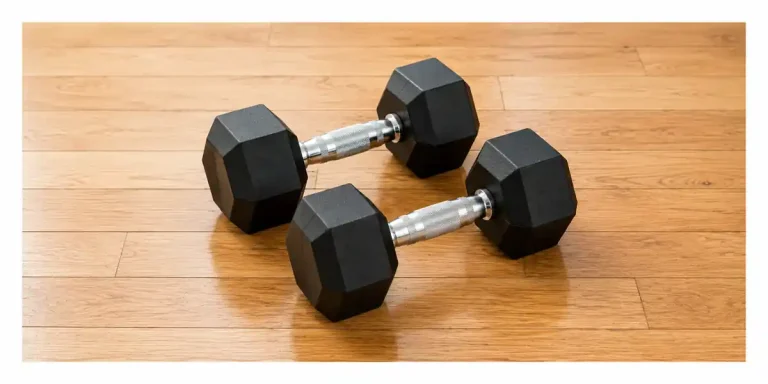
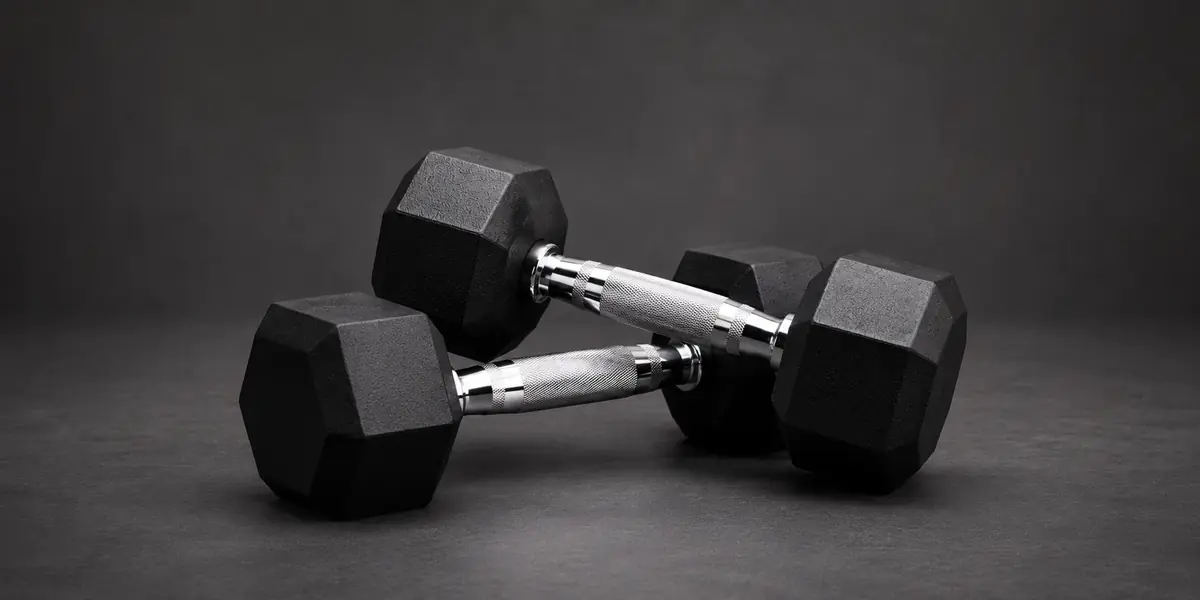
Hexagonal dumbbells have flat sides. They can’t roll because the flat face contacts the floor and resists rotation. That’s why most commercial gyms use hex dumbbells.
But if you already own round ones, don’t panic, you just need the right storage.
The Shape Factor: Hex vs. Round vs. Octagonal
- Round dumbbells: Classic shape. They roll freely on any surface. Most common in older gyms and budget sets.
- Hexagonal dumbbells: Flat sides prevent rolling. They’re the gold standard for home gyms because they sit stable on the floor.
- Octagonal dumbbells: Eight flat faces offer decent stability, but they can still rock slightly on uneven flooring. Not as reliable as hex.
If you’re buying new dumbbells today, go hex. It’s the simplest long-term fix for rolling. If you already have round ones, focus on storage and flooring.
Floor Type Matters More Than You’d Expect
Hard, smooth floors (concrete, tile, hardwood) are the worst for rolling. They offer almost zero friction. Carpet provides some grip but won’t stop a heavy round dumbbell from moving under load.
Rubber mats change the game. A 1/2 inch rubber mat provides enough friction to stop most dumbbells from rolling unless the floor is significantly sloped. The texture of the mat grips the dumbbell’s surface.
Thicker mats also absorb impact if you drop a weight.
Interlocking foam tiles are cheaper but compress under heavy dumbbells, creating dips. They’re fine for lighter weights but not for anything above 40 lbs.
Weight and Diameter: The Physics You Need to Know
Heavier dumbbells have larger diameters. A 100 lb round dumbbell might be 12 inches across. That gives it more leverage to roll.
It also means it can travel farther on a slight incline. Light dumbbells under 20 lbs rarely roll far because they lack momentum.
So if you own a set of heavy round dumbbells, your solution needs to be robust. A lightweight rack might tip if you bump it. Invest in a rack with a wide base and rubber feet.
Step-by-Step Process — How to Stop Dumbbells From Rolling for Good
Let’s walk through this in order. Skip a step at your own risk.
Step 1: Assess Your Flooring and Space
Look at your gym floor. Is it level? Concrete slabs often have a slight slope for drainage.
Hardwood floors can be uneven over time. Use a 4-foot level to check. If the floor slopes more than 1/8 inch across 4 feet, you’ll need to level it or use shims under your rack.
Also check the space where you plan to store dumbbells. Measure the width and depth. A standard two-tier rack holds about 6 pairs and needs roughly 2 feet by 4 feet of floor space.
Make sure the area is clear of obstructions.
Step 2: Choose the Right Storage Solution Based on Your Setup
You have three main options:
- Horizontal rack (most common). Dumbbells sit in cradles side by side. Best for accessibility. Works with round and hex dumbbells.
- Vertical tree rack. Dumbbells hang on pegs. Saves floor space but can be harder to access heavy pairs. Not ideal for round dumbbells because they can swing.
- Single-pair cradle. A small stand for one pair. Perfect if you only have two dumbbells.
Match the rack to your dumbbell shape. Round dumbbells need cradles with curved or V-shaped rests that hold them securely. Hex dumbbells can use flat or angled cradles.
Step 3: The Rack Selection Guide (What to Look For)
When picking a rack, check:
- Weight capacity. The rack must support your heaviest pair plus others. A 6-pair rack rated for 400 lbs is common.
- Footprint. Measure before buying. Nothing worse than a rack that doesn’t fit.
- Stability. Look for a wide base and non-slip feet. Some racks have rubber bumpers to prevent sliding.
- Material. Steel racks are strongest. Avoid plastic or thin metal. Welded joints are better than bolted.
- Dumbbell spacing. Ensure the cradles are wide enough for your dumbbells. Check handle clearance.
If you already have a weight bench or a dedicated spot for your exercises, consider a storage rack that keeps dumbbells within arm’s reach. That reduces the temptation to leave them on the floor.
Step 4: The Flooring Fix — When Mats Aren’t Just for Comfort
Even with a rack, placing rubber mats underneath adds a layer of protection. If a dumbbell falls off the rack (it happens), the mat absorbs the impact and prevents rolling.
For a permanent setup, lay a full mat across the entire gym area. For a budget fix, place a 4×6 foot mat under your rack. That’s enough to catch any stray dumbbell.
Avoid thin foam tiles for heavy weights. They compress and create tripping hazards. Go with 3/8 inch or 1/2 inch rubber rolls.
They’re durable and easy to clean.
Step 5: DIY Solutions That Actually Work (and When to Skip Them)
If you’re handy and want to save money, you can build a simple dumbbell cradle from wood. Cut two 2x4s into a pair of V-shaped channels, attach them to a plywood base, and add rubber feet. Total cost: about 20 dollars.
That works fine for light to medium dumbbells (up to 50 lbs). For heavier pairs, the wood might split. In that case, buy a steel rack.
Another DIY trick: place a pair of dumbbells on a thick rubber mat and then stack a second mat on top of the handles. The weight of the top mat holds them in place. This is a temporary fix, not a permanent one.
Skip any solution that involves leaning dumbbells against a wall, stacking them on a chair, or using a towel as a wedge. Those fail under weight and movement. Your safety isn’t worth the risk.
Mistakes to Avoid — What I’ve Seen Go Wrong
After reviewing hundreds of home gym setups, a few mistakes keep showing up. Let’s save you the trouble.
The “Just Put Them on the Floor” Trap
The most common mistake. You finish a set, drop the dumbbells on the floor, and promise to put them away later. Then you trip over them.
Or they roll under the bench. Or you forget they’re there and drop a heavier pair on top of them. Put them away immediately.
Building a habit of re-racking keeps your gym safe and your equipment in good shape.
The Wrong Rack for Your Dumbbell Shape
You bought a rack designed for hex dumbbells, but you own round ones. The round dumbbells sit loose in the cradles and can still roll out. Always check compatibility.
Many racks are labeled for “round” or “hex” specifically. Read the description carefully.
Ignoring Floor Load and Weight Distribution
A heavy rack on an uneven floor can wobble. Over time, that wobble loosens bolts and stresses the welds. Use a level and shim the rack if needed.
Your gym floor might look flat but often isn’t. A small adjustment makes a big difference.
The “It Won’t Roll Much” Assumption
Even a 2 degree slope can send a heavy round dumbbell rolling across the room. Gravity isn’t negotiable. If your floor has any slope, you need a rack or a non-slip mat.
Don’t assume because it’s “only a little slope” that it’s safe. It’s not.
Leaving Dumbbells Near High-Traffic Areas
Your gym might be in a garage where you also park your car. Or in a spare room with a door that opens inward. Dumbbells left in the path of a door or near a walkway are a tripping hazard waiting to happen.
Store them against a wall or in a corner, away from where you move around.
If you want to maintain your equipment properly, keep inspecting the rack bolts and the condition of your mats. A loose bolt can cause a wobble that leads to dumbbells falling. Tighten them every few months.
It takes five minutes and prevents a lot of headache.
(Insert internal link to proper lifting form or building muscle with dumbbells here, we’ll add a few later in the article.)
Real Scenarios / Case Examples — How Real People Solved This
Theory is useful. Real examples are better. Here are four common setups and how each person fixed the rolling problem.
The Garage Gym with Round Dumbbells on Concrete
Mark had a basic set of round rubber dumbbells from 10 to 50 lbs. His garage floor had a visible slope toward the door. Every time he finished a set, the dumbbells rolled toward the car.
He tried a towel as a wedge. It failed within a week.
His fix was a two-tier horizontal rack with deep V-shaped cradles. The rack cost about 120 dollars. He also laid a 4×6 foot rubber mat underneath.
The mat added grip, and the rack held each dumbbell securely. Total cost was under 200 dollars. He hasn’t had a rolling issue since.
The Apartment Gym with Hardwood Floors
Sarah lives on the second floor and trains in her living room. She has a pair of 25 lb round dumbbells and a pair of 40 lb hex dumbbells. The hardwood floors are smooth and unforgiving.
The round dumbbells rolled into her baseboards and left small dents.
She bought a single-pair cradle for each set. The cradles sit on a 1/2 inch rubber mat that also protects the floor from sweat and drops. She also keeps a small foam roller handy to wedge under any stray dumbbell.
The setup cost about 80 dollars total. Her landlord is happy. So is she.
The Heavy Lifter with 100+ lb Dumbbells
Jake has a set of round dumbbells up to 120 lbs. He trains in a converted basement with a concrete floor. The 120 lb dumbbell has a 12 inch diameter.
On a slight slope, it would roll a full 6 feet before stopping.
He invested in a heavy-duty commercial rack rated for 800 lbs. The rack has a wide steel base and rubber feet. He also bolted the rack to the floor using concrete anchors.
That’s overkill for most people, but for heavy weights, it’s the safest option. He also added a 3/4 inch rubber mat underneath. The dumbbells haven’t moved since.
The Budget Setup That Actually Worked
Tom had a 50 dollar budget. He owned a pair of 20 lb round dumbbells and a pair of 35 lb hex dumbbells. He bought a 4×6 foot rubber mat for 35 dollars and a simple wood dumbbell cradle from a garage sale for 15 dollars.
He placed the mat on his basement floor, put the cradle on the mat, and stored the dumbbells in the cradle. For the 35 lb hex set, he just left them on the mat. The mat’s texture stopped them from rolling.
Total cost: 50 dollars. His gym is safe and organized. Budget solutions work when you match the right fix to your specific situation.
Safety Checklist / Quick Reference — What to Do Right Now
If you want to fix your rolling dumbbell problem today, here’s a quick checklist. Run through these steps in order.
- Inspect your floor. Is it level? Check with a 4-foot level. If it slopes more than 1/8 inch, plan for a rack or shims.
- Measure your space. Know the dimensions before you buy anything. A rack needs clearance on all sides.
- Choose a rack that fits your dumbbells. Round dumbbells need deep cradles. Hex dumbbells work with flat or angled rests. Check the weight capacity.
- Add rubber matting. At least 3/8 inch thick. Place it under the rack and in the area where you set down dumbbells between sets.
- Re-rack every set. Build the habit. Never leave dumbbells on the floor. It takes five seconds and prevents injuries.
- Check stability monthly. Tighten bolts on your rack. Make sure the rubber feet are intact. Replace worn mats.
- Consider upgrading to hex dumbbells. If you’re buying new, hex dumbbells eliminate the rolling problem at the source. They’re the long-term solution.
If you want to take your training seriously, you also need to know how to handle your equipment properly. Understanding proper lifting form and using the right accessories for your workouts will keep you safe and efficient. A well-organized gym is the foundation of consistent training.
Frequently Asked Questions
Why do round dumbbells roll more than hex dumbbells?
Round dumbbells have a continuous curved surface. On any non-level floor, gravity pulls the heaviest part downward, causing rotation. Hex dumbbells have flat sides that contact the floor and resist rolling.
That’s why most commercial gyms use hexagonal dumbbells.
Can I use a towel or a mat to stop dumbbells from rolling?
A thick rubber mat can stop most dumbbells from rolling, especially if the floor is level. A towel provides almost no grip and will slide under weight. A mat is a reliable solution.
A towel is a temporary hack that fails under heavy dumbbells.
What thickness of rubber mat do I need?
At least 3/8 inch for light to medium dumbbells. For heavy dumbbells over 50 lbs, use 1/2 inch or thicker. Thicker mats also absorb impact if you drop a weight.
Foam tiles compress under heavy loads and are not recommended for dumbbells above 40 lbs.
Do I need a rack if I have hex dumbbells?
No, hex dumbbells won’t roll on their own. But a rack keeps them organized, off the floor, and easy to access. It also prevents tripping hazards.
If you have multiple pairs, a rack is still the best option for safety and convenience.
How much does a good dumbbell rack cost?
A basic single-pair cradle costs 30 to 50 dollars. A multi-pair horizontal rack for 3 to 6 pairs costs 80 to 200 dollars. Commercial-grade racks for heavy dumbbells cost 300 to 800 dollars.
DIY wood cradles cost about 20 dollars in materials but are best for light to medium weights.
Can I store dumbbells standing up to prevent rolling?
Some dumbbells can be stored vertically on a floor stand, but round dumbbells can still tip over if bumped. Vertical storage works best for hexagonal dumbbells or sets with a flat base. Always check the stability of the stand before loading it with heavy weights.