How to How to Train Shoulders With Dumbbells
If you've ever tried to train shoulders and ended up with achy joints instead of solid gains, you're not alone. The shoulder is the most mobile joint in the body, and that mobility comes at a cost, it's also one of the easiest to injure when you don't know how to train shoulders with dumbbells properly.
The good news? Dumbbells are actually the ideal tool for shoulder work. They let each arm move independently, which helps fix muscle imbalances and keeps your joints in a more natural path of motion compared to a barbell.
According to the American Council on Exercise, free-weight training with dumbbells activates more stabilizer muscles than machines, making your shoulders stronger in a functional, real-world way. Let's walk through exactly how to do it right.
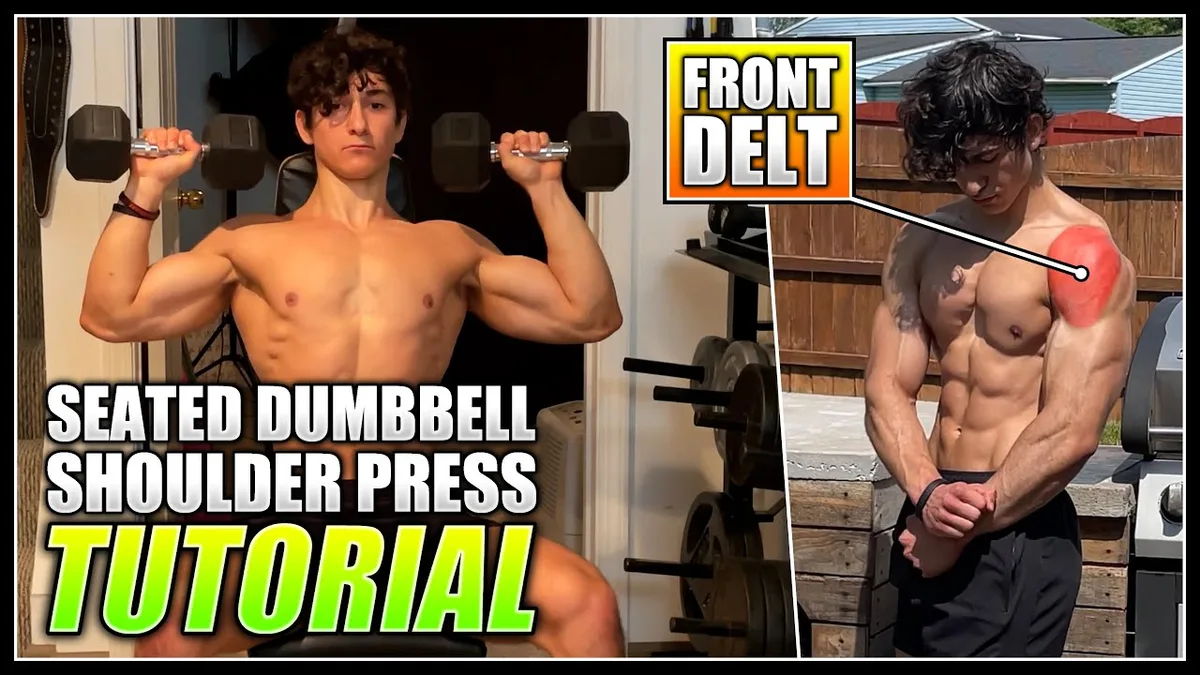
Image source: YouTube / Max Euceda (YouTube thumbnail (fair-use with source credit))
Quick Answer
Train shoulders with dumbbells by targeting all three deltoid heads. Do overhead presses for the front. Use lateral raises for the side.
Finish with bent-over reverse flies for the rear. Use 3 to 4 sets of 8 to 15 reps per exercise. Rest 60 to 90 seconds between sets.
Train shoulders once or twice per week.
Why Shoulder Training Needs Its Own Rules (Even With Dumbbells)
The shoulder joint, technically the glenohumeral joint, is a shallow ball-and-socket. That design gives you incredible range of motion. You can reach overhead, behind your back, and across your body.
But that same looseness makes it unstable.
Here's the thing most lifters miss. The shoulder isn't one muscle. It's three distinct heads of the deltoid: anterior (front), lateral (side), and posterior (rear).
Each one has a different job and responds to different angles. If you only press, you're overdeveloping the front while neglecting the rear. That imbalance alone can lead to poor posture and eventually impingement.
Dumbbells solve several problems at once. They allow a neutral grip (palms facing each other), which is the most shoulder-friendly pressing position. They let you lower the weight past your ears safely, giving you a longer range of motion than a barbell.
And they force each side to work equally, which matters more than most people realize.
As of 2026, research in the Journal of Strength and Conditioning Research continues to confirm that dumbbell pressing produces comparable muscle activation to barbell pressing with less compressive stress on the shoulder joint. That's a meaningful safety advantage for anyone training long-term.
One more thing before we dive into the exercises. If you're newer to lifting or coming back from a break, take a minute to review proper form and safety tips first. It's the kind of foundation work that saves you from setbacks later.
The Anatomy Shortcut You Actually Need: Front, Side, Rear
You don't need a medical textbook here. But you do need to understand the three deltoid heads because each one requires a different movement to grow.
Anterior deltoid (front). This head handles shoulder flexion, raising your arm forward and overhead. It gets worked heavily during any pressing movement. Most people overdevelop this head without trying because it also works during chest exercises like the bench press.
Lateral deltoid (side). This is the head that gives your shoulders that round, capped look. It handles shoulder abduction, raising your arm out to the side. It's notoriously stubborn to grow because it's a small muscle with poor leverage.
Many lifters use too much weight and compensates by swinging or shrugging.
Posterior deltoid (rear). This head handles shoulder extension and horizontal abduction, pulling your arm backward and out to the side. It's the most neglected head in typical training. A weak rear delt contributes to rounded shoulders and can set you up for rotator cuff problems.
Most shoulder workouts fail because they hammer the front and skip the rear. A balanced routine hits all three heads in a roughly even split. That's what we're building next.
Your Dumbbell Shoulder Workout: The Core Lifts
These four exercises cover every deltoid head fully. They're ordered from compound (most weight, most overall demand) to isolation (targeted, less weight). Stick to this order for safety and best results.
The Overhead Press (Seated or Standing)
This is your main strength builder for the shoulders. It targets the front and side delts heavily, with some triceps and upper traps as assistants.
Seated version. Sit on an adjustable bench set to 90 degrees (upright). Keep your feet flat on the floor. Hold a dumbbell in each hand at shoulder height, palms facing forward or slightly angled.
Brace your core. Press the dumbbells overhead until your arms are fully extended but not locked out. Lower them back to shoulder height with control.
Standing version. Stand with feet hip-width apart. Hold the dumbbells at shoulder height. Brace your core and squeeze your glutes, this prevents arching your lower back, which is a common form breakdown.
Press overhead and lower with control.
Which one should you pick? Seated is better for isolating the shoulders because it removes leg drive and reduces lower back strain. Standing is better for building core stability and real-world pressing strength.
If you have lower back issues, go seated.
Start with a weight you can press for 8 to 10 clean reps. Most beginners should begin around 15 to 25 pounds per hand. Focus on control on the way down, that eccentric phase is where most muscle growth happens.
The Lateral Raise (The Make-or-Break Exercise)
This is the exercise that builds shoulder width. It's also the one most people do wrong.
Stand with a dumbbell in each hand at your sides, palms facing your thighs. Keep a slight bend in your elbows, imagine you're holding a cup of coffee in each hand. Raise both arms out to the sides until they're roughly parallel to the floor.
Don't go higher than ear level. Pause briefly at the top. Lower with control.
The most common mistake? Using momentum. If you're swinging your torso or using your traps to heave the weight up, you've lost the tension on the lateral delt.
Drop the weight. Seriously. Most people need 10 to 15 pounds per hand, sometimes less.
Another critical cue: keep your thumbs pointing slightly upward as if you're pouring a pitcher. This externally rotates the shoulder and puts the lateral delt in a better mechanical position.

Image source: Wikimedia Commons / ThoroughlyReviewed (CC BY)
The Rear Delt Fly (The Most Overlooked)
This is the exercise most people skip, and it's the one that would fix the most shoulder problems.
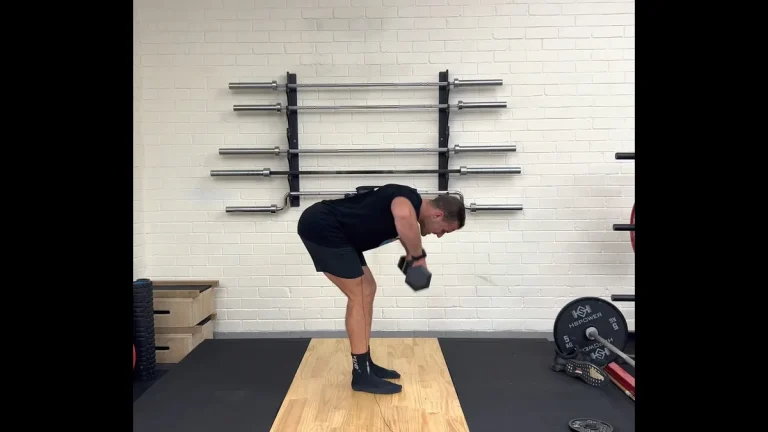
Sit on the edge of a flat bench. Hinge forward at your hips until your chest is nearly touching your thighs. Hold a dumbbell in each hand, palms facing each other, arms hanging straight down.
With a slight bend in your elbows, raise both arms out to the sides and slightly backward, squeezing your shoulder blades together. Lower with control.
You want a light weight here, 8 to 12 pounds per hand is plenty for most people. The rear delt is a small muscle. It doesn't need heavy loading.
It needs consistent, controlled tension.
A common error is using too much back. If you feel this mostly in your rhomboids or mid-traps, you're pulling with your back instead of isolating the rear delt. Focus on moving from the shoulder joint, not squeezing the shoulder blades.
The Front Raise (Use With Caution)
The front raise hits the anterior delt directly. But here's the honest truth: if you're already doing overhead presses and any chest pressing, your front delts are probably getting enough work. Adding front raises on top of that can tip you into overdevelopment.
Use front raises sparingly. One option is to do them only on days when you're not doing any overhead pressing. Another is to alternate them with lateral raises rather than adding both to the same session.
If you do include front raises, use a neutral grip (palms facing each other) and stop at shoulder height. Going higher shifts tension to the traps and stresses the joint unnecessarily.
How to Structure a Shoulder Day: Sets, Reps, and Order
A well-structured shoulder day follows a simple logic: hardest exercise first, easiest last. That means compound movements before isolation.
Here's a sample structure you can follow:
| Exercise | Sets | Reps | Rest |
|---|---|---|---|
| Dumbbell overhead press | 4 | 8 to 10 | 90 seconds |
| Lateral raise | 3 | 12 to 15 | 60 seconds |
| Rear delt fly | 3 | 12 to 15 | 60 seconds |
| Front raise (optional) | 2 to 3 | 10 to 12 | 60 seconds |
Do this once or twice per week with at least 48 hours between sessions. Shoulders are relatively small muscles that recover quickly, but they do need rest. If you train shoulders hard on Monday, give them until Wednesday or Thursday before hitting them again.
You can also split shoulder work across other days. For example, do overhead presses on push day and then add lateral raises and rear delt flies on pull day. That works well for lifters on a push-pull-legs split and keeps overall volume manageable.
For a complete full-body approach, consider a structured program for building muscle with dumbbells that integrates shoulder work alongside other major movements.
The Real Weights You Should Use (And Why You're Probably Using Too Much)
Let's be direct about this because it's the most common mistake in dumbbell shoulder training. The weights people use for lateral raises and rear delt flies are almost always too heavy.
For overhead press, here's a rough guide based on your training level:
- Beginner (0 to 6 months). 15 to 25 pounds per hand for pressing. 5 to 10 pounds for lateral raises.
- Intermediate (6 months to 2 years). 25 to 45 pounds for pressing. 10 to 15 pounds for lateral raises.
- Advanced (2+ years). 45 to 70 pounds for pressing. 15 to 25 pounds for lateral raises.
Those lateral raise numbers look low, and that's intentional. A 2020 study in PeerJ found that lighter loads with strict form produced similar muscle activation to heavier loads with momentum for lateral raises. The difference was in the shoulder joint loading, lighter loads were significantly safer.
If you can't complete a set of lateral raises without swinging your torso, heaving the weight, or shrugging your traps, the weight is too heavy. Drop down by 5 pounds per hand and see if you can feel the lateral delt working. That's the goal.
Common Form Mistakes That Lead to Injury
Shoulder injuries are often cumulative. They build up over weeks or months of poor mechanics before a single rep triggers pain. Catching these form issues early matters.
Arching and Leaning on the Press
When the weight gets heavy, the natural instinct is to arch your lower back and lean back to use your chest and shoulders together. This puts the shoulder joint in a compromised position and transfers load to your lower spine.
The fix: brace your core before every rep. Imagine someone is about to punch you in the stomach. Keep your ribs down, don't let them flare up.
If you're seated, press your lower back against the bench pad. If you're standing, squeeze your glutes to stabilize your pelvis.
Shrugging on Lateral Raises
Shrugging happens when the weight is too heavy and your upper traps take over. Instead of isolating the lateral delt, you're using your neck and trap muscles to complete the movement. This not only reduces shoulder growth but can also lead to neck tightness and headaches.
The fix: lower the weight. Keep your shoulders down and back throughout the movement. Imagine someone is pressing down on your shoulders while you raise your arms.
That mental cue helps keep the traps relaxed.
Flaring Elbows Too High
On lateral raises, going past parallel (elbows above ear level) increases impingement risk without adding muscle-building benefit. The same goes for overhead pressing with elbows flared out to the sides.
The fix: stop at shoulder height on lateral raises. On overhead press, keep your elbows at about a 45-degree angle from your torso rather than 90 degrees. That's a safer pressing angle for most shoulder anatomies.
Ignoring the Eccentric (Lowering Phase)
The lowering phase of any exercise is where most muscle damage and growth signaling occurs. Dropping the weight quickly and letting gravity do the work means you're leaving gains on the table.
The fix: lower every rep with control over 2 to 3 seconds. On the last rep of each set, you should feel a deep burn in the target muscle. That's the eccentric doing its job.
How to Progress Without Hurting Yourself
Progressive overload is the foundation of muscle growth. But with shoulders, the rate of progression matters more than with larger muscle groups like quads or lats. Small jumps, done consistently, win the long game.
Use the double progression method. First, increase your reps within a given rep range. Once you hit the top of that range for all sets, add weight.
Then drop back down to the bottom of the rep range and repeat.
Here's what that looks in practice:
- Weeks 1 to 3: Overhead press 20 pounds for 4 sets of 8 reps.
- Weeks 4 to 6: Overhead press 20 pounds for 4 sets of 10 reps.
- Week 7: Overhead press 22.5 pounds for 4 sets of 8 reps.
That's 2.5 pounds of progression over 7 weeks. It doesn't sound dramatic, but over a year that's roughly 15 to 17 pounds of added strength on your press. With shoulders, slow and steady beats aggressive loading every time.
For lateral raises and rear delt flies, aim for 5-pound jumps at most. Some lifters benefit from 2.5-pound micro-loading for these movements.
Who Should Skip Certain Dumbbell Shoulder Exercises
Not every exercise is right for every person. Some shoulder anatomies handle certain movements poorly, and pushing through discomfort is a bad strategy.
Skip overhead pressing if: you have a history of shoulder impingement, labral tears, or AC joint issues. Many physical therapists recommend substituting with incline pressing (bench set to 30 to 45 degrees) which puts the shoulder in a safer position while still working the delts.
Skip upright rows entirely. The upright row with dumbbells involves internal rotation of the shoulder at full abduction, which is a textbook impingement position. The lateral raise achieves the same goal with much less risk.
Skip front raises if: your anterior delts already feel tight or overdeveloped from pressing. Most people don't need dedicated front raise work unless they're specifically trying to bring up a weak spot.
If you have existing shoulder issues or pain that doesn't resolve with rest, consult a physical therapist before pushing through. Properly lifting dumbbells with correct form should never cause sharp joint pain, that's the line between productive training and self-inflicted injury.
When to See a Professional (Pain vs. Soreness)
Muscle soreness after a good workout is normal. It feels like a dull ache in the belly of the muscle. It shows up 12 to 24 hours after training and fades within 48 to 72 hours.
That's expected.
Joint pain is different. It's sharp, localized, and often happens during the movement itself. You might feel it at the front of the shoulder during pressing or on the side during lateral raises.
If the pain persists after you stop the movement, that's a red flag.
See a physical therapist or sports medicine professional if:
- You have sharp pain during any dumbbell shoulder exercise
- The pain lingers for more than a few minutes after you stop
- You feel clicking, catching, or grinding in the joint
- You've lost range of motion or strength in that arm
- The pain wakes you up at night
Conservative rehab often involves rotator cuff strengthening, scapular stabilization work, and temporarily avoiding the painful movement. Most shoulder issues resolve with proper management. Ignoring them rarely works out well.
The Quick-Reference Shoulder Workout Plan
Here's a complete dumbbell shoulder workout you can use next time you train. Warm up with 5 minutes of arm circles, band pull-aparts, and 10 light lateral raises before starting.
| Exercise | Sets x Reps | Dumbbell Weight (Guide) |
|---|---|---|
| Dumbbell overhead press (seated) | 4 x 8-10 | 20-45 lbs per hand |
| Lateral raise | 3 x 12-15 | 8-15 lbs per hand |
| Rear delt fly | 3 x 12-15 | 8-12 lbs per hand |
| Front raise (optional) | 2-3 x 10-12 | 10-15 lbs per hand |
Rest 90 seconds after presses and 60 seconds after isolation work. Complete the entire workout in about 35 to 45 minutes. Do this once or twice per week for 8 to 12 weeks, then reassess your weights and progress.
For more specialized shoulder training, including warm-ups and balance work, check out our detailed guide on shoulder workouts with dumbbells for beginners. It includes additional variations and troubleshooting tips.
Frequently Asked Questions
How often should I train shoulders with dumbbells?
Train shoulders one to two times per week with at least 48 hours between sessions. Twice per week is optimal for growth if you're managing recovery. Once per week works for maintenance or if you're on a full-body program.
Can I build big shoulders with only dumbbells?
Yes. Dumbbells provide full range of motion and allow for progressive overload. The key is consistency in your form and weight progression.
Many lifters achieve impressive shoulder development using only dumbbells.
Why do my shoulders hurt when I do lateral raises?
Sharp pain during lateral raises usually means the weight is too heavy or your form is off. Lower the weight and focus on keeping your thumbs slightly turned up. Stop at shoulder height and control the descent.
If pain persists, stop and consult a professional.
Should I do shoulder presses standing or seated?
Seated pressing is better for isolating the shoulders and protecting the lower back. Standing pressing builds more core stability and functional strength. Choose based on your goals and any existing back issues.
Both are effective.
How long does it take to see results from dumbbell shoulder training?
Visible changes typically appear in 8 to 12 weeks of consistent training with proper nutrition. Strength gains come sooner, you should be able to increase your pressing weight within 4 to 6 weeks using the double progression method.
Warm-Up Moves That Actually Protect Your Shoulders
A proper warm-up for shoulders isn't just about getting blood flowing. It's about activating the rotator cuff muscles that stabilize the joint during heavy work. Skip this and you're asking for trouble.
Spend 5 to 7 minutes on these three movements before touching a dumbbell:
- Arm circles. 20 forward, 20 backward. Start small and increase the circle size.
- Band pull-aparts. Hold a light resistance band at chest height. Pull it apart by squeezing your shoulder blades. Do 2 sets of 15 reps.
- Light lateral raises. Use 5-pound dumbbells. Do 10 slow reps with a 3-second lower. This wakes up the lateral delt before heavier work.
Your rotator cuff muscles are small and need direct activation. They won't fire up just from general movement. Take the time to wake them up before every shoulder session.
How to Combine Shoulder Work With Other Training Days
Shoulder recovery is straightforward if you plan smart. The front delt works during chest pressing. The rear delt works during back pulling.
That means you're already hitting parts of the shoulder on other days.
Here's a simple rule. Don't train shoulders the day before or the day after a heavy chest day. Your front delts need at least 48 hours between direct and indirect work.
If you're on a push-pull-legs split, put your main shoulder pressing on push day. Then add lateral raises and rear delt flies on pull day. This spreads volume across the week and gives each head enough recovery time.
When to Use Wrist Straps for Shoulder Work
Wrist straps aren't usually needed for shoulder training. The loads are moderate enough that grip strength rarely limits performance on presses or raises.
There is one exception. If you're doing high-rep lateral raise sets (15 to 20 reps) and your grip gives out before your delts, straps can help you finish the set. But that's a niche case.
For overhead pressing, skip the straps. Building grip strength through pressing is a useful side benefit. If you do want to use them, learn how to use wrist straps with dumbbells properly so you don't compromise wrist alignment.
Common Shoulder Training Myths Worth Ditching
Myths stick around because they sound logical. Let's clear up a few that cause real problems.
Myth: You need heavy weight to grow shoulders. Shoulders respond well to moderate loads with strict form. Lateral raises with 15 pounds done correctly beat 25 pounds done with momentum.
Myth: Front raises are essential for shoulder growth. Most people get enough front delt work from overhead pressing and chest exercises. Dedicated front raises are optional at best.
Myth: Dumbbells are inferior to barbells for shoulder strength. Dumbbells actually allow a greater range of motion and a more natural pressing path. Research supports comparable strength gains with less joint stress.
Myth: You should feel every exercise in the target muscle immediately. Some people feel lateral raises in their traps instead of delts due to individual anatomy. That doesn't mean the exercise isn't working. Focus on form, not sensation.
The Final Framework for Long-Term Shoulder Success
If there's one takeaway from all this, it's that shoulder training rewards patience. Slow progression with perfect form beats heavy ego lifting every time.
Stick with the four core exercises covered here. Press heavy with control. Keep lateral raises light and strict.
Never skip rear delt work. Progress using the double progression method. And if something hurts, stop and reassess before pushing through.
Your shoulders will thank you in the long run. They'll look fuller, move better, and stay injury-free for years of training ahead.
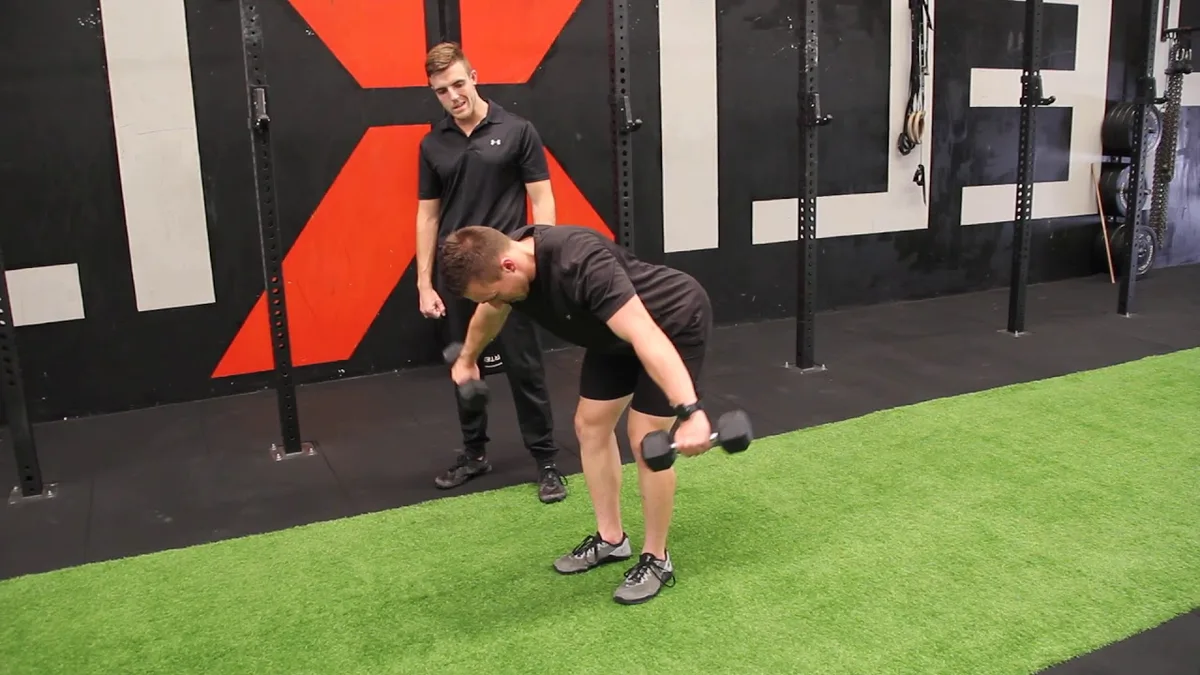
Image source: YouTube / Functional AF (YouTube thumbnail (fair-use with source credit))