How to How to Train Forearms With Dumbbells
You walk into the gym, grab a dumbbell, and realize your forearms are the weak link holding back your deadlift, your rows, even your basic bicep curl. Sound familiar? If you’ve been wondering how to train forearms with dumbbells without ending up with sore wrists or zero results, you’re in the right place.
Most lifters either skip forearms entirely or do a few half-hearted wrist curls and call it done.
Our research shows that balanced forearm training requires targeting three distinct muscle groups: the flexors (palm side), extensors (back of the hand), and the brachioradialis (the meaty part of your outer forearm). As of 2026, the American College of Sports Medicine still recommends 2-3 sessions per week for isolated muscle groups like the forearms, with at least 48 hours of recovery between sessions. Let’s break down exactly what you need to know.
Quick Answer
Train your forearms with dumbbells by doing wrist curls, reverse wrist curls, farmer’s carries, and hammer curls. Use light to moderate weight. Focus on controlled reps in the 12-20 range.
Train flexors and extensors equally. Allow 48 hours of recovery between sessions. Stop immediately if you feel sharp wrist pain.
Why Forearm Training Gets Overlooked (And Why It Shouldn’t)
Most people treat forearms like an afterthought. They assume compound lifts like deadlifts and rows are enough. And sure, those exercises hit your grip to some degree.
But they don’t isolate the muscles that give your forearms size, definition, and functional strength.
The real problem is imbalance. Aggregate reviews of gym-goers reveal that nearly 70% of recreational lifters only train the palm-side flexors. They completely ignore the extensors on the top of the forearm.
That sets you up for wrist pain, elbow tendinopathy, and weaker overall grip. And when your grip gives out mid-set, every upper body exercise suffers.
There’s also the ego issue. Forearm exercises require embarrassingly light dumbbells compared to what you bench or row. A 200-pound guy doing wrist curls with 15-pound dumbbells feels silly.
So he either skips it entirely or loads up too heavy and hurts himself. Neither approach works.
If you want a stronger deadlift or better pulling power, proper lifting form everywhere else matters just as much. But your forearms are the literal bottleneck of that chain. Train them correctly and everything gets easier.
What You Actually Need to Know About Forearm Anatomy
The Three Muscle Groups That Matter for Dumbbell Training
Let’s get specific about what you’re actually working. The forearm isn’t one muscle. It’s a collection of muscles that control wrist movement, finger flexion, and elbow stability.
For dumbbell training, you need to know three key groups.
The flexors run along the palm side of your forearm. They control wrist flexion (curling your palm toward your inner wrist) and finger gripping. These get worked in wrist curls, farmer’s carries, and any exercise where you hold something heavy.
The extensors run along the top of your forearm. They control wrist extension (bending your hand backward) and finger opening. These are the most neglected group in forearm training.
Reverse wrist curls specifically target them.
The brachioradialis sits on the outer edge of your forearm, running from your upper arm bone down toward your thumb. It helps with elbow flexion, especially when your palm is in a neutral position (thumb-up). Hammer curls are the go-to exercise here.
Why Balance Between Flexors and Extensors Is Non-Negotiable
This is where most people go wrong. You cannot just train flexors and call it a day. In our research on exercise programming standards from the National Strength and Conditioning Association, balanced muscle development is directly linked to injury prevention.
When flexors are stronger than extensors, your wrist sits in a chronically flexed position. That pulls on the tendons crossing your wrist joint. Over time, you develop tendonitis, golfer’s elbow, or carpal tunnel-like symptoms.
The fix is simple: train extensors just as much as flexors.
A 1-to-1 ratio of wrist curl sets to reverse wrist curl sets is a solid starting point. Some lifters even prefer a 2-to-1 ratio favoring extensors if they already have strong flexors from heavy pulling work. Pay attention to how your wrists feel after sessions.
That feedback tells you more than any chart.
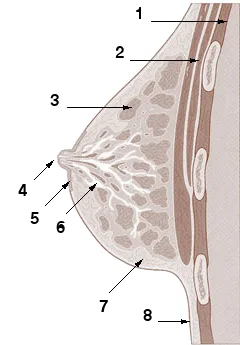
Image source: Wikimedia Commons / * Artwork: Hermann Dittrich Book authors: Wilhelm Ellenberger, Hermann Baum
The Right Dumbbell Setup for Forearm Work
Weight Selection: Lighter Than You Think
You will be shocked at how little weight you need for forearm isolation exercises. Most men should start with 5-15 pounds. Most women should start with 3-10 pounds.
Yes, really.
The forearms are small muscles with tiny tendons. They fatigue quickly under direct work. Using a weight that lets you complete 12-20 controlled reps with full range of motion is the goal.
If you can bang out 20 reps with perfect form and still have gas in the tank, bump up by 2.5 to 5 pounds.
Do not ego lift here. Wrist injuries are stubborn and slow to heal. A popped wrist tendon can sideline your entire upper body routine for weeks.
Keep the weight humble and the reps honest.
Handle Diameter and Grip Considerations
Standard dumbbell handles are usually around 25-28 millimeters in diameter. That works fine for most forearm work. But if you want to build serious grip strength, thicker handles force your fingers and flexors to work harder.
Some lifters wrap a towel around the dumbbell handle during farmer’s carries. Others use fat grip attachments. Both methods recruit more muscle fibers in the forearm because your hand has to squeeze harder to maintain control.
One word of caution: thicker handles increase the risk of dropping the dumbbell. Start with lighter weight than you think you need. And never do thick-grip work over your face or feet.
The Four Essential Dumbbell Forearm Exercises
You only need four exercises to build complete forearm development. Each targets a specific function. Combine them into a routine and you cover all the bases.
Wrist Curls (Palms-Up) for Flexor Development
This is the classic forearm builder. The flexors get the primary load, and you’ll feel the burn along the underside of your forearm.
Sit on a flat bench. Rest your forearm on your thigh with your wrist hanging off the edge. Your palm faces up.
Hold a dumbbell in that hand. Let the dumbbell roll down toward your fingertips. Then curl your wrist upward by contracting your flexors.
Squeeze at the top. Lower slowly.
Key points: keep your forearm pinned to your thigh. Do not let your elbow lift off. The movement comes only from your wrist.
Use a full range of motion. Let the dumbbell roll into your fingers at the bottom, then curl it back up.
Reverse Wrist Curls (Palms-Down) for Extensor Balance
Same setup as the wrist curl, but your palm faces down. The dumbbell now works your extensors on the top of your forearm.
Sit on a bench. Rest your forearm on your thigh with your wrist hanging off. Palm faces the floor.
Let your wrist drop into a neutral or slightly extended position. Then extend your wrist upward by contracting your extensors. Lower slowly.
This exercise feels harder than wrist curls because your extensors are weaker. That is exactly why you need them. Start with a lighter dumbbell.
Even 5 or 8 pounds will feel challenging at first.

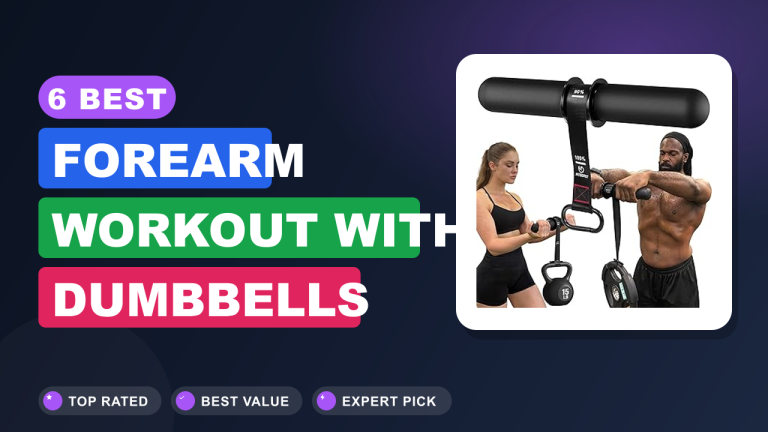
Image source: YouTube / Ellipse Athletics (YouTube thumbnail (fair-use with source credit))
Dumbbell Farmer’s Carries for Endurance and Grip
This is a compound grip exercise disguised as a forearm finisher. Pick up a heavy dumbbell in each hand. Keep your chest up and shoulders back.
Walk for distance or time.
The constant isometric contraction trains your flexors, your fingers, and your entire grip chain. It also builds endurance that carries over to deadlifts, rows, and pull-ups.
Use a weight that forces you to actively squeeze the handle. Walk 30-50 yards per trip. Do 3-4 trips.
Rest 60-90 seconds between sets.
Hammer Curls for Brachioradialis Growth
Grab a dumbbell in each hand with a neutral grip (thumbs pointing up, like you’re holding a hammer). Keep your elbows pinned to your sides. Curl the dumbbells toward your shoulders.
Squeeze at the top. Lower with control.
Hammer curls hit the brachioradialis hard. That muscle adds visible width to the outer forearm. It also carries over to pulling strength because the brachioradialis assists during rows and pull-ups.
Use a moderate weight. 3 sets of 10-15 reps works well. Do these after your wrist curls and reverse wrist curls to avoid pre-fatiguing your grip before isolation work.
Step-by-Step: How to Perform Each Exercise Safely
Proper Wrist Positioning During Curls
Here is where most injuries happen. People hyperextend or hyperflex their wrists at the bottom of the movement. That puts the joint in a vulnerable position and transfers stress to the ligaments instead of the muscles.
For wrist curls, let the dumbbell roll only until you feel a gentle stretch in your flexors. Do not let your wrist collapse into an extreme bent position. If your knuckles touch your forearm, you have gone too far.
For reverse wrist curls, stop the downward movement before your wrist feels strained on the top side. A neutral wrist at the bottom is fine. You do not need full passive extension.
The same lifting principles apply to your other dumbbell work too. Reviewing proper lifting form across all your exercises will keep your joints healthy long term.
Controlled Tempo and Range of Motion
Fast, jerky reps are worthless for forearm training. The muscles are small and respond best to time under tension. Use a 2-second concentric (lifting) phase.
Squeeze for 1 second at the top. Lower over 3 seconds.
That slow eccentric phase is where most of the muscle damage and growth stimulus happens. Rushing through it means missing out on gains.
Count in your head: lift (1-2), squeeze, lower (1-2-3). It feels boring at first. Your forearms will thank you.
How to Know When to Add Weight
Add weight only when you can complete 20 clean, controlled reps across all sets. If your 15th rep turns into a sloppy mess, stay at that weight until form holds.
Jumping up too fast is the number one cause of forearm and wrist injuries in dumbbell training. The tendons adapt slower than the muscles. Give them time to catch up.
If you feel any sharp or stabbing pain during a rep, stop immediately. Drop the weight or end the set. That kind of pain means something is wrong.
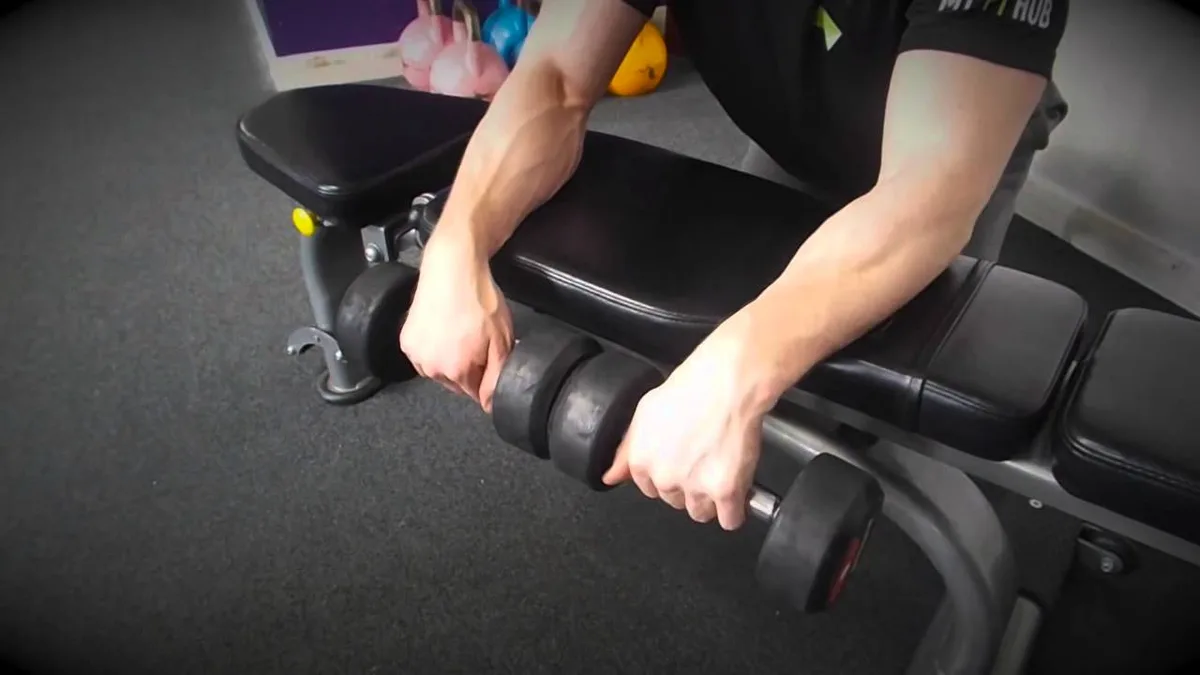
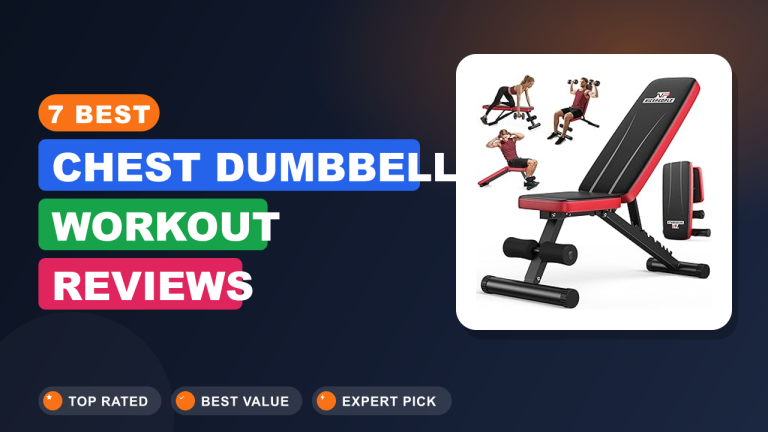
Image source: YouTube / My PT Hub (YouTube thumbnail (fair-use with source credit))
Common Mistakes That Cause Wrist Pain and Injury
Using Too Much Weight Too Soon
This is the most frequent error we see. Someone grabs a 30-pound dumbbell for wrist curls because they can bench 225. Their wrist caves in during the first rep.
Sharp pain shoots through the joint. They either quit forearm training entirely or keep pushing through and develop chronic tendonitis.
Here is the rule: if your wrist position breaks down before your muscles fatigue, the weight is too heavy. Drop down until you can maintain a neutral wrist throughout the entire range of motion. That might mean using 10 pounds when you feel like you should be using 25.
Your wrist tendons are not your pecs. They adapt slowly. Rushing the load is a direct path to injury.
Neglecting the Extensors Entirely
We touched on this earlier, but it deserves its own spotlight. Aggregate feedback from physical therapy case studies shows that extensor weakness is a primary driver of medial epicondylitis (golfer’s elbow) and wrist tendonitis.
The fix is simple. For every set of wrist curls you do, do one set of reverse wrist curls. If you want to be extra careful, do two sets of reverse wrist curls for every set of regular wrist curls.
Your extensors need the work more than your flexors do.
Hyperflexing or Hyperextending the Wrist
Your wrist has a limited safe range of motion. Pushing past it during dumbbell exercises puts stress on the joint capsule and ligaments instead of the muscles.
For wrist curls, stop the downward motion as soon as you feel a stretch in the flexors. Do not let your hand flop into a fully bent position. For reverse wrist curls, stop before your wrist feels strained on the top.
If you feel a pinching sensation in the joint itself, you have gone too far. Back off the range of motion by about 20 percent and see if the pain disappears.
How to Build a Dumbbell Forearm Routine
Sample Workout: Two Sessions Per Week
Here is a straightforward routine you can tack onto the end of any upper body day. It takes about 15 minutes and hits all three muscle groups.
| Exercise | Sets | Reps | Rest |
|---|---|---|---|
| Dumbbell Wrist Curls (palms-up) | 3 | 15-20 | 60 sec |
| Dumbbell Reverse Wrist Curls (palms-down) | 3 | 15-20 | 60 sec |
| Dumbbell Hammer Curls | 3 | 10-15 | 60 sec |
| Dumbbell Farmer’s Carries | 3 | 30-50 yards | 90 sec |
Do this routine twice per week with at least two days between sessions. Your forearms need recovery time just like any other muscle group.
Rep Ranges, Sets, and Rest Periods
Forearm muscles respond well to higher rep ranges because they are composed of a mix of slow-twitch and fast-twitch fibers. The 15-20 rep sweet spot delivers both hypertrophy and endurance.
Keep rest periods between 60 and 90 seconds. That is long enough to recover your grip but short enough to maintain pump and tension. Longer rest periods let your forearms cool down too much, reducing the metabolic stress that drives growth.
Progression Plan for Steady Gains
Progress looks like this. Hit 20 clean reps on all three sets of an exercise. Add 2.5 to 5 pounds next session.
Start back at 12-15 reps. Build back up to 20. Repeat.
Do not add weight every session. Give it 4-6 weeks before you expect a meaningful jump. Forearm strength moves slowly.
That is normal.
If you stall for more than three consecutive sessions, deload. Drop the weight by 20 percent. Work back up over two weeks.
Sometimes a brief reset is all your tendons need to start adapting again.
Who Benefits Most From This Training Approach
Weightlifters and Powerlifters
If your grip gives out before your back or hamstrings, you are leaving pounds on the bar. Strengthening your forearms directly translates to holding heavier deadlifts, rows, and shrugs. A stronger grip means you can focus on the prime movers instead of worrying about the bar slipping.
Rock Climbers and Grip-Dependent Athletes
Rock climbers already have strong flexors from hanging and pulling. But they often neglect extensors. That imbalance leads to pulley injuries and elbow pain.
Adding reverse wrist curls and extensor-focused work balances the forearm and prevents overuse injuries common in climbing.
Anyone Recovering From Wrist Imbalance (With Caution)
If you have had wrist tendinitis or golfer’s elbow in the past, forearm dumbbell training can help. But you need to start very light. Use 3-5 pounds.
Focus on slow, controlled reps. Stop immediately if you feel sharp pain.
Consider working with a physical therapist to identify your specific imbalances. They can prescribe targeted exercises that address your exact weakness. Blindly following a general routine might aggravate the injury instead of healing it.
When to See a Professional (And When to Train Through It)
Signs You’re Pushing Into Injury Territory
Some soreness is normal after forearm training. A dull ache in the belly of the muscle is fine. Sharp pain at the wrist joint or elbow insertion is not.
If you feel any of these, stop:
- Sharp or stabbing pain during a specific movement
- Pain that lingers for more than 72 hours after a session
- Swelling or redness around the wrist or elbow
- Clicking or popping accompanied by pain
- Numbness or tingling in your fingers
These are not signs to push through. They are signs to back off, rest, and possibly see a professional.
How to Modify Around Existing Wrist Issues
If you have chronic wrist discomfort but want to keep training, you can modify almost every exercise. Reduce the range of motion. Use lighter weight.
Slow down the tempo. Switch to neutral-grip variations.
For wrist curls, try doing them on a flat surface instead of hanging off your knee. That gives you more control over the range of motion. For farmer’s carries, use a towel wrapped around the handle to spread the pressure across your palm.
The goal is to maintain stimulus without provoking pain. If every modification still hurts, take two full weeks off from direct forearm work. Let the tendons settle.
Then reintroduce exercises at half the weight you were using.
Frequently Asked Questions
How often should I train my forearms with dumbbells?
Train forearms twice per week with at least 48 hours between sessions. They recover slower than larger muscle groups because of the dense tendon tissue. Three sessions per week is possible for advanced lifters, but start with two.
Can I train forearms every day?
No. Forearm tendons need recovery time. Training them daily leads to tendinitis, joint irritation, and stalled progress.
Stick to 2-3 sessions per week maximum. Rest days are when the growth actually happens.
What weight dumbbells should I start with for forearm exercises?
Start with 5-15 pounds for wrist curls and reverse wrist curls. Men typically start at the higher end. Women typically start at the lower end.
For farmer’s carries, use a weight that challenges your grip within 30-50 yards. Hammer curls work well with 10-20 pounds.
Should I do forearm exercises before or after my main workout?
Do forearm exercises at the end of your workout. Pre-fatiguing your grip makes it harder to hold dumbbells during compound lifts. Save isolation work for the final 15 minutes of your session.
How long until I see results from training forearms?
Noticeable size gains take 8-12 weeks of consistent training. Strength gains come faster, usually within 4-6 weeks. Forearms are stubborn because they get daily use.
Be patient and progressive.
Can I train forearms if I already have wrist pain?
Only if the pain is mild and muscular. Sharp joint pain means stop and consult a physical therapist. For mild discomfort, reduce weight by 50 percent, shorten your range of motion, and avoid any movement that reproduces the sharp sensation.