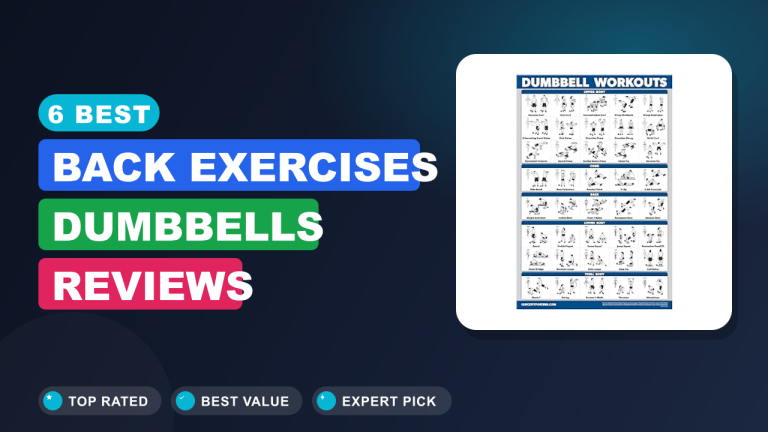
Beginner’s Guide to How to Workout Triceps With Dumbbells
If you've ever searched for "how to workout triceps with dumbbells" and ended up with sore elbows instead of visible results, you're not alone. The triceps make up roughly two-thirds of your upper arm mass, yet most people train them wrong or barely train them at all. They're the horse shoe shaped muscle on the back of your arm, and they're the key to filling out your sleeves.
The problem is that dumbbell triceps work looks deceptively simple. You just extend your arm, right? Not quite.
According to EMG research published through the National Strength and Conditioning Association, triceps activation varies dramatically based on elbow position, grip orientation, and shoulder angle. Get those wrong and your shoulders or chest steal the load. Get them right, and you'll feel a burn that tells you exactly where the growth happens.
Let's break down how to actually do this.
Quick Answer
To workout triceps with dumbbells, choose three to four isolation exercises per session. Perform each for three sets of eight to fifteen reps. Keep your elbows fixed at your sides or pointed at the ceiling.
Control the lowering phase for two to three seconds. Extend fully at the top and squeeze. Rest sixty to ninety seconds between sets.
Train triceps once or twice per week.
Why Triceps Feel Stubborn (and Why Dumbbells Fix That)
Here's the honest truth most articles skip. Your triceps already work hard during chest day and shoulder day. Every time you bench press or overhead press, the long head of your triceps fires to lock out the weight.
So if you're only doing compound lifts, your triceps get some stimulus. But not enough to grow visibly.
The triceps need direct, isolated work to reach full development. And dumbbells are actually better for this than barbells or cables in several ways.
First, dumbbells let you move through a fuller range of motion. With a barbell, your hands are locked in position. With dumbbells, you can rotate your wrists, adjust your elbow angle, and find the path that hits your triceps hardest without forcing your shoulders into a compromised position.
Second, dumbbells force each arm to work independently. That matters because most of us have a dominant arm that cheats for the weak one. With dumbbells, your stronger arm can't compensate.
The weaker side has to do its share, which over time fixes muscle imbalances that make arms look uneven.
Third, dumbbells are accessible. You don't need a cable machine or a preacher bench or a specialized attachment. You need a pair of dumbbells and a flat bench.
Maybe not even the bench. That's it.
The catch is that you have to use proper form. Dumbbells give you freedom, but freedom also means room for error. Flare your elbows during a skull crusher and you transfer tension from your triceps to your shoulder joint.
Rush the eccentric and you lose the stretch that drives growth. So let's get specific about what you're actually trying to target.
The Three Heads of the Triceps – What You're Actually Trying to Hit
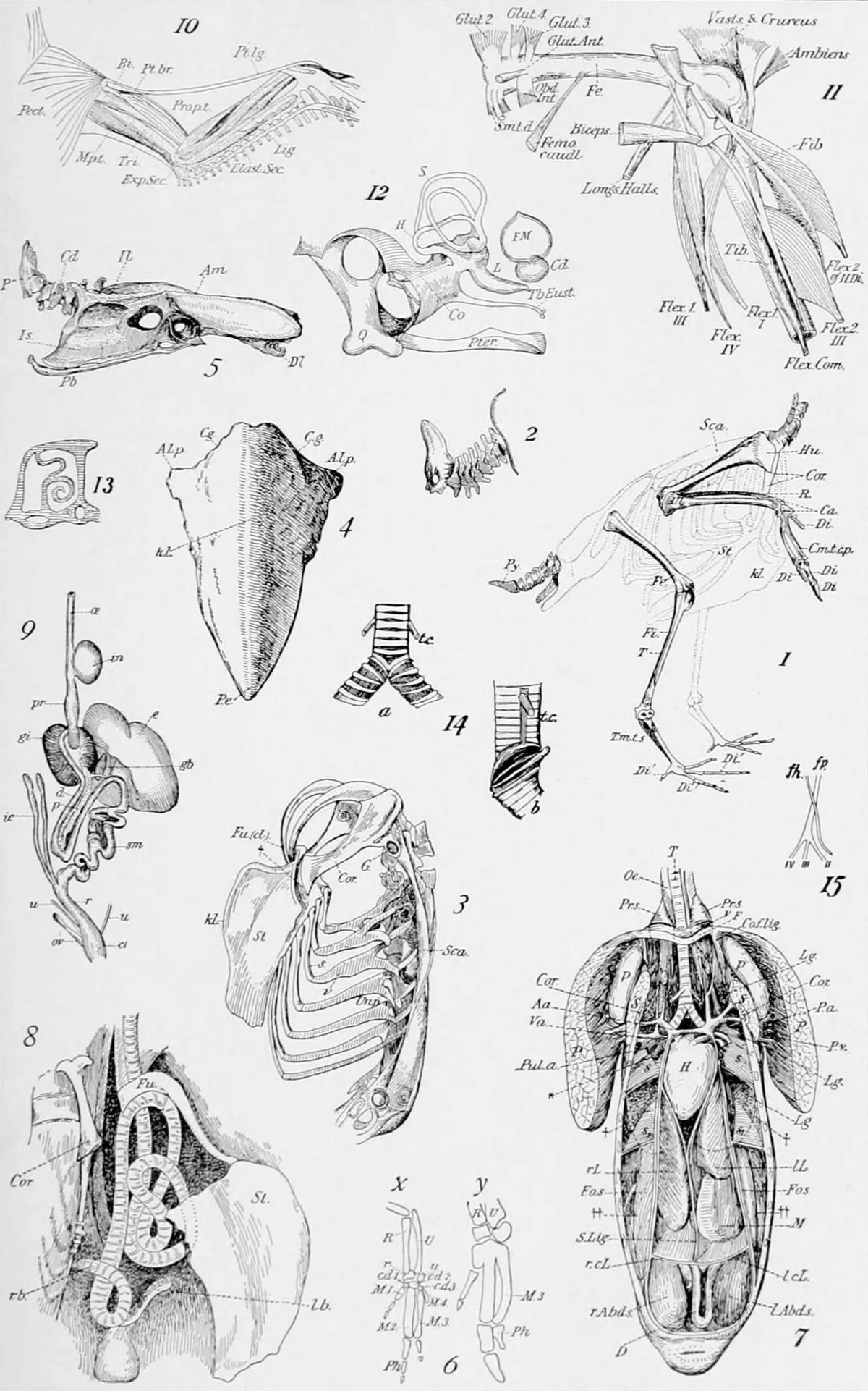
Image source: Wikimedia Commons / artist not specified; Ernest Ingersoll is the author of the article.
The triceps brachii has three heads. The long head runs along the inside of your arm, closest to your body. The lateral head sits on the outside and gives your arm that defined horseshoe look when it's developed.
The medial head sits underneath both and acts as a deep stabilizer.
Each head originates at a different point on your shoulder blade and upper arm bone, but they all insert at the same spot on your elbow. That common insertion means every triceps exercise extends your elbow. But depending on your arm position, you shift emphasis between the heads.
Here's what the research and practical experience confirm.
The long head is the largest of the three. It gets the most stretch when your arm is overhead. That's why overhead triceps extensions are the go to move for long head development.
If you want mass on the inner part of your arm, you need exercises where your elbows are above your shoulders.
The lateral head fires most when your palms face down or when your arms are at your sides. Think pushdown style movements, but with dumbbells, that means kickbacks and close grip pressing variations.
The medial head activates during any triceps extension but especially during the lockout phase at the top of the movement.
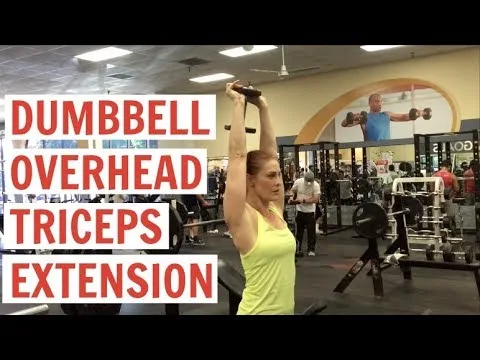
Image source: YouTube / Women's Strength Nation by Holly Perkins (YouTube thumbnail (fair-use with source credit))
The practical takeaway is simple. If you only do one triceps exercise, you only develop one head. To build full, balanced arms, you need at least one overhead movement and one arms at your sides movement per session.
We'll cover exactly which exercises deliver those angles in the next section.
What You'll Need: Dumbbells, a Bench, and One Non-Negotiable Rule
You don't need a fancy setup. Here's the short list.
| Item | Purpose | Notes |
|---|---|---|
| Pair of dumbbells | Resistance for all exercises | Adjustable or fixed weight works; you need a weight you can control for 8-15 reps with perfect form |
| Flat workout bench | Support for lying and seated exercises | Can substitute with a sturdy chair or the floor for some moves |
| Grip chalk or straps (optional) | Keeps dumbbell secure during overhead work | Helpful once you go above 30-40 pounds per hand |
That's genuinely it. No cable tower. No EZ bar.
No preacher bench. A pair of dumbbells and a bench cover every exercise we're about to discuss.
The one non-negotiable rule is this. Control the weight on the way down. The lowering phase of a triceps extension, often called the eccentric, is where most of the muscle damage and subsequent growth stimulus happens.
If you drop the dumbbell down fast and muscle it back up, you're skipping the part that actually builds tissue. Aim for a two to three second lowering phase on every rep. That slow eccentric is what separates effective triceps training from elbow abuse.
If you're unsure about your current setup, our guide on how to properly lift dumbbells covers the foundational form cues that apply to every upper body movement. And if you're working with adjustable dumbbells, it's worth knowing how to fix common mechanical issues so you never have to skip a session due to equipment failure.
The 5 Best Dumbbell Triceps Exercises (Ranked by Activation)
These five exercises cover the full spectrum of triceps development. Each targets the muscle from a different angle. You don't need to do all five in one session.
Pick two or three per workout and rotate them over time.
Overhead Dumbbell Extension – Best for Long Head Growth
This is the single most important exercise for triceps mass. When your arms are overhead, the long head is stretched to its maximum length. That stretch under load is a powerful growth signal.
You can do this seated or standing. Seated is more stable and lets you focus on the contraction. Standing engages your core and allows slightly heavier weight.
Both work.
Hold one dumbbell with both hands cupping the inner plate, or hold a single dumbbell in one hand. Press it overhead until your arms are fully extended. Then lower the dumbbell behind your head by bending only at the elbows.
Keep your upper arms stationary and pointing straight up. Lower until you feel a deep stretch in your triceps, then extend back to the start.
Keep your elbows pointed at the ceiling. If they flare outward, you lose tension on the long head and transfer load to your shoulders. If you're new to this exercise, start with a light weight and prioritize depth over load.
Lying Dumbbell Extension (Skull Crusher) – Best for Overall Mass
The lying dumbbell extension works all three heads simultaneously, but it demands respect for safety. We'll cover the danger factor in detail later, but for now, know that form is everything here.
Lie on a flat bench with a dumbbell in each hand. Press the dumbbells up until your arms are straight above your chest, palms facing each other. Without moving your upper arms, bend your elbows and lower the dumbbells toward your ears.
Stop when your forearms are past parallel to the floor, then extend back to the starting position.
Your elbows should stay pointed toward the ceiling throughout. If your elbows drift outward, you shift tension away from the triceps. Keep your upper arms perpendicular to the floor.
This exercise puts the medial head under heavy load, and it builds the kind of dense triceps that show in every angle.
Single-Arm Dumbbell Kickback – Best for Mind-Muscle Connection
Kickbacks get a bad reputation because most people do them wrong. They use too much weight and turn the movement into a shoulder exercise. Done correctly, kickbacks are fantastic for isolating the lateral head.
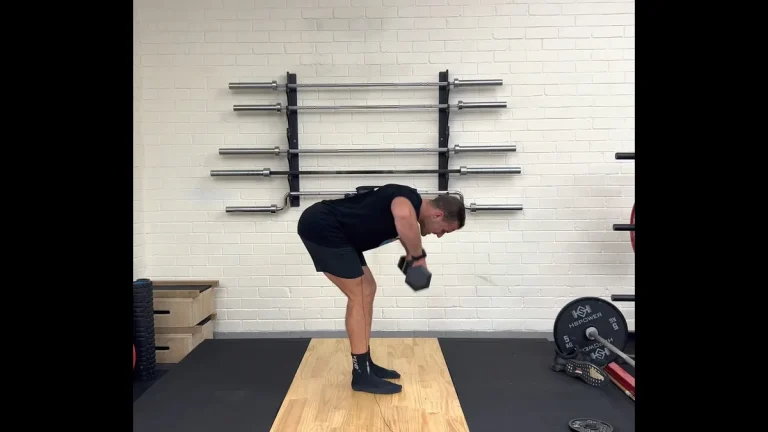
Hinge at your hips until your torso is nearly parallel to the floor. Hold a dumbbell in one hand with your upper arm pinned to your side and your elbow bent at ninety degrees. Without moving your upper arm, extend the dumbbell backward until your arm is straight.
Squeeze your triceps hard at the top, then lower slowly.
The key is to keep your upper arm completely still. If your shoulder moves, you've lost the isolation. Use a weight that lets you feel the contraction clearly.
For most people, that's lighter than they expect. This is a great movement to include in your warmup to activate the triceps before heavier work.
Close-Grip Dumbbell Press – Best for Heavy Loading
The close-grip dumbbell press is essentially a bench press variation, but bringing your hands closer together shifts the emphasis to your triceps. It lets you handle heavier weight than any isolation exercise, which means more mechanical tension and more growth potential.
Lie on a flat bench holding two dumbbells at your chest with your palms facing each other. Keep the dumbbells close together, almost touching throughout the movement. Press them up until your arms are fully extended.
Lower back down with control.
The dumbbells should stay aligned with your lower chest, not your upper chest. Keeping them close together maximizes triceps activation and minimizes chest involvement. This exercise also pairs well with the broader topic of building upper body strength, which is covered in our guide on how to build muscle with dumbbells.
Neutral-Grip Overhead Extension – Best for Shoulder-Friendly Work
If traditional overhead extensions bother your shoulders, the neutral grip version often solves the problem. Instead of holding the dumbbell with palms facing forward or cupping the plate, hold one dumbbell vertically with both hands, palms facing each other.
Sit on a bench with back support. Press the dumbbell overhead. Lower it behind your head while keeping your upper arms vertical.
The neutral grip position puts your shoulders in a more natural rotation, reducing impingement risk while still delivering the long head stretch.
This is an excellent alternative for anyone with a history of shoulder issues. It's also a good finisher at the end of a triceps session because it requires lighter weight and focuses on blood flow.
How Many Sets, Reps, and Weights to Use (Real Numbers)
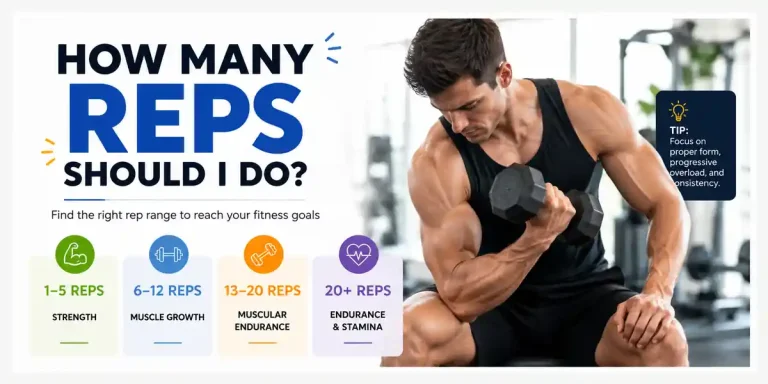
The rep range you choose determines the outcome. For triceps growth, the sweet spot sits between 8 and 15 reps per set. That range delivers enough mechanical tension to stimulate muscle fibers while keeping the time under tension high enough to trigger metabolic stress.
Here's how to break it down by goal.
| Goal | Reps per Set | Sets per Exercise | Rest Between Sets | Weekly Frequency |
|---|---|---|---|---|
| Muscle growth (hypertrophy) | 8–12 | 3–4 | 60–90 seconds | 1–2 times |
| Strength and density | 5–8 | 4–5 | 90–120 seconds | 1–2 times |
| Endurance and tone | 12–15 | 2–3 | 45–60 seconds | 2–3 times |
Pick a weight that makes the last two reps of each set feel challenging but not impossible. If you can complete all reps without breaking form, go heavier next session. If you fail before reaching the target rep count, drop the weight slightly.
A common mistake is using the same weight for every exercise. Your close-grip press will handle more weight than your kickbacks. That's normal.
The close-grip press is a compound movement. The kickback is an isolation move. Adjust accordingly.
For most people, a good starting point looks like this. Overhead extensions with a 20 to 30 pound dumbbell. Skull crushers with 15 to 25 pounds per hand.
Kickbacks with 10 to 15 pounds. Close-grip presses with 30 to 45 pounds per hand. These numbers shift based on your training history, but they give you a reference point.
If you're newer to training, start at the lower end of the rep range and focus on form first. The weight will come. Rushing to heavy loads before your connective tissues adapt is how elbow pain starts.
Common Mistakes That Kill Triceps Gains
Most people do triceps work. Few people do it well. These four mistakes are the most common reasons your arms aren't growing the way you expect.
Flaring Your Elbows
This is mistake number one by a wide margin. When your elbows flare out to the sides during a skull crusher, overhead extension, or kickback, you immediately reduce triceps activation. The tension shifts from the muscle belly to the shoulder joint capsule.
Keep your elbows pointed where they should be. For overhead work, that means pointing straight at the ceiling. For kickbacks, pinned to your ribs.
For skull crushers, perpendicular to the floor. If your elbows drift, stop the set and reset.
Using Your Shoulders Instead of Your Triceps
Watch someone do overhead extensions with heavy weight. You'll often see their shoulders shrug up to help lift the dumbbell. That's the body's natural way of recruiting more muscle to move a load it can't handle.
The fix is simple. Lower the weight until you can perform the movement without shoulder involvement. Keep your shoulders down and back, engaged but not moving.
Your upper arms should remain completely still during isolation exercises. Only your forearms move.
Half-Reps at Lockout
Partial range of motion is a major reason triceps stay underdeveloped. Many people stop an inch or two short of full extension because that's where the movement gets harder. But that last bit of range is where the medial head activates most.
Fully extend your arm at the top of every rep. Not violently. Not hyperextended.
Just a clean, controlled lockout where you feel the triceps contract. Then lower with control. That full range is what builds the complete muscle.
Gripping the Dumbbell Too Tight
This one surprises people. When you death grip a dumbbell, you recruit your forearm flexors and wrist stabilizers. That creates tension overflow that reduces your ability to feel the triceps working.
Hold the dumbbell firmly but not aggressively. Think of your hand as a hook. The triceps does the work of extending the arm.
The hand just holds the weight in place. If your forearm is cramping before your triceps is tired, loosen your grip.
Our guide on how to use wrist straps with dumbbells can help if grip fatigue is limiting your triceps work. Straps let you hold heavier weight without your forearms burning out first.
The Most Dangerous Exercise (and How to Do It Safely)

Image source: YouTube / FIT.nl (YouTube thumbnail (fair-use with source credit))
The lying dumbbell extension is the most effective overall triceps builder with dumbbells. It's also the easiest to injure yourself on. The name skull crusher exists for a reason.
If you lose control of the weight during the lowering phase, you're dropping it directly toward your face.
Here's how to do it safely.
First, always use a weight you can control for the full set. Never max out on skull crushers. Leave at least two to three reps in the tank.
If your form breaks down on rep eight, the weight is too heavy.
Second, keep your elbows pointed at the ceiling. If they flare out during the set, you're at higher risk of dropping the dumbbell because your mechanical advantage changes unpredictably.
Third, control the descent. The danger zone is the bottom of the movement when your forearms are past parallel. That's where your triceps is under maximum stretch and fatigue.
If you rush through that position, you can lose control.
Fourth, consider using a spotter or performing the exercise on the floor instead of a bench. Floor press style skull crushers limit how far you can lower the weight because your elbows hit the ground first. That built in safety stop makes the exercise much safer for solo training.
If you feel sharp pain in your elbow during skull crushers, stop immediately. That's not normal muscle fatigue. That's a signal that your form is off or the load is too heavy.
Switch to overhead extensions for that session instead.
When to Do Triceps – Before or After Chest and Shoulders?
Order matters. If your primary goal is arm size, you have two valid approaches.
Option one is to train triceps after chest and shoulders. This is the standard approach. Your triceps are already fatigued from pressing movements, so you finish them off with isolation work.
The advantage is that your chest and shoulders get full strength for their primary movements. The disadvantage is that your triceps are pre-fatigued, so you may not lift as heavy during isolation work.
Option two is to train triceps first on a dedicated arm day or before pressing work. This approach ensures your triceps are fresh for heavy isolation work. The tradeoff is that your bench press and overhead press numbers may drop because your triceps are already tired.
Which one should you choose? If arm growth is your priority, train triceps first or on a separate day. If overall pressing strength matters more, train triceps after.
For most people, the best compromise is to dedicate one session per week to triceps first and let your second session happen after pressing. That gives you the best of both worlds.
This ordering question also applies to other muscle groups. Our guide on how to workout upper back with dumbbells explains similar principles for back training timing.
A Simple Triceps Workout You Can Do Right Now
Here's a complete session you can run with just dumbbells and a bench. It takes about 30 minutes.
| Exercise | Sets | Reps | Rest |
|---|---|---|---|
| Overhead dumbbell extension (seated) | 3 | 10–12 | 60 sec |
| Close-grip dumbbell press | 3 | 8–10 | 90 sec |
| Single-arm dumbbell kickback | 3 | 12–15 | 45 sec |
| Neutral-grip overhead extension (finisher) | 2 | 15 | 45 sec |
Warm up with light band extensions or 10 to 15 reps with a very light dumbbell before starting. Do not skip the warmup. Cold connective tissues are more prone to injury.
Perform the exercises in this order. Overhead work first because it targets the long head and requires the most control. Then the heavier close-grip press.
Then kickbacks for isolation. Finish with the neutral-grip extension for a blood flow pump.
Stick with this routine for four to six weeks. After that, swap one or two exercises for alternatives we covered earlier to keep progress moving.
How to Progress Without Hurting Your Elbows
Progressive overload is the principle of gradually increasing demand on your muscles so they adapt and grow. But with triceps, you have to be careful. The elbow joint is small and the triceps tendon attaches directly to it.
Aggressive jumps in weight can lead to tendonitis that takes weeks to recover from.
Follow the two for two rule. If you can complete two more reps than your target on the last set for two consecutive sessions, increase the weight by the smallest increment available. For most dumbbells, that's 2.5 or 5 pounds.
Do not jump by 10 pounds.
If you're using adjustable dumbbells, small increments are easy to manage. Fixed dumbbells may require buying an intermediate weight. That's worth the investment to keep your elbows healthy.
Also vary your rep ranges over time. Spend four weeks in the 8 to 12 rep range. Then four weeks in the 12 to 15 range.
Then four weeks in the 6 to 8 range with heavier weight. Cycling your rep ranges prevents stagnation and gives your tendons time to adapt to heavier loads.
When Elbow Pain Means Stop (Injury Warning Signs)
Not all discomfort is bad. Muscle burn during the last few reps is normal. But certain types of pain signal trouble.
Sharp pain during the lowering phase of any triceps exercise is a red flag. That indicates stress on the triceps tendon or the elbow joint itself. Stop the exercise immediately.
Pain that persists after your workout is also concerning. If your elbow aches the next day or feels tender to the touch, back off triceps work for at least a week. Switch to chest and shoulder exercises that don't load the triceps directly during that time.
Clicking or popping in the elbow joint during extensions isn't necessarily dangerous if there's no pain. But if popping is accompanied by pain, have it evaluated by a sports medicine professional.
The safest approach is to warm up thoroughly, avoid ego lifting, and listen to your body. Missing a week due to caution is better than missing a month due to injury.
Frequently Asked Questions
Can I build triceps with just dumbbells at home?
Yes. Dumbbells provide enough resistance and range of motion to build significant triceps mass. You need a bench for some exercises, but many movements can be done standing or on the floor.
Consistency and proper form matter more than equipment variety.
How many times per week should I train triceps?
One to two sessions per week is ideal for most people. More than that without adequate recovery can overload the elbow joint. If you train triceps twice per week, space sessions at least 48 hours apart.
Why don't I feel my triceps working during exercises?
You're likely using too much weight or letting your shoulders take over. Drop the weight by 20 to 30 percent and focus on slow, controlled reps. Keep your upper arms still.
You should feel a deep burn in the back of your arms within a few controlled reps.
Are skull crushers safe for beginners?
They can be safe with light weight and strict form. Beginners should start with overhead extensions or kickbacks first to build mind-muscle connection. Once you can perform those with control, add skull crushers using a weight that feels easy for the first few reps.
Should I do triceps on arm day or with chest?
Either works depending on your goal. For arm growth, a dedicated arm day or triceps first is better. For overall strength, train triceps after chest.
Many lifters benefit from both approaches on different days of the week.
How This Workout Fits Into Your Full Routine
The triceps don't exist in isolation. They work alongside your chest, shoulders, and even your back during compound movements. That means your weekly schedule matters.
If you train triceps on Monday, avoid heavy chest or shoulder work on Tuesday. Your triceps need time to recover. A good rule of thumb is to leave at least 48 hours between triceps sessions or between triceps work and heavy pressing.
Here's a sample weekly split that works well for most people.
| Day | Workout Focus | Triceps Involvement |
|---|---|---|
| Monday | Chest and triceps | Direct triceps work after chest |
| Tuesday | Back and biceps | Minimal triceps load |
| Wednesday | Rest or light cardio | Full recovery |
| Thursday | Shoulders and triceps | Direct triceps work after shoulders |
| Friday | Legs and core | No triceps load |
| Saturday | Full arm day or rest | Optional extra triceps work |
| Sunday | Rest | Full recovery |
If you prefer push pull legs, put triceps on your push days. That gives you two triceps sessions per week with adequate spacing.
The key is to avoid training triceps the day before a heavy bench press or overhead press session. Your central nervous system needs time to recover from the high intensity of close-grip presses and overhead extensions.
How to Combine Triceps With Biceps for Arm Day
Many lifters dedicate one day per week to arms. That's smart if arm growth is a priority. But the order matters.
Always train triceps before biceps on arm day. Here's why. Your triceps are larger and more powerful than your biceps.
They need your freshest energy for heavy compound movements. Biceps recover faster and respond well to higher volume at the end of a session.
A balanced arm day looks like this.
Start with a compound triceps movement. Overhead extensions or close-grip presses for three to four sets. Then move to a compound biceps movement like standing dumbbell curls.
Then finish with isolation work for both. Kickbacks for triceps. Hammer curls for biceps.
End with a high rep finisher for both muscle groups.
Keep the total volume manageable. Six to eight working sets per muscle group is plenty. More than that risks overtraining the elbow joint, especially since your triceps tendon and biceps tendon both attach near the same area.
If you're following a dedicated arm day approach, our guide on what angle for incline dumbbell curl can help you optimize your biceps work to match your triceps routine.
How to Adjust for Home Workouts Without a Bench
Not everyone has a weight bench. That's fine. You can still build impressive triceps with dumbbells and a floor.
The overhead extension works perfectly standing. Stand with feet shoulder width apart. Hold one dumbbell overhead with both hands.
Lower behind your head. Extend back up. No bench needed.
The kickback works standing or kneeling on a flat surface. Hinge at your hips. Keep your back flat.
Extend the dumbbell behind you. The movement is identical to the bench version.
For skull crushers, perform them on the floor. Lie on your back with your knees bent. Press the dumbbells up.
Lower them toward your forehead. Your elbows will stop when they hit the ground, which actually makes the exercise safer by limiting range of motion.
The close-grip press can also be done on the floor. Lie flat. Press the dumbbells up from your chest.
Your upper arms stop when they hit the ground, preventing overstretching at the bottom.
The only real limitation of floor work is range of motion for overhead movements. Standing overhead extensions provide full range. Floor pressing limits the stretch slightly.
But the tradeoff in safety is worth it for many home gym users.
How Long Until You See Results
Realistic timelines matter. Triceps are stubborn because they're already used daily for pushing and stabilizing. They don't respond as quickly as biceps or shoulders.
With consistent training two times per week, most people notice visible changes in about eight to twelve weeks. You'll feel it sooner. The muscle burn and pump tell you something is happening.
But visible shape takes time.
The lateral head develops fastest for most people. That's the horseshoe shape on the outside of your arm. The long head takes longer because it requires consistent overhead work with adequate range of motion.
Measure progress by reps and weight, not just the mirror. If you increase your overhead extension from 20 pounds for 10 reps to 25 pounds for 10 reps over eight weeks, you're building muscle. The mirror will catch up.
If you hit a plateau, change your rep range or swap exercises. Four weeks of heavy low rep work followed by four weeks of lighter high rep work keeps progress moving. Our guide on how to build muscle with dumbbells covers these progression principles in more detail.
Final Practical Takeaways
Let's boil this down to what actually matters.
Stick to three or four exercises per session. Rotate between overhead work and arms at your sides work. Control every rep.
Keep your elbows where they belong. Increase weight in small steps. Give your elbows time to recover.
The best triceps workout is the one you do consistently with proper form. Dumbbells give you everything you need. No machines.
No cables. Just a pair of weights and the willingness to slow down and feel the muscle work.
Start with the sample workout in this guide. Run it for four weeks. Then swap in exercises you haven't tried.
Keep your elbows healthy. Trust the process. The results will follow.
How This Workout Fits Into Your Full Routine
The triceps don't exist in isolation. They work alongside your chest, shoulders, and even your back during compound movements. That means your weekly schedule matters.
If you train triceps on Monday, avoid heavy chest or shoulder work on Tuesday. Your triceps need time to recover. A good rule of thumb is to leave at least 48 hours between triceps sessions or between triceps work and heavy pressing.
Here's a sample weekly split that works well for most people.
| Day | Workout Focus | Triceps Involvement |
|---|---|---|
| Monday | Chest and triceps | Direct triceps work after chest |
| Tuesday | Back and biceps | Minimal triceps load |
| Wednesday | Rest or light cardio | Full recovery |
| Thursday | Shoulders and triceps | Direct triceps work after shoulders |
| Friday | Legs and core | No triceps load |
| Saturday | Full arm day or rest | Optional extra triceps work |
| Sunday | Rest | Full recovery |
If you prefer push pull legs, put triceps on your push days. That gives you two triceps sessions per week with adequate spacing.
The key is to avoid training triceps the day before a heavy bench press or overhead press session. Your central nervous system needs time to recover from the high intensity of close-grip presses and overhead extensions.
How to Combine Triceps With Biceps for Arm Day
Many lifters dedicate one day per week to arms. That's smart if arm growth is a priority. But the order matters.
Always train triceps before biceps on arm day. Here's why. Your triceps are larger and more powerful than your biceps.
They need your freshest energy for heavy compound movements. Biceps recover faster and respond well to higher volume at the end of a session.
A balanced arm day looks like this.
Start with a compound triceps movement. Overhead extensions or close-grip presses for three to four sets. Then move to a compound biceps movement like standing dumbbell curls.
Then finish with isolation work for both. Kickbacks for triceps. Hammer curls for biceps.
End with a high rep finisher for both muscle groups.
Keep the total volume manageable. Six to eight working sets per muscle group is plenty. More than that risks overtraining the elbow joint, especially since your triceps tendon and biceps tendon both attach near the same area.
If you're following a dedicated arm day approach, our guide on what angle for incline dumbbell curl can help you optimize your biceps work to match your triceps routine.
How to Adjust for Home Workouts Without a Bench
Not everyone has a weight bench. That's fine. You can still build impressive triceps with dumbbells and a floor.
The overhead extension works perfectly standing. Stand with feet shoulder width apart. Hold one dumbbell overhead with both hands.
Lower behind your head. Extend back up. No bench needed.
The kickback works standing or kneeling on a flat surface. Hinge at your hips. Keep your back flat.
Extend the dumbbell behind you. The movement is identical to the bench version.
For skull crushers, perform them on the floor. Lie on your back with your knees bent. Press the dumbbells up.
Lower them toward your forehead. Your elbows will stop when they hit the ground, which actually makes the exercise safer by limiting range of motion.
The close-grip press can also be done on the floor. Lie flat. Press the dumbbells up from your chest.
Your upper arms stop when they hit the ground, preventing overstretching at the bottom.
The only real limitation of floor work is range of motion for overhead movements. Standing overhead extensions provide full range. Floor pressing limits the stretch slightly.
But the tradeoff in safety is worth it for many home gym users.
How Long Until You See Results
Realistic timelines matter. Triceps are stubborn because they're already used daily for pushing and stabilizing. They don't respond as quickly as biceps or shoulders.
With consistent training two times per week, most people notice visible changes in about eight to twelve weeks. You'll feel it sooner. The muscle burn and pump tell you something is happening.
But visible shape takes time.
The lateral head develops fastest for most people. That's the horseshoe shape on the outside of your arm. The long head takes longer because it requires consistent overhead work with adequate range of motion.
Measure progress by reps and weight, not just the mirror. If you increase your overhead extension from 20 pounds for 10 reps to 25 pounds for 10 reps over eight weeks, you're building muscle. The mirror will catch up.
If you hit a plateau, change your rep range or swap exercises. Four weeks of heavy low rep work followed by four weeks of lighter high rep work keeps progress moving. Our guide on how to build muscle with dumbbells covers these progression principles in more detail.
Final Practical Takeaways
Let's boil this down to what actually matters.
Stick to three or four exercises per session. Rotate between overhead work and arms at your sides work. Control every rep.
Keep your elbows where they belong. Increase weight in small steps. Give your elbows time to recover.
The best triceps workout is the one you do consistently with proper form. Dumbbells give you everything you need. No machines.
No cables. Just a pair of weights and the willingness to slow down and feel the muscle work.
Start with the sample workout in this guide. Run it for four weeks. Then swap in exercises you haven't tried.
Keep your elbows healthy. Trust the process. The results will follow.