How to Do Chest Flys with Dumbbells Properly
Here is the article with the introduction and the first five H2 sections.
If you've ever watched someone do chest flys with what looks like perfect control, you know there's a difference between mimicking the movement and actually doing it right. The dumbbell chest fly is one of the most effective isolation exercises for building chest width, but it's also one of the easiest to mess up in a way that hurts your shoulders. This guide covers how to do chest flys with dumbbells the right way, with the form cues that actually protect your joints.
Per research from the National Strength and Conditioning Association (NSCA), the fly produces some of the highest pectoral activation of any dumbbell exercise when performed correctly. The catch is that the same movement with poor form shifts stress directly onto the anterior deltoid and the rotator cuff. As of 2026, that's still the number one reason people give up on this exercise.
Let's fix that.
Quick Answer
Lie on a flat bench with a dumbbell in each hand. Keep a slight bend in your elbows. Lower the weights out to your sides in a wide arc.
Stop when your elbows reach shoulder height. Squeeze your chest to bring the weights back up. Control the movement on both the way down and the way up.
Why Getting This Right Actually Matters
The dumbbell chest fly is not a heavy lift. It's a stretch-and-squeeze movement. The goal isn't to move weight from point A to point B.
It's to create tension through the full range of motion, specifically in the pectoralis major.
When you do it correctly, you target the muscle fibers that give your chest that full, wide appearance. The fly emphasizes the stretch at the bottom and the contraction at the top. That's something compound exercises like the bench press don't do as well.
Research using electromyography (EMG) shows that the fly activates the sternal (lower) portion of the pecs significantly more than pressing variations under certain load conditions.
But here's where it gets tricky. The shoulder joint is in a vulnerable position during the fly. At the bottom of the movement, your arms are extended out to the sides with the weight pulling downward.
That position puts stress on the glenohumeral joint and the anterior capsule. If your form breaks down, you're not building chest. You're inviting an impingement.
That's why form matters more than weight for this exercise. More on that in a moment.
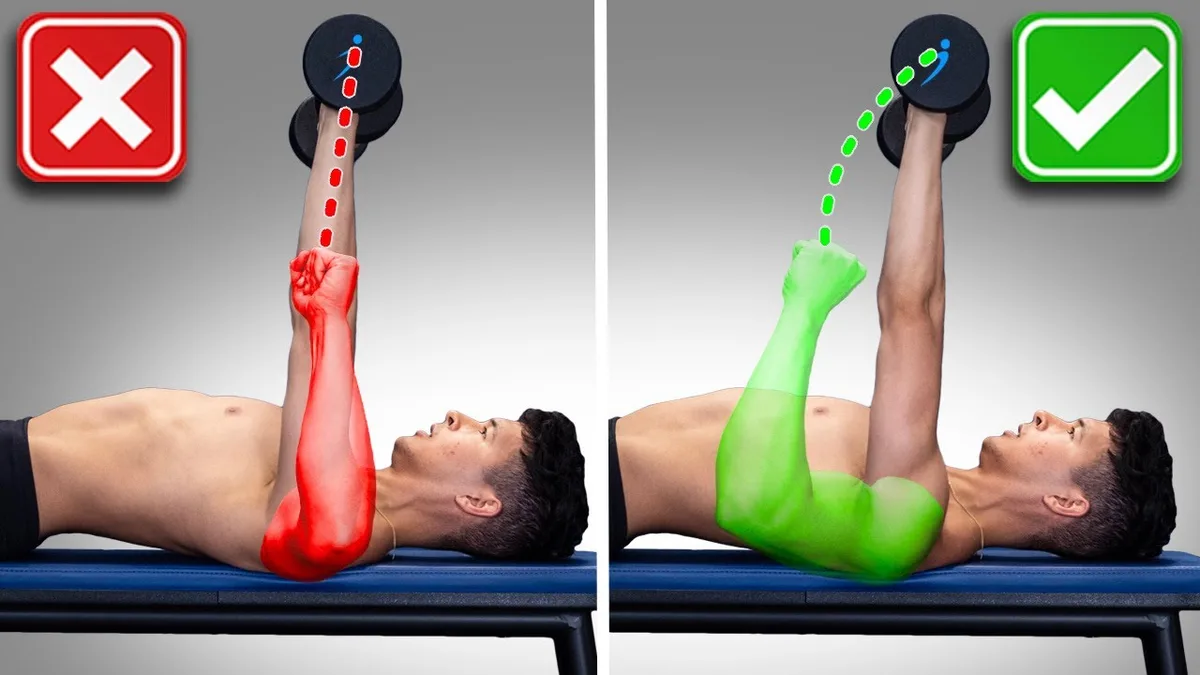
Image source: YouTube / Jeremy Ethier (YouTube thumbnail (fair-use with source credit))
What a Dumbbell Chest Fly Actually Does (and Doesn't Do)
Let's clear up a common confusion. The dumbbell fly is not a pressing movement. You don't push the weights up.
You bring them together in an arc, like you're hugging a large barrel.
The Muscles It Targets
The primary mover is the pectoralis major. Within the pec major, the sternocostal head (the lower, larger portion) gets the most activation during a flat bench fly. The clavicular head (upper chest) gets more work when you incline the bench.
That's covered later in the angle section.
Secondary muscles during the fly include the anterior deltoid, but to a much lesser degree than in a press. The biceps act as stabilizers, keeping the elbow angle fixed. The serratus anterior and the rotator cuff muscles also fire to stabilize the shoulder joint throughout the movement.
What It Doesn't Do
The fly will not replace the bench press for raw strength development. The load you can handle in a fly is significantly lower. If your goal is to push heavy weight, the bench press or a dumbbell press is a better tool.
The fly also won't build tricep strength. Since your elbows remain bent at a fixed angle, the triceps don't extend. This is actually a benefit for people whose triceps fatigue before their chest during pressing movements.
The fly isolates the pecs without involving the triceps.
So where does the fly fit? It's a finishing movement or a targeted isolation exercise. Most programs place it after heavy pressing work.
It's also a solid option for people recovering from shoulder issues who need a lighter chest exercise with controlled range of motion. If you want a complete chest routine, the fly is a great complement to exercises like the incline bench press. For a solid routine, consider learning how to get a bigger chest using dumbbells to build a balanced plan.
The Setup That Saves Your Shoulders
Most people skip the setup and go straight to the lift. That's mistake number one. How you position your body determines whether the fly feels smooth or grindy.

Image source: YouTube / Virginia Mason Franciscan Health (YouTube thumbnail (fair-use with source credit))
Bench Position and Body Contact Points
Start by setting a flat bench to a standard 17 to 18 inch height. Sit down and hold the dumbbells on your thighs. As you lie back, use your legs to help kick the weights into position.
Here are the three contact points to check before you start moving:
- Head: Flat on the bench. Don't lift your head to watch the weights.
- Upper back and shoulders: Shoulder blades retracted and pressed into the bench. This is non-negotiable.
- Feet: Flat on the floor, wide enough for stability.
The Shoulder Blade Rule
Pinch your shoulder blades together as if you're holding a pencil between them. Keep them pinned throughout the set. This does two things.
First, it protects the anterior shoulder capsule by keeping the shoulders in a stable, externally rotated position. Second, it allows the pecs to work through a fuller range of motion without the shoulders taking over.
Your upper back should not lift off the bench at any point. If it does, the weight is too heavy or you've lost your setup.
The Grip
Hold each dumbbell with a neutral grip. Your palms face each other throughout the movement. Some lifters prefer a slight supination (palms angled toward the feet) at the bottom.
Start neutral and experiment once you have the basic form down.
Do not grip the dumbbell too tightly. A death grip recruits the forearm flexors and steals focus from the pecs. Hold it firmly but relaxed enough that you feel the weight in your chest, not your hands.
Step-by-Step: How to Do a Dumbbell Chest Fly the Right Way
Here's the exact sequence. Follow it every time.
Step 1: Starting Position
Lie back with the dumbbells pressed up over your chest. Arms are extended straight up, palms facing each other. Your elbows have a slight bend, roughly 15 to 30 degrees.
This bend stays fixed for the entire rep. Think of your arms as two curved hooks, not straight poles.
Your chest should be slightly elevated from the retracted shoulder blades. The dumbbells should be directly above your shoulders, not above your face or your stomach.
Step 2: The Lowering Phase
This is where most of the work happens. Inhale. Slowly lower the dumbbells out to your sides in a wide arc.
Imagine you're opening your arms to hug a giant beach ball.
Key checkpoints during the lowering phase:
- Elbow angle stays constant. Do not let it straighten or bend more.
- Shoulder blades stay pinned.
- Dumbbells travel out and slightly down, not straight down.
- Lower until your elbows reach shoulder height. Do not go deeper.
Going deeper than shoulder height puts the shoulder joint in a compromised position. The anterior capsule stretches beyond its safe range. If you feel a pinch in the front of your shoulder, you've gone too far.
Step 3: The Bottom Position
Pause briefly at the bottom when your elbows are at shoulder level. You should feel a stretch across your chest. This stretch is the money part of the exercise.
Do not bounce or use momentum to reverse direction.
If you don't feel a stretch, you're either not lowering far enough or your elbow angle is too tight.
Step 4: The Contraction Phase
Exhale. Squeeze your chest to bring the dumbbells back up along the same arc. Think about bringing your elbows together, not your hands.
This mental cue helps activate the pecs rather than the front delts.
Squeeze hard at the top as the dumbbells nearly touch. Hold the contraction for a brief second. The dumbbells should almost kiss each other, but don't let them clang together.
Keep tension on the pecs.
Step 5: The Full Rep
That's one rep. Lower for a count of two to three seconds. Squeeze up for one to two seconds.
Control is everything. If you're rushing, you're cheating yourself out of muscle activation.
A Quick Note on Breathing
Inhale during the lowering phase. Exhale during the contraction. Do not hold your breath.
If you find yourself holding, slow down the tempo. A controlled breath pattern keeps your core stable and your blood pressure in check.
For a complete upper body routine, consider pairing the fly with targeted rowing movements. Our guide on how to perform a single-arm dumbbell row covers form cues that translate well to overall back and posture stability during chest work.
The 5 Most Common Mistakes (and How to Fix Each One)
Even experienced lifters make these errors. Here's what to watch for.
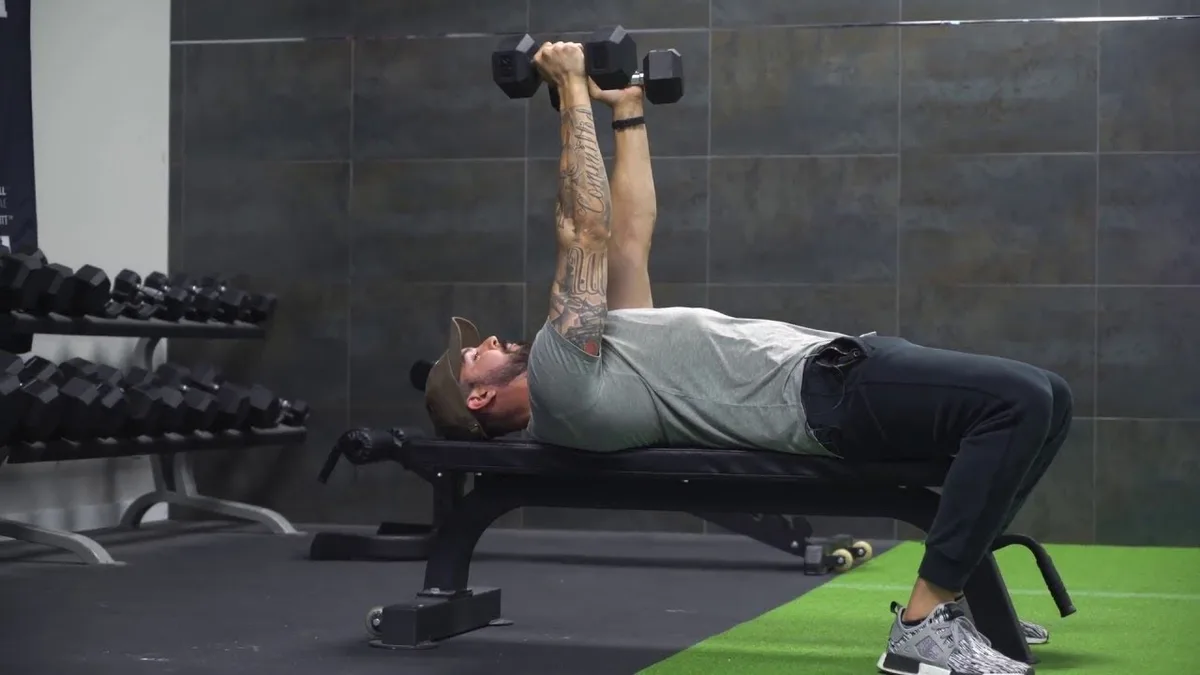
Image source: YouTube / Mind Pump TV (YouTube thumbnail (fair-use with source credit))
Mistake 1: Straightening the Elbows
A locked-out elbow transfers the weight stress from the chest to the elbow joint. It also reduces the leverage of the pecs. The result is a jerky, unstable movement.
The fix: Keep a soft bend in your elbows. Imagine you're holding a basketball between your forearms and your biceps. That angle should not change.
Mistake 2: Dropping Below Shoulder Height
Lowering the dumbbells too deep is the fastest way to irritate the shoulder. The anterior shoulder capsule is not designed for extreme end-range loading.
The fix: Stop when your elbows are in line with your shoulders. If you're not sure where that is, have someone watch your setup. A quick rule: if you can see the dumbbells below the bench line from the side, you've gone too deep.
Mistake 3: Using Momentum
People often swing the weights up using their lower back or their legs. This turns a controlled isolation exercise into a sloppy full-body heave.
The fix: Slow down. Count two to three seconds on the way down. If you can't control the eccentric, the weight is too heavy.
Drop down and focus on form.
Mistake 4: Flaring the Elbows
This happens when the elbows point out to the sides in line with the shoulders. It shifts the load from the pecs to the front delts and increases shoulder stress.
The fix: Keep your elbows slightly forward of your shoulders throughout the movement. Think of leading with your elbows, not your hands.
Mistake 5: Lifting the Upper Back Off the Bench
When the weight gets heavy, people instinctively arch their lower back and lift their shoulder blades off the pad. This reduces chest activation and increases spinal load.
The fix: Keep your shoulder blades pinned. If your back leaves the bench, lower the weight. Your upper back is your anchor.
If the anchor moves, the lift falls apart.
Flat vs Incline vs Decline: Which Angle Is Right for You
The bench angle changes which part of the chest gets the most work. Here's the breakdown.
Flat Bench Fly
The flat bench targets the mid to lower portion of the pectoralis major. This is the standard starting point for most people. It provides the most balanced stretch across the entire chest.
If you're new to the exercise, start here.
Incline Bench Fly
Set the bench to 15 to 30 degrees. The incline shifts more activation to the clavicular head, which is the upper chest. EMG research indicates that incline angles beyond 30 degrees increase front delt involvement without adding pec activation.
Stick to a moderate incline.
This variation is useful if your upper chest lags behind the rest. It's also a good option if flat bench flys cause shoulder discomfort. The incline position places the shoulders in a slightly more externally rotated position, which some people find easier on the joints.
Decline Bench Fly
The decline angle targets the lower chest fibers. It's the least common variation for a reason. The setup is awkward, and the range of motion is shorter.
Most people get enough lower chest activation from the flat bench fly plus pressing work.
| Angle | Primary Target | Best For |
|---|---|---|
| Flat | Mid and lower chest | General chest development |
| 15-30° Incline | Upper chest | Building upper chest fullness |
| Decline | Lower chest | Specialized lower chest work |
Our research suggests most lifters benefit most from flat or slightly incline flys. Decline adds complexity without proportional benefit for most people. If you want to target the lower chest specifically, consider adding our guide on how to do lower chest with dumbbells for targeted exercises.
How Much Weight Should You Use? A Practical Guide
The dumbbell fly is not a strength exercise. It's a hypertrophy and stretch movement. That means the weight should be light enough to control but heavy enough to feel tension.
Starting Weight Recommendations
For men with some training experience, start with 15 to 25 pound dumbbells. For women with similar experience, 10 to 15 pounds is a good starting point. These numbers sound low compared to what you use for presses.
That's normal.
If you can bench press 80 pound dumbbells, your fly weight might be 30 to 40 pounds. The ratio is roughly 35 to 50 percent of your pressing weight. Aggregate user feedback from experienced lifters confirms that trying to go heavier usually results in form breakdown.
How to Know When to Increase
Use the rep quality test. If you can complete 12 controlled reps with perfect form and still feel like you could do one or two more, increase the weight by 2.5 to 5 pounds. If your form breaks on rep 10, stay at the same weight.
Never increase weight if you feel shoulder discomfort. That's your body telling you the load exceeds your shoulder's capacity for this movement pattern.
Reps, Sets, and When to Add Weight
The fly responds best to moderate rep ranges. This isn't a power movement, so low reps with heavy weight aren't effective here.
Recommended Training Parameters
- Reps: 8 to 15 per set. The 10 to 12 range is the sweet spot for most people.
- Sets: 3 to 4 sets per workout. More than that and fatigue compromises form.
- Rest: 60 to 90 seconds between sets. The pecs recover quickly enough that you don't need long breaks.
- Frequency: 1 to 2 times per week. Chest flys are an isolation exercise. They work best after compound pressing work.
Progressive Overload for Flys
Progressive overload works differently here. Since the weight is limited by shoulder health, focus on other ways to increase difficulty.
- Slow down the eccentric. Lower the weight over 3 to 4 seconds instead of 2.
- Increase reps within the 8 to 15 range before adding weight.
- Add a half second pause at the bottom stretch position.
- Reduce rest between sets to 45 seconds.
These methods build tension and time under tension without loading the shoulders beyond their comfort zone.
Dumbbell Fly vs Other Chest Exercises: Where It Fits
The fly fills a specific role in chest training. It's not a replacement for other exercises. It's a complement.
Dumbbell Fly vs Dumbbell Bench Press
The press is a compound movement. It moves more weight and builds more overall chest mass. The fly isolates the pecs with less shoulder and tricep involvement.
Compound movements like the dumbbell bench press work multiple muscle groups and build functional strength. The fly adds the stretch and squeeze that pressing misses.
Our research indicates that a well rounded chest program includes both. Do presses first for strength and mass. Do flys afterward for isolation and detail.
Dumbbell Fly vs Cable Crossover
Both are isolation movements with similar activation patterns. The cable crossover provides constant tension throughout the range of motion. The dumbbell fly has a tension curve that peaks at the bottom stretch and the top squeeze, with a slightly easier middle.
Cables also allow more angle variety. But dumbbells are more accessible for home gyms. The dumbbell fly is simpler to set up and doesn't require a cable machine.
Home lifters often find the fly more practical.
Dumbbell Fly vs Push Ups
Push ups are a compound bodyweight exercise. They involve the chest, shoulders, triceps, and core. The fly isolates the chest specifically.
Push ups build pressing endurance and stability. The fly builds chest width and mind muscle connection.
Both have value. Push ups can serve as a warm up or a finisher. Flys are the targeted chest builder.
Modifications for Shoulder Pain or Limited Mobility
Shoulder issues don't mean you have to skip chest work entirely. Several modifications make the fly safer for sensitive shoulders.
Reduce the Range of Motion
Lower the dumbbells only until your elbows are at 45 degrees instead of 90. This takes stress off the anterior capsule. You lose some stretch but keep the activation.
Use a Neutral Grip
Keep palms facing each other throughout the movement. This keeps the shoulders in a more stable position compared to a supinated grip where palms face the feet.
Try Single Arm Flys
Work one arm at a time. This allows you to focus entirely on form and control. The lighter load reduces shoulder stress.
It also helps identify strength imbalances between sides.
Switch to an Incline
For some people, the flat bench fly creates anterior shoulder pressure. A slight incline redirects the shoulder position and relieves that stress. Experiment with 15 to 30 degrees and see how your shoulders respond.
Use Lighter Weights and Higher Reps
Drop the weight by 20 to 30 percent and work in the 12 to 15 rep range. The lighter load lets your shoulders stay stable while you still get chest activation. Many physical therapy protocols use this approach for shoulder safe chest training.
If shoulder pain persists despite these modifications, consult a physical therapist. Persistent pain is not something to push through. There are periodized shoulder recovery programs that can address the root cause before you return to chest work.
For complete upper body training that respects shoulder health, our guide on how to do shoulder workout with dumbbells provides progression strategies that pair well with fly adjustments.
A Quick Warm-Up Before You Start
A cold shoulder is an injured shoulder. The fly places the joint in a stretched position under load. Warming up properly reduces that risk significantly.
The Warm-Up Sequence
Start with 5 to 10 minutes of light cardio. Jumping jacks or a brisk walk on the treadmill work fine. You want blood flowing before any stretching or lifting.
Follow with dynamic arm circles. Do 10 forward and 10 backward. Then move to band pull-aparts.
Hold a resistance band in front of you at shoulder height and pull it apart. This activates the rear delts and the rotator cuff. Do 15 reps.
Finish with a light set of dumbbell flys using 50 percent of your working weight. Do 10 to 12 slow, controlled reps. Focus on the stretch and the squeeze.
This primes your nervous system for the movement pattern.
What to Avoid
Don't do static stretching of your chest or shoulders before the fly. Cold static stretches can reduce muscle activation and increase injury risk. Save static stretching for after your workout.
The Bottom Line: Is This Exercise Worth Your Time
The dumbbell chest fly is worth your time if you want chest width, better mind-muscle connection, and a movement that complements pressing exercises. It is not worth your time if you want to move heavy weight or build tricep strength.
Keep the weight moderate. Keep your elbows slightly bent. Keep your shoulder blades pinned.
Stop at shoulder height. Control the eccentric. Squeeze at the top.
If you follow those rules, the fly becomes one of the safest and most effective isolation exercises in your chest routine. If you ignore them, it becomes a fast track to shoulder discomfort and stalled progress.
Start light. Focus on form. Add weight slowly.
Your shoulders will thank you.
Frequently Asked Questions
Can I do dumbbell flys every day?
No. Your chest needs 48 to 72 hours to recover between sessions. Doing flys daily leads to overuse and shoulder strain.
Once or twice per week is enough.
Why do my shoulders hurt during flys?
The most common cause is lowering the dumbbells too deep. Stop when your elbows reach shoulder height. If pain persists, check your elbow angle.
A straight elbow transfers load to the shoulder joint.
Should I do flys before or after bench press?
Do bench press first. The press requires more energy and heavier loads. The fly is a finishing movement that isolates the chest after your compound work is done.
What weight should a beginner start with for dumbbell flys?
For most men, 15 to 20 pounds. For most women, 10 to 15 pounds. The weight should feel light enough that you can control the full range of motion without shaking.
Can I do flys without a bench?
Yes. You can do floor flys. Lie on the floor with dumbbells.
Your arms stop when your elbows touch the ground. The range of motion is shorter but safer for shoulders. It's a good starting point for beginners.