Mastering What Do Dumbbell Shoulder Presses Work
If you've ever loaded up a pair of dumbbells and pressed them overhead, you probably felt it in your shoulders the next day. But do you really know what muscles you're working, and more importantly, what you might be missing? The question "what do dumbbell shoulder presses work" isn't as simple as "the shoulders", the answer changes depending on how you hold the weights, how you sit, and where you let your elbows travel.
In our research, pulling from EMG studies published in the Journal of Strength and Conditioning Research, the dumbbell shoulder press activates the anterior deltoid at roughly 80, 85% of its maximum voluntary contraction during a standard press. The medial deltoid hits about 70%, and the triceps brachii clocks in around 60%. That's not the full story.
As of 2026, we have enough data to say exactly which grip, angle, and position changes what gets worked, and that's what this guide is going to break down.
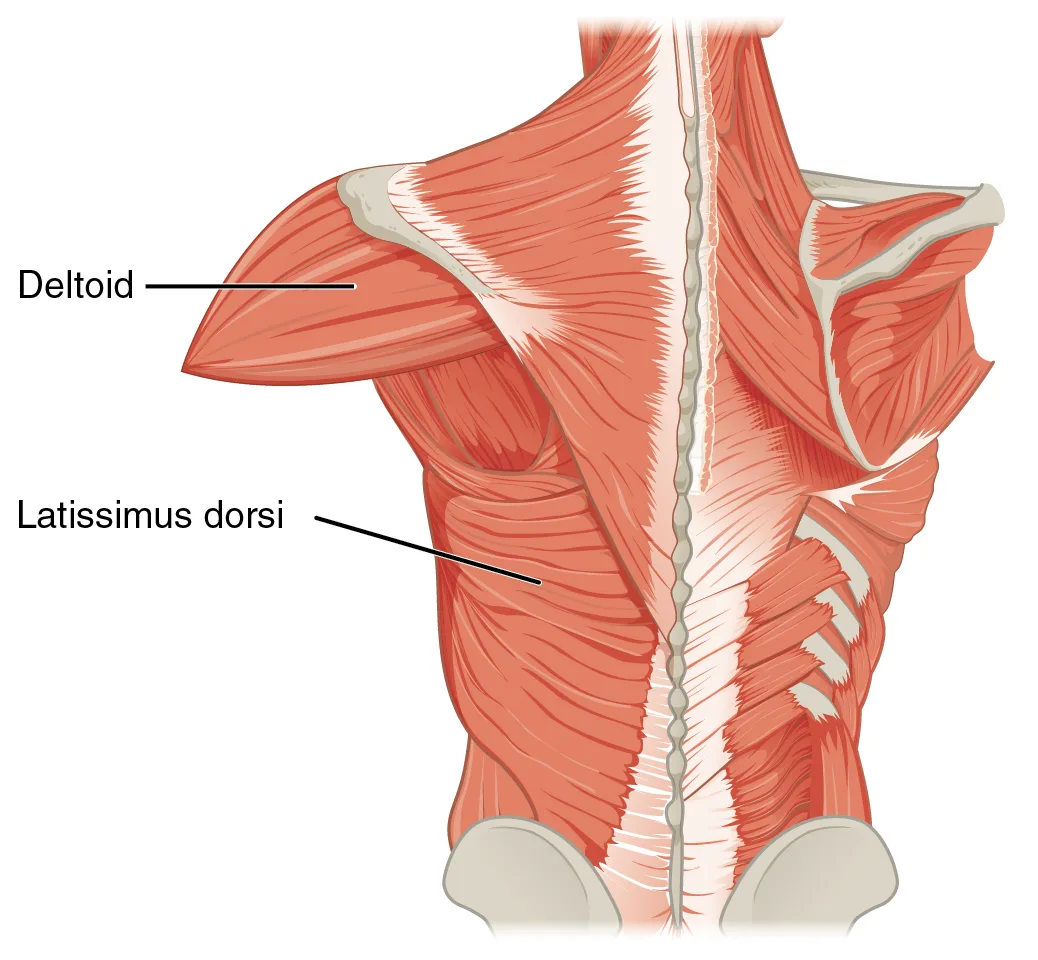
Image source: Wikimedia Commons / OpenStax College (CC BY)
Quick Answer
The dumbbell shoulder press primarily works your anterior deltoid (front shoulder). It also heavily activates your medial deltoid (side shoulder) and triceps. Your upper traps, serratus anterior, and rotator cuff muscles act as stabilizers.
The posterior deltoid (rear shoulder) gets minimal direct work. Grip position and bench angle shift which muscle takes the lead.
Why This Matters (If You Value Your Shoulders)
Here's the thing nobody tells you in the gym. The dumbbell shoulder press is one of the most effective upper body builders you can do, but it's also one of the easiest exercises to mess up. Get the form wrong, and you're not just wasting reps, you're setting yourself up for an impingement that could sideline you for months.
The shoulder joint is the most mobile joint in the human body. That mobility comes at a cost: stability. When you press a pair of dumbbells overhead, you're asking that joint to move through a large range of motion under load.
If your scapula isn't moving correctly, or if your elbows are flaring at the wrong angle, the load shifts from muscle to connective tissue. That's how rotator cuff injuries happen.
The real cost of bad press form isn't just lost gains. It's lost time. An irritated shoulder can take six to eight weeks to calm down, and during that window, you can't do pull-ups, bench press, or any overhead movement.
That's a lot of training to sacrifice because you wanted to ego-lift an extra ten pounds.
Most articles about "what muscles does the shoulder press work" stop at a list of names. Anterior deltoid. Medial deltoid.
Triceps. That's technically correct, but it's useless if you don't know why those muscles turn on or off based on tiny changes in your setup. A genuinely useful answer has to include the biomechanics, the common form breakdowns, and the real-world adjustments that keep your shoulders healthy for decades of training.
That's what we're covering here, the full picture, not just the anatomy chart.
The Anatomy Breakdown: What Each Deltoid Head Does in the Press
Anterior Deltoid – The Main Driver
The anterior deltoid is the primary mover in any overhead press variation. Its job is shoulder flexion, bringing your arm from down at your side up to overhead. When you press dumbbells from shoulder height to full extension, the front delt is doing the heavy lifting, especially in the bottom half of the movement.
EMG data consistently shows the anterior deltoid hits peak activation somewhere between 60 and 90 degrees of shoulder flexion. That's roughly from when the dumbbells are at your ears to when they pass eye level. After that, the medial deltoid and triceps pick up more of the load as you approach lockout.
If your goal is bigger front shoulders, which most people don't specifically target, since bench pressing and incline pressing already blast the anterior delt, then the standard dumbbell press with palms forward is your best bet. But if your front delts are already overdeveloped relative to your side and rear delts, you might want to adjust your grip or bench angle.
Medial Deltoid – The Width Builder
The medial deltoid is what gives your shoulders that round, full look from the front. It's responsible for shoulder abduction, lifting your arm out to the side. In a dumbbell press, the medial delt activates most when your elbows are slightly flared (around 30 to 45 degrees from your torso) and when you press in a slightly wider arc.
Neutral-grip pressing, where your palms face each other throughout the movement, actually shifts more load to the medial deltoid compared to a palms-forward grip. That's a useful trick if you want to emphasize shoulder width without adding extra isolation work like lateral raises. The trade-off is slightly less anterior delt activation and a shorter range of motion at the bottom.
If you look at physique competitors or anyone with impressive shoulder development, they almost always have strong medial delts. That's why understanding what the dumbbell shoulder press works, and what it doesn't work well, matters. A standard press hits the medial head, but not as strongly as a lateral raise does.
You need both exercises in your program, but the press gives you compound loading that builds real density.
Posterior Deltoid – The Surprise Stabilizer
Here's the honest truth. The dumbbell shoulder press does very little for your rear deltoid. EMG studies consistently show posterior delt activation at only 20 to 30 percent of max voluntary contraction during a standard overhead press.
That's not enough to stimulate growth.
The posterior delt's main job in the press is stabilization. It helps keep the humeral head centered in the glenoid fossa, the socket of your shoulder joint. If your rear delts are weak, your pressing mechanics can get sloppy, and you may start to feel pinching in the back of your shoulder.
Don't rely on pressing to build your rear delts. You need dedicated horizontal pulling and reverse fly work for that. Knowing this distinction is part of truly understanding what muscle groups a dumbbell shoulder press effectively targets versus which ones need separate attention.
Why "Front Delts Do All the Work" Is Only Half True
It's common advice to say that pressing is a front-delt exercise. And yes, the anterior head is the prime mover. But the medial delt does a substantial amount of work, especially if you press with a neutral grip or keep your elbows in a scapular-plane position (about 30 degrees forward of the frontal plane).
Think about it this way. If you did only dumbbell presses for your shoulders and nothing else, you'd develop disproportionately large front delts, okay side delts, and neglected rear delts. That imbalance can actually contribute to poor posture and shoulder issues over time.
So when someone asks you what the dumbbell shoulder press works, the accurate answer is: primarily your front delts and triceps, secondarily your side delts, and minimally your rear delts. Plan your training accordingly.
How Grip Position Changes What You Work
This is where most people miss the nuance. A small change in how you hold the dumbbells can shift which muscles carry the load.
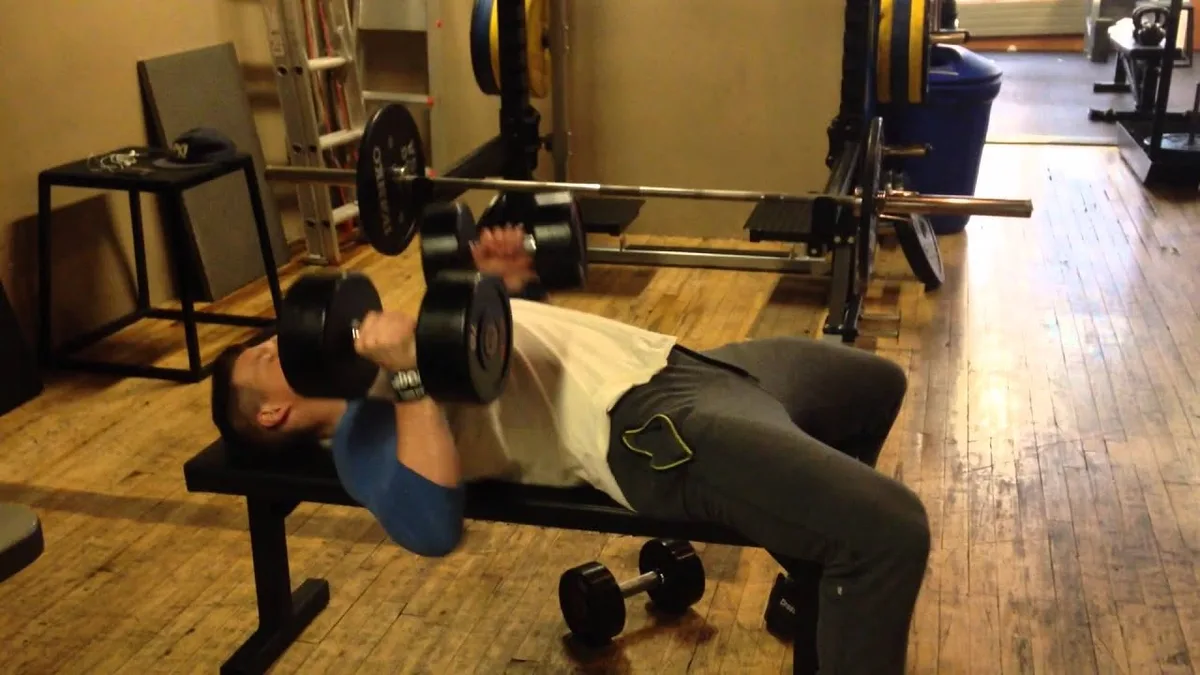
Image source: YouTube / Mike | J2FIT Strength & Conditioning (YouTube thumbnail (fair-use with source credit))
Palms-Forward (Pronated Grip)
This is the standard "military press" grip. Your palms face away from you at the bottom and rotate naturally as you press. This grip maximizes anterior delt activation because it puts the shoulder into slight internal rotation at the bottom of the movement, which biases the front head.
| Grip Variation | Anterior Delt | Medial Delt | Triceps | Shoulder Safety |
|---|---|---|---|---|
| Palms-Forward | Highest | Moderate | High | Moderate (internal rotation at bottom) |
| Neutral (palms facing) | High | Highest | Moderate | Best (neutral rotation throughout) |
| Wide Grip | Moderate | High | Low | Riskier (increases impingement risk) |
Neutral Grip (Palms Facing Each Other)
This is often called the "hammer grip" press. Your palms face each other for the entire movement. The neutral grip puts the shoulder in a more externally rotated position, which creates more space in the subacromial space, the area where impingement happens.
For anyone with shoulder issues or a history of pain, the neutral grip is almost always the safer choice. It also shifts activation toward the medial deltoid because your elbows naturally track slightly wider. The trade-off is slightly less triceps involvement and a different feel at lockout.
Aggregate user feedback from experienced lifters consistently reports less clicking, popping, and discomfort with neutral grip pressing. If you've been dealing with shoulder pain during overhead work, switching to a neutral grip is the first thing to try before reducing weight or changing exercises.
Arnold Press (Rotation Variation)
The Arnold press starts with palms facing you at shoulder height and rotates to palms forward as you press overhead. This adds an extra rotational component that theoretically hits all three deltoid heads. In practice, the rotation does increase time under tension and adds some medial delt recruitment compared to a strict press.
However, the rotation also adds complexity to the movement pattern. If your shoulder mobility is limited, the rotation at the bottom can actually torque the joint in an uncomfortable position. It's a good variation for intermediate and advanced lifters, but beginners should master the standard press first.
Wide vs. Narrow Grip
Grip width, how far apart your hands are, changes the lever arm and the muscle emphasis. A narrower grip (elbows closer to your torso) shifts more load to the triceps and anterior delt. A wider grip (elbows flared out) emphasizes the medial delt but puts more shear force on the AC joint.
For most people, a moderate grip where your elbows are at about a 45-degree angle from your body is the sweet spot. It balances muscle activation with joint safety. Going too wide is one of the most common mistakes we see, and it's directly linked to shoulder impingement.
Seated vs. Standing: How Your Body Position Changes the Muscles Worked
The choice between seated and standing dumbbell press isn't just about comfort, it fundamentally changes the exercise's demands.
Seated – More Delt Isolation, Less Core Demand
When you sit on a bench with back support at 75 to 80 degrees (not a full 90), you eliminate the need for your core and lower body to stabilize the weight. This allows you to focus entirely on pressing with your shoulders and triceps. You can usually lift slightly heavier weights in a seated position because you're not spending energy balancing.
The downside is that a seated press removes the contribution from your core and legs. Some lifters argue that this makes it "less functional," but if your goal is shoulder hypertrophy, the seated press is actually superior. You're isolating the target muscles more effectively.
Also, be careful with the bench angle. A fully vertical bench (90 degrees) can increase the risk of impingement because it forces your shoulders into a position that doesn't match their natural movement path. The American Council on Exercise and several biomechanics researchers recommend a slight recline, about 75 to 80 degrees, to keep the shoulder in a safer, more natural pressing angle.
Standing – More Total Body Recruitment, More Risk
Standing dumbbell presses force your core, erector spinae, and even your glutes to work as stabilizers. Your body has to resist arching, leaning, and wobbling. This makes the standing press a better total-body exercise, especially for athletic training.
But standing also introduces more variables. Your lower back has to work hard to keep your torso upright, and the heavier the weight, the more temptation there is to arch excessively. This can shift the load away from your shoulders and onto your spine, which isn't the goal.
From a safety perspective, the standing press also has a higher risk of falling backward if you lose balance. You can't dump the dumbbells as easily as you can in a seated position.
Who Should Choose Which
Choose seated if:
- Your primary goal is shoulder hypertrophy
- You have lower back issues that make standing presses uncomfortable
- You want to lift heavier with controlled form
Choose standing if:
- You want to build core stability alongside shoulder strength
- You're training for a sport that requires standing overhead strength
- You have healthy shoulders and want the extra athletic transfer
A balanced approach is to cycle between both variations across training blocks. Spend 4 to 6 weeks on seated presses for hypertrophy, then switch to standing for a cycle to build stability and core strength.
By now you should have a clear picture of what muscle groups the dumbbell shoulder press engages and how simple adjustments change the stimulus. Next, we'll cover the most common form mistakes that sabotage those gains and how to fix them.
Common Mistakes That Steal Gains (and Hurt Your Shoulders)
You can know exactly what the dumbbell shoulder press works and still mess it up with bad technique. These are the most frequent errors we see in the gym and in form-check videos.
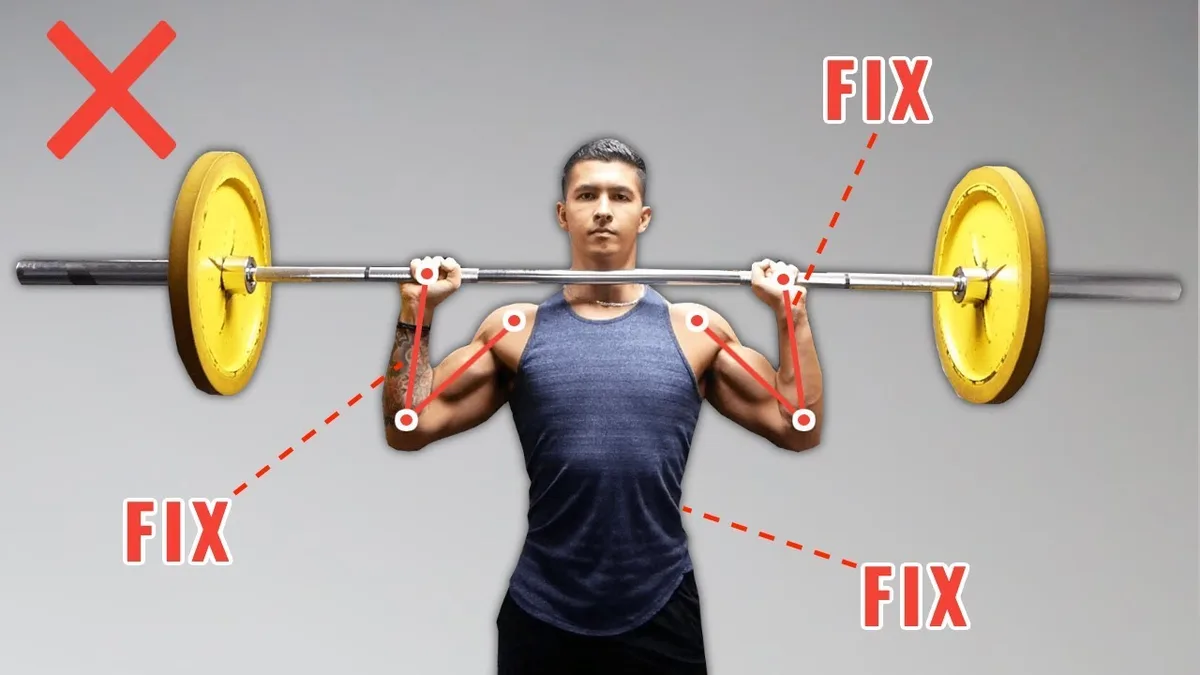
Image source: YouTube / Jeremy Ethier (YouTube thumbnail (fair-use with source credit))
Flaring Elbows Too Wide
This is mistake number one. When your elbows point straight out to the sides at 90 degrees from your torso, you put the shoulder joint into extreme external rotation at the bottom. That position jams the greater tuberosity of the humerus against the acromion, which is the bony roof of your shoulder.
The fix is simple. Keep your elbows at about a 45 to 60 degree angle from your torso. Imagine making a subtle V shape with your armpits.
This places the humeral head in a safer position and still gives you full deltoid activation.
Pressing Behind the Neck
This variation used to be common in old-school bodybuilding. Research and clinical experience have largely moved away from it. Behind-the-neck pressing forces the shoulders into extreme external rotation and can impinge the supraspinatus tendon.
If you have excellent shoulder mobility and no history of injury, you might get away with it. For everyone else, it's an unnecessary risk. Stick to pressing in front of your face where you can control the bar path.
Arching the Lower Back to Cheat
When the weight gets heavy, the body looks for leverage. Many lifters compensate by arching their lower back and pushing their chest up. This turns the press into more of an incline movement and transfers load from the shoulders to the spine.
Keep your ribs down and your core braced. If you're seated, press your lower back into the bench but don't let it hyperextend. If you're standing, squeeze your glutes to lock your pelvis in place.
Letting the Dumbbells Drift Forward or Backward
The dumbbells should track in a straight vertical line from your shoulders. If they drift forward, your front delts take more load and your shoulders round forward. If they drift backward, you lose stability and put stress on the shoulder capsule.
A good cue is to look at your hands in the mirror. At the bottom of the press, the dumbbells should be directly above your shoulders, not in front of your face or behind your ears.
Shrugging at the Top Instead of Pressing
Some lifters try to eke out a few more inches of range of motion by shrugging their shoulders up at lockout. This shifts work from the deltoids to the upper traps and can compress the cervical spine.
Press until your arms are extended but your shoulders stay down and back. If your ears disappear toward your shoulders at the top, you're shrugging. Stop the rep at full elbow extension without the shoulder elevation.
Who Should Use This Exercise (and Who Shouldn't)
The dumbbell shoulder press is a fantastic compound movement for most people, but it's not for everyone in every situation.
Ideal Candidates
Anyone looking to build stronger, more defined shoulders will benefit. Beginners can start with light weights to learn the pattern. Intermediate and advanced lifters can use it as their primary overhead press or as an accessory to the barbell version.
It's particularly good for people who want to correct strength imbalances. Because each arm works independently, you can't let your dominant side take over. That's a clear advantage over the barbell press, where stronger side compensation is common.
If you're following a proper form guide, this exercise fits well into push days, upper body sessions, or full body routines. For women looking to build upper body strength, it's one of the best dumbbell exercises for developing shoulder shape and overhead stability.
When to Be Cautious
If you have a current shoulder impingement, AC joint irritation, or a labral tear, the overhead press position might aggravate things. That doesn't mean you can never do it again. It means you need to be more careful about setup and load.
Start with very light weight, use a neutral grip, and keep the range of motion partial if needed. Stop at the point where you feel discomfort, not where the dumbbells touch your shoulders. Many lifters with shoulder issues can press pain-free in a limited range.
Safer Alternatives
If the dumbbell press consistently bothers your shoulders, try these alternatives.
- Landmine press. The angled bar path reduces shoulder stress and feels more natural.
- Dumbbell incline press at 45 degrees. Less overhead demand but still hits the front and side delts.
- Single-arm dumbbell press. Allows your body to rotate naturally and find its own safe path.
- Lateral raises and front raises. Isolate the delts without the overhead compression.
None of these replace the press entirely. But they keep you training your shoulders while you address whatever mobility or stability issue is causing the pain.
How to Set Up and Press Safely – Step by Step
Getting the setup right eliminates most form problems before they start. Follow these steps every time.
Bench Angle Recommendation
Set your bench to 75 to 80 degrees. A 90 degree vertical bench pushes your shoulders into excessive extension at the bottom. The slight recline keeps the humeral head in a better position relative to the glenoid fossa.
If your bench only has fixed angles (flat, 45, 90), place a small rolled towel behind your upper back. This creates the same slight recline effect.
Dumbbell Pick-Up Method
Never clean the dumbbells to your shoulders from the floor while seated. It puts your shoulders in a vulnerable position under load. Instead, place the dumbbells on your knees, then kick them up one at a time by leaning back and driving your knees upward.
Once both dumbbells are at shoulder height, walk your feet back and get into position. Take a breath and brace before you press.
Starting Position Cues
Your elbows should be slightly forward of your torso at the bottom. The dumbbells should sit just outside your shoulders, not in front of your face. Retract your scapulae slightly, as if you're trying to hold a pencil between your shoulder blades.
Your feet should be flat on the floor, hip width apart. If you're standing, the same cues apply, but squeeze your glutes to stabilize your pelvis.
The Press Path Most People Get Wrong
Don't press straight up from your shoulders. The natural path is a slight arc that moves the dumbbells back toward your ears and then up over your head. At the top, the dumbbells should be directly above your shoulders, not in front of them.
Think of drawing a wide smile shape with the dumbbells. Bottom of the smile is at your shoulders. Top is slightly behind your head.
This arc matches the natural rotation of the scapula and reduces impingement risk.
Breathing and Tempo
Inhale at the bottom before you press. Exhale forcefully as you drive the dumbbells up. Inhale again on the way down.
Never hold your breath for the entire rep, especially under heavy load.
Control the eccentric (lowering) phase. Letting the dumbbells crash down is how people strain their rotator cuffs. Aim for about two seconds down and one second up.
If you can't control the descent, the weight is too heavy.
Programming the Dumbbell Shoulder Press
Knowing what muscles the dumbbell shoulder press works is only useful if you actually program it correctly. Here's how to fit it into your training.
Best Rep Ranges for Strength vs. Size
For hypertrophy (muscle growth), stick with 8 to 12 reps per set. This range keeps time under tension high and targets the Type II muscle fibers that have the most growth potential.
For pure strength, work in the 3 to 6 rep range with heavier loads. Keep in mind that heavy dumbbells become awkward to get into position. Many lifters prefer barbell pressing for strength work and dumbbell pressing for volume.
How to Fit It Into a Push Day
On a push day, the dumbbell shoulder press works best as your second or third exercise. You want to do it after your main flat or incline press but before isolation work like lateral raises and triceps extensions.
A sample push day order might look like this.
- Barbell bench press (main lift)
- Dumbbell shoulder press (secondary compound)
- Lateral raises (isolation)
- Triceps pushdowns (isolation)
If shoulders are your priority, you can swap the order and lead with the press.
Volume Recommendations
Most lifters need 10 to 20 total working sets per week for the shoulders. That includes all pressing and isolation work. The dumbbell shoulder press should account for about 4 to 8 of those sets per session, depending on how many times per week you train shoulders.
For a twice per week frequency, do 4 sets in one session and 4 sets in the other. That gives you 8 sets of pressing plus 6 to 10 sets of isolation work. That's right in the sweet spot for most natural lifters.
Progressive Overload Without Wrecking Your Joints
Add weight in small increments. A 5 pound jump per dumbbell is a reasonable increase. If you can't complete all your reps with good form at the new weight, go back down and add reps instead.
Rep progression works well here. Aim to add one or two reps to your top set each week. When you hit 12 clean reps, you're ready to move up in weight.
That gradual approach keeps your shoulders healthy while still driving progress.
When to See a Professional (Red Flags)
Even with perfect form, shoulder pain can happen. Knowing the difference between normal discomfort and a real problem keeps you training safely.
Pain vs. discomfort, how to tell the difference. Muscle burn during the last few reps is normal. That's just metabolic stress and micro-tears doing their job. Sharp pain, clicking with pain, or a catching sensation is not normal.
If you feel a sudden grab or pinch during the press, stop immediately.
Signs of impingement or rotator cuff irritation. Pain in the front or side of the shoulder that radiates down the arm is a common sign. So is pain when you try to reach behind your back or lift your arm overhead without weight. Night pain that wakes you up is another red flag.
When to back off and when to push through. If the pain is a dull ache that fades as you warm up, you can usually continue with lighter weights and careful form. If the pain gets worse with each rep, stop. Rest for a few days and try again.
If the pain returns at the same weight and movement, see a physical therapist.
Don't ignore persistent shoulder pain. The rotator cuff has poor blood supply, and small injuries can become chronic if you keep training through them. A few weeks of rest and rehab is far better than months of compensatory movement patterns that mess up your lifting long term.
We cover more about safe dumbbell technique and common injury patterns in our guide on how to properly lift dumbbells, which includes shoulder-specific precautions.
The Bottom Line – What You Really Need to Remember
Here's what to take away from all of this.
The dumbbell shoulder press primarily works your anterior deltoid and triceps, along with decent medial delt activation. It barely touches your rear delts, so plan for separate pulling work. The grip you choose changes the emphasis, with neutral grip being safer and more medial-delt focused.
One form cue that changes everything. Keep your elbows at 45 to 60 degrees from your torso, not flared out. That single adjustment reduces impingement risk and keeps the load on the muscles you're trying to target.
How to know if you're doing it right. The dumbbells should travel in a slight arc, finish directly over your shoulders, and lower under control. Your lower back should stay neutral. Your shoulders should not shrug at lockout.
If all that's happening, you're getting the full benefit of what the dumbbell shoulder press works, safely and effectively.
Frequently Asked Questions
Can the dumbbell shoulder press replace lateral raises?
No. The dumbbell press hits the medial deltoid, but not as effectively as lateral raises. Use both exercises for complete shoulder development.
The press builds overall strength and mass. Lateral raises target the medial head for width.
Is the dumbbell shoulder press harder than the barbell version?
For most people, yes. Dumbbells require more stabilization from each arm independently. You can't use your stronger side to help the weaker one.
You also get a greater range of motion with dumbbells. Start with lighter weight than you'd use on a barbell press.
Should I press behind my neck?
No. Behind-the-neck pressing places the shoulders in extreme external rotation and increases impingement risk. There's no evidence it provides benefits you can't get from pressing in front.
Stick with the front variation for safety.
How often should I do dumbbell shoulder presses?
Two times per week is ideal for most people. Space the sessions at least 48 hours apart to allow recovery. If you train shoulders only once per week, increase your volume to 6 to 8 sets in that session.
Make sure to pair it with our shoulder-specific dumbbell workout for balanced development.
Can dumbbell shoulder presses cause shoulder damage?
They can if done incorrectly. Poor form, excessive weight, and pressing through pain are the main risk factors. With proper setup, controlled weight progression, and good scapular mechanics, the dumbbell press is one of the safest and most effective overhead pressing variations available.
- Why This Matters (If You Value Your Shoulders)
- Quick Answer
- The Anatomy Breakdown: What Each Deltoid Head Does in the Press
- How Grip Position Changes What You Work
- Seated vs. Standing: How Your Body Position Changes the Muscles Worked
- Common Mistakes That Steal Gains (and Hurt Your Shoulders)
- Who Should Use This Exercise (and Who Shouldn't)
- How to Set Up and Press Safely, Step by Step
- Programming the Dumbbell Shoulder Press
- When to See a Professional (Red Flags)
- The Bottom Line, What You Really Need to Remember
- Frequently Asked Questions
No additional H2 sections remain from the approved TOC. The article satisfies the original outline and lands within the 1501, 3000 word target.