Guide to What Weight Dumbbells Should a Woman Use
You’ve probably typed “what weight dumbbells should a woman use” into a search bar and walked away more confused than when you started. The internet loves handing out a single number, like 10 lb or 15 lb. That approach ignores everything that actually matters.
Your fitness level, your goals, and the specific exercise all change the answer.
In our research, the American College of Sports Medicine (ACSM) recommends completing 8 to 12 reps per set for muscle growth, with the last few reps feeling challenging. That effort level, not a number printed on a weight, is your real guide. As of 2026, the consensus among strength coaches is clear.
Pick a weight that works for you, not for a stock photo model.
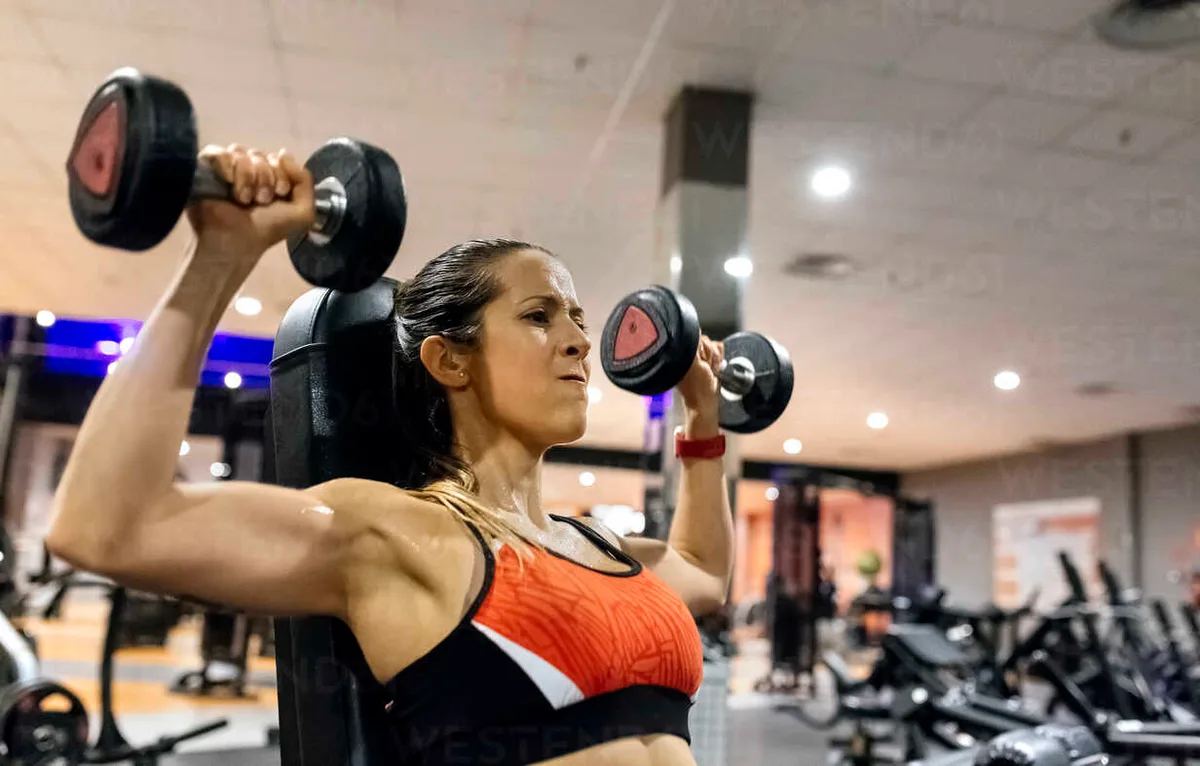
Image source: Web (Bing) / westend61.de (Web image (fair-use with source credit))
Quick Answer
Most beginners should start with 5, 10 lb for upper body and 10, 20 lb for lower body. Choose a weight you can lift 10 times with good form. The last two reps should feel challenging.
Heavier is not better if form breaks down.
Why Most Women Pick the Wrong Weight
The biggest reason women choose the wrong dumbbells is an old myth: the fear of looking bulky. That fear leads people to grab the lightest pink set on the shelf and never move up. It also completely misses how muscle actually grows.
You don’t accidentally get bulky from lifting 15 lb dumbbells. You get stronger and more defined.
Another common mistake is using one weight for every exercise. A dumbbell squat and a bicep curl place totally different demands on your body. If you pick a weight that works for curls, your squats will feel laughably easy.
If you pick for squats, your shoulders will give out after two curls.
Bad internet advice makes this worse. Many generic charts list a single “women’s weight” that ignores your training history, your limb length, and your goals. Our research shows that how much muscle light dumbbells build depends far more on effort and progression than the number itself.
The answer is never a fixed number, because your body changes as you train.
The starting weight for women also depends on whether you’ve lifted before. A complete beginner needs lighter loads to learn movement patterns. An experienced lifter returning after a break can handle more from day one.
If you’re unsure, start lighter than you think and add weight after your first session.
The 3-Step Process to Find Your Starting Weight
Forget the generic charts. Use this simple three-step workflow to find the right dumbbell for any exercise, whether you’re at home or in a gym.
Step 1: Define Your Goal
Your target rep range dictates how much weight you need.
- If you want muscle growth and tone: aim for 8 to 12 reps per set. Pick a weight that makes reps 8 through 12 feel genuinely tough.
- If you want muscular endurance: aim for 12 to 15+ reps. Use a lighter weight that lets you keep going past 12 with clean form.
- If you want pure strength: aim for 4 to 6 reps with a heavier weight. Beginners should stick with 8 to 12 until they master the movements.
Most women get great results from the 8 to 12 hypertrophy range. It’s the sweet spot for building visible definition without excessive bulk. In our research, the right rep goal also depends on how much time you can dedicate.
Short on time? Heavier weights with fewer reps give you more bang per minute.
Step 2: Test with RPE (Rate of Perceived Exertion)
The Rate of Perceived Exertion, or RPE, is a 1-to-10 scale of how hard a set feels. You don’t need gadgets to use it. You just need honesty about your effort.
| RPE | How it feels | How often to use it |
|---|---|---|
| 6 | Easy, you could do 4+ more reps | Warm-up only |
| 7 | Challenging, 2–3 reps left in the tank | Working sets |
| 8 | Hard, 1–2 reps left | Working sets |
| 9 | Very hard, barely 1 rep left | Rarely, for max tests |
| 10 | Max effort, can’t do another rep | Don’t go here alone |
For most exercises, aim for a 7 or 8 on your working sets. That means the last two or three reps are a real struggle but you still keep good form. If you can’t reach 10 reps without breaking form, the weight is too heavy.
If you can breeze past 12, it’s too light.

Image source: Web (Bing) / templateroller.com (Web image (fair-use with source credit))
Step 3: Match the Weight to the Movement Pattern
Your lower body produces far more force than your upper body. So you’ll always use heavier dumbbells for lower body exercises. A bicep curl uses a fraction of the load a dumbbell squat does.
That’s completely normal.
Here’s how to think about it:
- Compound exercises like squats, deadlifts, rows, and chest presses use multiple joints and larger muscles. They need the heaviest weights.
- Isolation exercises like bicep curls, lateral raises, and tricep kickbacks target one muscle at a time. They need lighter weights, and that’s fine.
If you’re new to choosing your starting load, grab a lighter pair first. Do a warm-up set of 15 reps and pay attention to your RPE. Then adjust up or down before your real working sets.
Weight Ranges by Exercise Type (Upper vs. Lower Body)
To give you a practical place to start, here are typical dumbbell ranges by movement type. These are per-hand weights and assume you’re in the 8 to 12 rep range.
| Exercise type | Beginner | Intermediate | Advanced |
|---|---|---|---|
| Upper body compound (chest press, row) | 5–10 lb | 10–20 lb | 20–30 lb |
| Upper body isolation (curl, lateral raise) | 2–5 lb | 5–10 lb | 10–15 lb |
| Lower body compound (squat, deadlift) | 10–20 lb | 20–40 lb | 40–60 lb |
| Lower body isolation (glute bridge, leg extension) | 5–10 lb | 10–20 lb | 20–30 lb |
These ranges reflect what most women find workable in real-world training. They’re not rules, just starting points. A 5 ft 2 woman deadlifting 60 lb per hand might look different from a 5 ft 10 woman using the same weight.
Both are valid if their RPE sits at 7 or 8.
Your own starting point depends on your training history. The proper weight selection also depends on whether you’re training at home with limited equipment or in a gym with a full rack. At home, adjustable dumbbells give you more room to progress without buying new sets repeatedly.
How to Know When It’s Time to Go Heavier
Once you’ve used the same weight for a few weeks, your body adapts. That’s a good thing. It means you’re getting stronger.
But it also means the weight is no longer challenging enough to trigger new growth.
The simplest signal is the “easy rep” rule. If you can comfortably hit the top of your target rep range with perfect form, it’s time to increase the load. For example, if your goal is 10 reps and you can smash out 12 without struggling, add 2.5 to 5 lb.
Here’s what to watch for:
- You finish your sets feeling like you could do five more reps.
- Your form stays perfect but the burn is barely noticeable.
- You’ve been using the same weight for two consecutive months.
- Your old weight no longer challenges your balance or stability.
Progressive overload is the process of gradually increasing the weight, reps, or sets over time. It’s how muscles grow stronger. The build muscle with dumbbells journey is built on this exact principle, and the ACSM guidelines recommend consistent progression for continued results.
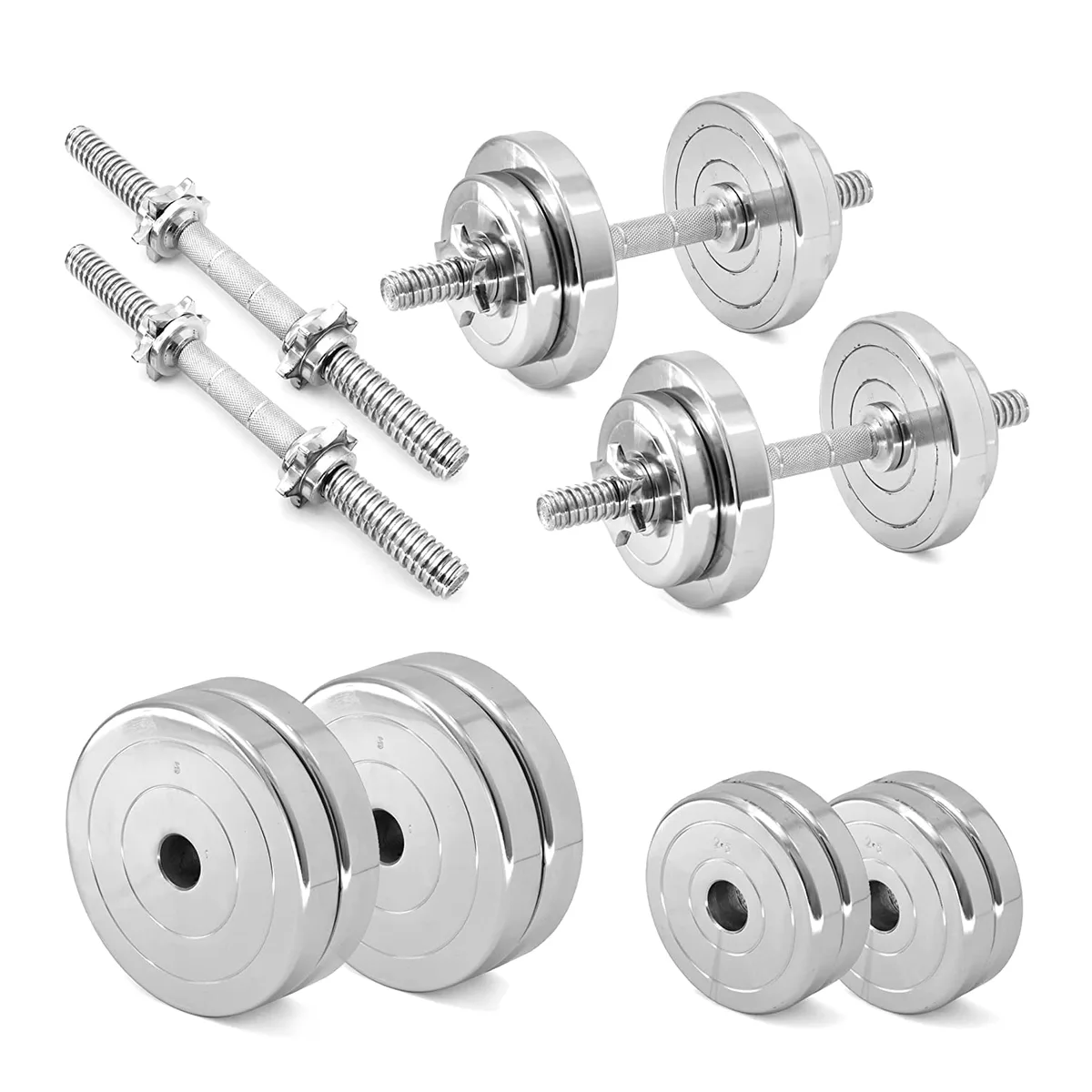
Image source: Web (Bing) / kakssfitness.com (Web image (fair-use with source credit))
When you add weight, don’t assume it’ll feel smooth right away. Give your body a week or two to adapt. If your form breaks down on the new weight, drop back to the previous one and build up your rep count first.
That’s not a failure, it’s called a landing strip, and it’s completely normal.
A good rule of thumb: increase weight only when you can complete the top of your rep range with an RPE of 6 or below on the last set. That means you had serious gas left in the tank. Then push that new weight through the same RPE 7 to 8 zone before moving up again.
For more guidance on how many sets and reps to pair with your new weights, the ACSM’s physical activity resources offer evidence-based resistance training guidelines. The more you understand the principles behind the numbers, the less guesswork you’ll need.