
Can You Build Muscle with 10 lb Dumbbells?
You’ve got a pair of 10 lb dumbbells sitting in your living room. Maybe you bought them during lockdown, or they came with a starter home gym setup. Now you’re wondering if they’re actually going to do anything for you beyond collecting dust.
Can you build muscle with 10 lb dumbbells? The short answer is yes, but only if you’re the right person using them the right way.
Per ACE-certified training guidelines, muscle hypertrophy requires working a muscle to fatigue within a specific rep range. For most people, that means choosing a weight you can only lift for 8 to 15 reps with good form. A 10 lb dumbbell can absolutely do that for certain exercises and certain lifters.
The key is knowing which camp you fall into, and that’s exactly what we’re going to break down here.
The Quick Answer: It Depends on Who You Are
Yes, but only for beginners and for isolation exercises. Muscle growth requires progressive overload. If you can do more than 15 reps with perfect form, the weight is too light for building size. 10 lb dumbbells work well for lateral raises, bicep curls, and tricep extensions.
For lower body work, you’ll need heavier weight.
Why This Question Actually Matters (The Problem)
Most people who buy 10 lb dumbbells fall into the same trap. They start with good intentions, doing bicep curls and shoulder raises every other day. For the first few weeks, they feel the burn and see some initial changes.
Then progress stalls.
The problem isn’t their effort. It’s the load. Muscles adapt to stress quickly, and once they do, you need to increase that stress to keep growing.
With a fixed 10 lb dumbbell, you can’t simply add more weight. You’re stuck.
This leads to frustration, wasted workouts, and often giving up entirely. The truth is that 10 lb dumbbells are a tool, not a solution. They work great for specific purposes, but only if you know how to use them correctly.
The main pain points break down like this:
- Limited progression. You can’t add weight, so you have to get creative with volume, tempo, or rest periods.
- False sense of progress. Doing more reps feels like you’re improving, but after a certain point you’re building endurance, not muscle.
- Wasted money. If you outgrow them in a month, that $30 pair was not a great investment.
- Lower body blind spot. Even a beginner can squat or lunge with 10 lbs and feel almost nothing.
These are the reasons people search for this question in the first place. They sense something isn’t working, but they don’t know why. Let’s fix that.
How Muscle Growth Really Works with Light Weights
Muscle growth, or hypertrophy, happens when you challenge a muscle beyond what it’s used to. That challenge creates microscopic tears in the muscle fibers. Your body repairs those tears and builds the muscle back stronger.
The key variable is intensity. For most people, that means lifting a weight that’s heavy enough to cause failure between 8 and 15 reps per set. This is the hypertrophy zone, confirmed by the American College of Sports Medicine in their resistance training guidelines.
With a 10 lb dumbbell, you can absolutely hit that zone for certain exercises. A lateral raise, for example, targets a small muscle group. Even a relatively strong person might struggle to do 12 clean lateral raises with 10 lbs.
But a bicep curl? Someone with moderate strength could easily do 20 or more reps, which pushes them into the endurance zone rather than the growth zone.
This is the crucial distinction. Light weights work for muscle growth, but only when the weight is challenging relative to the muscle group you’re using. The smaller the muscle, the more effective a light weight becomes.
Here’s a quick reference table showing how 10 lb dumbbells stack up across different muscle groups:
| Muscle Group | 10 lb Effectiveness | Typical Rep Range | Best Use |
|---|---|---|---|
| Lateral deltoid (side shoulder) | High | 8-15 reps | Isolation work |
| Biceps | Moderate | 15-25 reps | High-rep finishing |
| Triceps | Moderate | 12-20 reps | Kickbacks, extensions |
| Chest (pectorals) | Low | 25+ reps | Warmup only |
| Quadriceps | Very low | 30+ reps | Not effective |
| Glutes | Very low | 30+ reps | Not effective |
The takeaway is simple. If you’re working a small muscle group in isolation, 10 lbs can be enough. If you’re trying to grow your quads or glutes, you need something heavier.
The Decision Tree: Are You a Beginner or Not?
The answer to whether 10 lb dumbbells will build muscle for you comes down to one question: Are you a beginner?
If you’ve never lifted weights before, or if it’s been more than six months since you last trained consistently, you’re in the beginner category. Your muscles haven’t adapted to resistance training yet. Any new stimulus will trigger growth, including light weights.
If you’ve been training for three months or more with any kind of resistance, you’re likely past the beginner phase. Your muscles have adapted. They now need more load to keep growing.
Let’s break down each branch.
Branch 1: You’re a Beginner (0–3 Months of Lifting)
Good news. You can absolutely build muscle with 10 lb dumbbells during this phase. Your body is responding to any new resistance, a phenomenon often called “newbie gains.”
Your focus should be on learning proper form, not on how much weight you’re moving. Master the basic movements. Incline dumbbell curls, lateral raises, and single-arm rows are all excellent choices.
You can find detailed form guides for each of these exercises if you need to dial in your technique.
During this phase, aim for 3 sets of 10 to 15 reps per exercise. Rest 60 to 90 seconds between sets. Train each muscle group twice per week.
You should see visible progress in strength and muscle tone within 4 to 8 weeks.
But here’s the catch. Once you can comfortably do 15 reps on every set, you’ve maxed out this tool. It’s time to either increase the weight or use the techniques in the next section.
Branch 2: You’re Intermediate or Advanced (Can You Do 15+ Clean Reps?)
If you can do 15 or more reps of a bicep curl with perfect form using 10 lb dumbbells, you’re past the beginner stage. The weight is too light for building significant muscle mass in that movement.
But don’t give up on them entirely. Ten pound dumbbells still have a place in your routine. They’re excellent for isolation exercises that target small muscles.
Lateral raises, tricep kickbacks, and rear delt flyes all benefit from lighter weight.
For these exercises, focus on time under tension. Slow down the eccentric phase. Take 3 to 4 seconds to lower the weight.
This increases the muscle’s time under tension, which can stimulate growth even with lighter loads.
You can also use them for burnout sets at the end of a heavier workout. Do a set of 20 to 30 reps to pump blood into the muscle and trigger metabolic stress.
Branch 3: You’re Targeting Lower Body – The Hard Truth
This is the honest part. Ten pound dumbbells are not enough for significant lower body muscle growth. Your quadriceps, glutes, and hamstrings are powerful muscles.
They can handle much heavier loads.
A goblet squat with 10 lbs will feel like a warmup, not a workout. You’d need to do 50 or more reps to feel any challenge, and that builds endurance, not size. For lower body work, you need heavier dumbbells, a barbell, or bodyweight variations like single-leg squats.
If you’re serious about building leg muscle, 10 lb dumbbells are a starting point, not a solution.
You can still use them for specific exercises like Romanian deadlifts with a focus on form, or for glute bridges where you hold the dumbbell on your hip. But don’t expect dramatic results. The CDC’s physical activity guidelines recommend muscle-strengthening activities that work all major muscle groups, and for the lower body, that typically means heavier resistance.
Making 10 lb Dumbbells Work Longer (Without Buying New Ones)
You don’t have to throw your 10 lb dumbbells in the trash just yet. There are several ways to make them feel heavier and continue stimulating muscle growth. These techniques work best once you’ve outgrown the standard rep ranges.
Slow Negatives and Pause Reps
The most effective method is slowing down the eccentric, or lowering, phase of each rep. Take 3 to 4 seconds to lower the weight. Pause for one second at the bottom of the movement.
Then explode up on the concentric phase.
This increases time under tension dramatically. A set of 10 reps with a 4-second negative takes 40 seconds of work. Compare that to a standard set that takes 10 seconds.
The muscle experiences significantly more stress, which triggers growth.
Increasing Sets, Frequency, and Density
You can also increase the total volume of work. Instead of 3 sets per exercise, do 5 or 6 sets. Instead of training each muscle group twice per week, train them three times.
This increases the total workload, which can compensate for the lighter weight.
Density training is another option. Do the same number of reps but in less time. Reduce your rest periods from 90 seconds to 45 seconds.
This increases metabolic stress, which is another driver of muscle growth.
Combining with Bodyweight and Resistance Bands
Pair your dumbbells with bodyweight exercises. Do a set of pushups, then immediately do a set of dumbbell chest presses. The cumulative fatigue will make the 10 lbs feel heavier.
Resistance bands are another great pairing. Attach a band to the dumbbell or use it separately for exercises like banded squats. The variable resistance adds challenge at the top of the movement where muscles are strongest.
If you’re curious about how to structure a full workout around these techniques, check out our guide on how to build muscle with dumbbells for a complete program.
Best Exercises to Actually Build Muscle with 10 lbs
Not all exercises are created equal when you’re working with light weight. The key is choosing movements that isolate smaller muscle groups or that put your muscles at a mechanical disadvantage. This makes the 10 lb dumbbell feel much heavier than it actually is.
Here are the top exercises that deliver real results with 10 lb dumbbells:
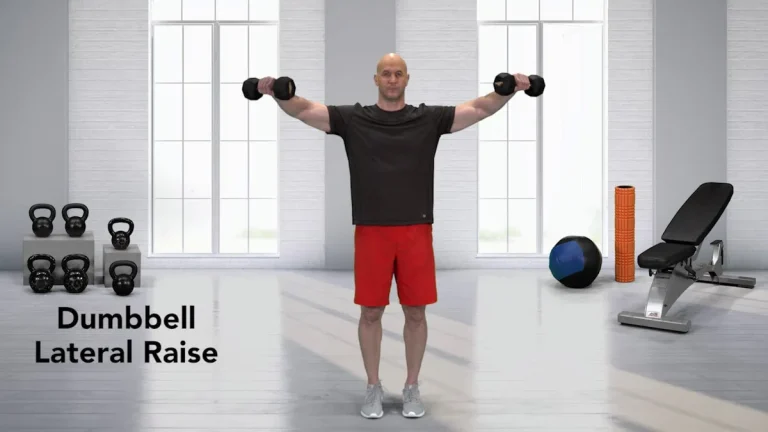
Lateral raises. This is the king of light-weight exercises. The lateral deltoid is a small muscle that fatigues quickly. Even strong lifters often cap out at 10 to 12 reps with 10 lbs.
Focus on keeping your elbows slightly bent and raising the dumbbells to shoulder height. Do not swing your body. You can refine your form with our detailed guide on how to do lateral raises with dumbbells.
Bent-over reverse flyes. Target the rear deltoids and upper back. Bend at the hips with a flat back. Raise the dumbbells out to the sides like you’re opening a book.
The mechanical disadvantage makes 10 lbs feel significant.
Overhead tricep extension. Hold one dumbbell with both hands overhead. Lower it behind your head until your elbows hit 90 degrees. Extend back up.
This movement isolates the triceps effectively with light weight.
Bicep curls with a twist. Slow down the lowering phase to 4 seconds. Add a supination twist at the top. This increases time under tension and makes 10 lbs feel much heavier.
Incline dumbbell curls. Performing curls on an incline bench stretches the biceps at the bottom of the movement. This puts them in a weaker position, making light weight more challenging. Our guide on incline dumbbell curls covers the proper form in detail.
Single-arm rows. While 10 lbs is light for rows, you can make it work by focusing on an intense squeeze at the top. Hold the contraction for 2 seconds. Lower slowly over 4 seconds.
This turns a light row into a serious back exercise.
Walking lunges with a twist. Hold the dumbbells at your sides. Add a torso rotation toward the front leg at the bottom of each lunge. This engages the core and changes the leverage, making the movement feel heavier.
Signs You’ve Hit a Plateau and Need to Upgrade
Your body will tell you when 10 lb dumbbells are no longer enough. The trick is knowing what to look for. Here are the clear signs that you’ve plateaued.
You can do 20 or more reps with perfect form. If you breeze through 20 reps on any exercise without feeling close to failure, the weight is too light. You’re building endurance, not muscle.
You stop feeling soreness. Soreness isn’t the only measure of a good workout, but a complete lack of it after a few weeks suggests your muscles have adapted completely. They’re no longer being challenged.
Your strength stops improving. If you hit the same rep count for four weeks straight with no progress, you’ve plateaued. You need a new stimulus.
Your muscles look the same. If you’re not seeing any visible change in muscle size or definition after 8 weeks of consistent training, something is off. The weight is likely the bottleneck.
When you notice two or more of these signs, it’s time to change your approach. You can either apply the techniques from the previous section or invest in heavier dumbbells. If you’re considering adjustable dumbbells, our guide on how to use Power Block dumbbells might help you decide.
Common Mistakes That Kill Your Progress
Even with the right exercises, you can sabotage your results with these common errors. Avoid them at all costs.
Swinging the weight. Using momentum to lift the dumbbell takes tension off the target muscle. You might complete more reps, but you’re building momentum, not muscle. Keep strict form.
If you have to swing, the weight is too heavy or you’re tired enough to stop.
Resting too little. With light weights, it’s tempting to blast through sets quickly. But short rest periods of 30 seconds or less shift the workout toward endurance. For hypertrophy, rest 60 to 90 seconds between sets.
This allows your muscles to recover enough to lift with intensity.
Ignoring the negative. The lowering phase of a lift is where most muscle damage occurs. Dropping the weight quickly misses half the benefit. Control the eccentric phase on every single rep.
Training the same muscles every day. More is not better. Muscles grow during recovery, not during the workout. Give each muscle group at least 48 hours of rest between sessions.
Overtraining with light weights still leads to overtraining.
Neglecting progressive overload. You can’t increase the weight, but you can increase the reps, sets, or frequency. If you’re doing the same workout every week, you’ll plateau. Change something every session.
Poor form on compound movements. A single-arm row with rounded shoulders or a lunge with a leaning torso reduces effectiveness and increases injury risk. Take the time to learn proper form. Our guide on how to properly lift dumbbells covers the fundamentals you need.
When to Quit 10 lbs and Move to Heavier Weights (Or Adjustables)
There comes a point where no amount of slow negatives or pause reps will save you. You need heavier weight. Here’s how to know when that time has come.
You’ve been training consistently for 8 to 12 weeks. By this point, your muscles have adapted to the stimulus. Newbie gains are exhausted. You need a new challenge.
You can do 25 reps of any exercise without breaking form. If you’re hitting 25 clean reps on lateral raises, bicep curls, or tricep extensions, the weight is no longer sufficient for hypertrophy. It’s time to move on.
You want to build significant lower body mass. This is non-negotiable. Ten pound dumbbells will not grow your quads, glutes, or hamstrings in any meaningful way. You need at least 20 to 30 lbs for lunges and squats.
You’re bored and unmotivated. If your workouts feel stale, your body isn’t being challenged. A heavier weight or a new set of exercises can reignite progress.
When you reach this point, you have two options. Buy a set of heavier fixed dumbbells, or invest in adjustable dumbbells. Adjustables are more expensive upfront but give you a range of weights in one compact package.
They’re ideal for home gyms where space is limited.
If you choose adjustable dumbbells, consider models that go up to 50 lbs per hand. This covers most upper body exercises and many lower body movements. Brands like PowerBlock and Bowflex are popular choices, but any reputable brand with a smooth adjustment mechanism will work.
You can find tips for maintaining them in our Bowflex dumbbell repair guide.
Who Should Still Use 10 lb Dumbbells (And Who Shouldn’t)
Let’s be clear about who benefits from 10 lb dumbbells and who should move on.
You should keep using them if:
- You’re a complete beginner with no lifting experience
- You’re recovering from an injury and need light resistance
- You’re focusing on rehabilitation or physical therapy
- You’re using them for isolation finishers after heavy compound lifts
- You’re traveling and need portable equipment
- You’re an older adult looking for low-impact strength maintenance
- You’re doing high-rep endurance or circuit training
You should upgrade to heavier weights if:
- You’ve been training consistently for 3 months or more
- You can easily do 15+ reps on most exercises
- You want to build significant muscle mass, especially in the lower body
- You’re a male with average or above-average strength
- You’re training for strength or power, not just muscle tone
The honest truth is that 10 lb dumbbells are a starting point, not a destination. They’re excellent for getting started, learning form, and targeting small muscles. But if you’re serious about building muscle, you’ll need heavier weight eventually.
Your Decision Guide: A Simple Flowchart in Words
Here’s how to decide whether 10 lb dumbbells are right for you, right now.
Are you a complete beginner? If yes, start with 10 lbs. Focus on form and the exercises listed above. Train for 8 to 12 weeks.
If no, move to the next question.
Can you do 15 clean reps of any exercise? If yes, the weight is too light for hypertrophy. Apply the techniques from section five. If you can’t, the weight is still challenging enough for growth.
Are you training lower body? If yes, upgrade to heavier weights. Ten pounds won’t build significant leg or glute mass. If no, you can continue with isolation work.
Have you plateaued for four weeks? If yes, upgrade or change your approach. If no, keep training and track your progress.
Follow this logic and you’ll never waste a workout with 10 lb dumbbells.
Frequently Asked Questions
Can you build muscle with 10 lb dumbbells if you’re a beginner?
Yes. New lifters see muscle growth from any resistance stimulus. Train consistently for 8 to 12 weeks.
Focus on proper form and progressive overload.
How many reps should I do with 10 lb dumbbells?
Aim for 8 to 15 reps per set. If you can do more than 15 with perfect form, the weight is too light for hypertrophy. Increase reps, sets, or time under tension.
What are the best exercises with 10 lb dumbbells?
Lateral raises, reverse flyes, overhead tricep extensions, and slow bicep curls work best. These target small muscle groups where light weight is effective.
Can 10 lb dumbbells build leg muscle?
Not effectively. Your quads, glutes, and hamstrings need heavier resistance. Use 10 lbs for upper body isolation work instead.
How long before I need heavier dumbbells?
Most people outgrow 10 lb dumbbells within 8 to 12 weeks of consistent training. Once you can do 15 to 20 reps easily, it’s time to upgrade.
Should I buy adjustable dumbbells instead?
Yes, if you plan to keep training long term. Adjustable dumbbells give you a range of weights in one set. They cost more upfront but save money over buying multiple fixed pairs.