What’s a Good Dumbbell Weight to Start?
You walk into the gym or open an online shopping cart, and suddenly the simplest question feels impossible: what's a good weight dumbbell to start with? Pick something too light and you'll waste weeks. Pick something too heavy and you'll hurt yourself or develop bad habits that take months to undo.
It's the most common beginner roadblock, and most advice online just throws out numbers based on nothing useful.
The American College of Sports Medicine recommends that beginners select a load they can lift with good form for 8 to 12 repetitions, where the last two reps are noticeably challenging but not impossible. That guideline is the gold standard as of 2026, but it still leaves you guessing. Let's fix that right now with a process that actually works for your specific body and goals.
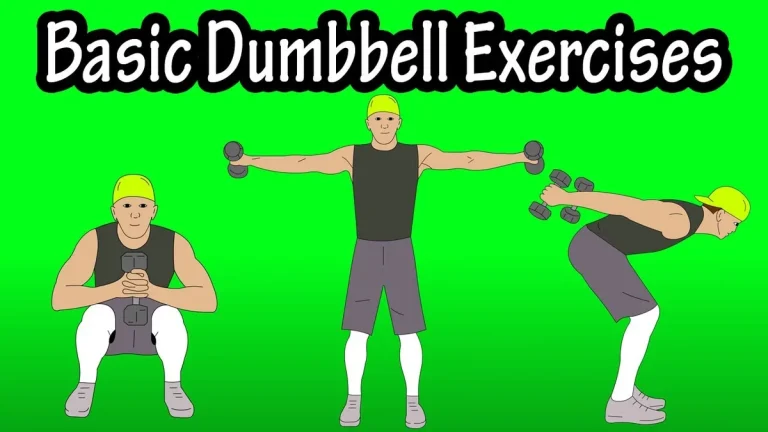
Image source: YouTube / Mensquats (YouTube thumbnail (fair-use with source credit))
Quick Answer
The right starting dumbbell weight depends on your current strength. Most untrained women start at 5 to 10 pounds. Most untrained men start at 10 to 20 pounds.
If you have athletic experience, start at 15 to 25 pounds. The real test is simple: you should struggle on the last two reps of a set of ten. If you can do fifteen clean reps easily, go heavier.
If you can't do eight with good form, go lighter.
What You'll Get Wrong Before You Get It Right
The biggest mistake beginners make is walking into a store and grabbing a dumbbell that "feels right" in their hand. That's a trap. Your biceps can handle more weight than your shoulders.
Your legs can handle more than your core. The weight that feels perfect for a bicep curl will be dangerous for an overhead press.
Here's the pattern we see over and over. A new lifter buys a 15-pound pair because they can curl it easily. Then they try an overhead press and their shoulders give out at rep three.
They drop the weight, strain something, or start arching their back to compensate. Bad form gets baked in from day one.
The second common mistake is copying someone else's starting weight. Your friend who played sports in high school might start at 20 pounds. Your coworker who has never exercised might need 8 pounds.
Their number has nothing to do with your body. Your height, your bone density, your muscle fiber composition, even your limb length all change which weight feels appropriate for a given exercise.
The third mistake is buying a single pair of dumbbells. You need different weights for different movements. An overhead press uses about 60 to 70 percent of what you can curl.
A goblet squat uses about twice what you can press overhead. One weight cannot do all of that.
So how do you avoid these traps? You use a systematic test that accounts for your weakest lift, your strongest lift, and everything in between. That test starts with the overhead press.
The Simple Self-Test That Picks Your Starting Weight (No Gym Required)
You don't need a full gym to figure out your starting weight. You need about fifteen minutes and access to a few pairs of dumbbells. If you're shopping online, you can do this test at a big box sporting goods store or a chain fitness center before you buy anything.
Start with the overhead press. This is the most revealing exercise for choosing a starting weight because your shoulders are typically your weakest upper body muscle group relative to body weight. If you can press a weight safely overhead with good form, everything else will feel manageable.
Here's the test protocol:
Step one: Warm up. Do five to ten arm circles forward and backward. Do ten bodyweight squats. Shake out your arms.
This takes two minutes but prevents the most common shoulder strains.
Step two: Guess low. Pick a dumbbell weight you are confident you can press overhead ten times. For most untrained women that's 5 pounds. For most untrained men that's 10 pounds.
Perform one set of five reps with your dominant arm only. If it feels easy, set it down.
Step three: Move up. Increase by 5 pounds and repeat. Do one set of five reps with good form. Keep increasing until you find a weight where rep four and five feel like real work.
Your shoulders should be working, your core should be braced, and you should not be able to do a sixth rep without breaking form.
Step four: Lock it in. That weight is your upper body starting point for overhead pressing and any similar movement. Write it down. This is your "press weight."
Now test your lower body. Grab a weight that is roughly double your press weight. Try a set of ten goblet squats.
If you can do all ten with your heels down and your chest up, that weight works. If you can't, drop down by 5 or 10 pounds until you can. This is your squat weight.
You now have two numbers. Your press weight is the ceiling for overhead and shoulder exercises. Your squat weight is the floor for legs and glutes.
Everything else lives in between.
Light, Medium, or Heavy? The Three-Tier Starter Strategy
Once you have your two test numbers, you can build a practical three-tier dumbbell set. You do not need a full rack of weights. You need three pairs that cover every beginner exercise.
Here is how the tiers break down based on your test results:
Light tier. This is your press weight or slightly below. For most people that is 5 to 12 pounds. You use this for overhead press, lateral raises, front raises, rear delt flyes, and any isolation work for your shoulders.
These exercises require control and range of motion, not maximum force.
Medium tier. This is roughly 50 percent heavier than your press weight. For most people that is 10 to 20 pounds. You use this for bicep curls, tricep extensions, rows, chest press, and pullovers.
These exercises involve larger muscle groups that can handle more load but still require careful form.
Heavy tier. This is your squat weight or slightly above. For most people that is 15 to 35 pounds. You use this for goblet squats, lunges, deadlifts, glute bridges, and bent-over rows.
These are compound movements where multiple joints and muscle groups share the load.
If your press weight was 10 pounds, your set looks like this: an 8 or 10 pound pair for shoulders, a 15 pound pair for arms and chest, and a 20 to 25 pound pair for legs and back. That is three pairs of dumbbells. That covers every exercise in a standard beginner program.
If your press weight was 15 pounds, your set shifts up: a 12 or 15 pound pair for shoulders, a 20 pound pair for arms and chest, and a 30 to 35 pound pair for legs and back. Same structure, different numbers.
Manufacturer specifications for most budget-friendly rubber hex dumbbells confirm that these weight jumps are widely available. You can buy each pair individually for roughly 30 to 80 dollars depending on the weight and coating quality. That puts a complete starter set at 90 to 240 dollars, which beats buying a full 20-pair rack by a wide margin.
The Overhead Press Rule: Why This Single Lift Tells You Everything
The overhead press is the gatekeeper exercise for beginner dumbbell selection. Here is why it matters more than any other test.
Your shoulders are the smallest major joint in your upper body. They have the most mobility and the least stability. When you press a weight overhead, your shoulders, your upper back, your core, and your stabilizer muscles all have to coordinate.
If any link in that chain is weak, the lift fails. This makes the overhead press brutally honest about your current strength level.
Compare that to a bicep curl. You can curl a surprisingly heavy weight with bad form. You can swing your back, use momentum, and still get the weight up.
That is why curls are terrible for finding your starting weight. They let you cheat.
The overhead press does not let you cheat. If the weight is too heavy, your shoulders cannot compensate. The bar stops moving.
You either drop it or you bail. That safety mechanism is exactly what makes the test reliable.
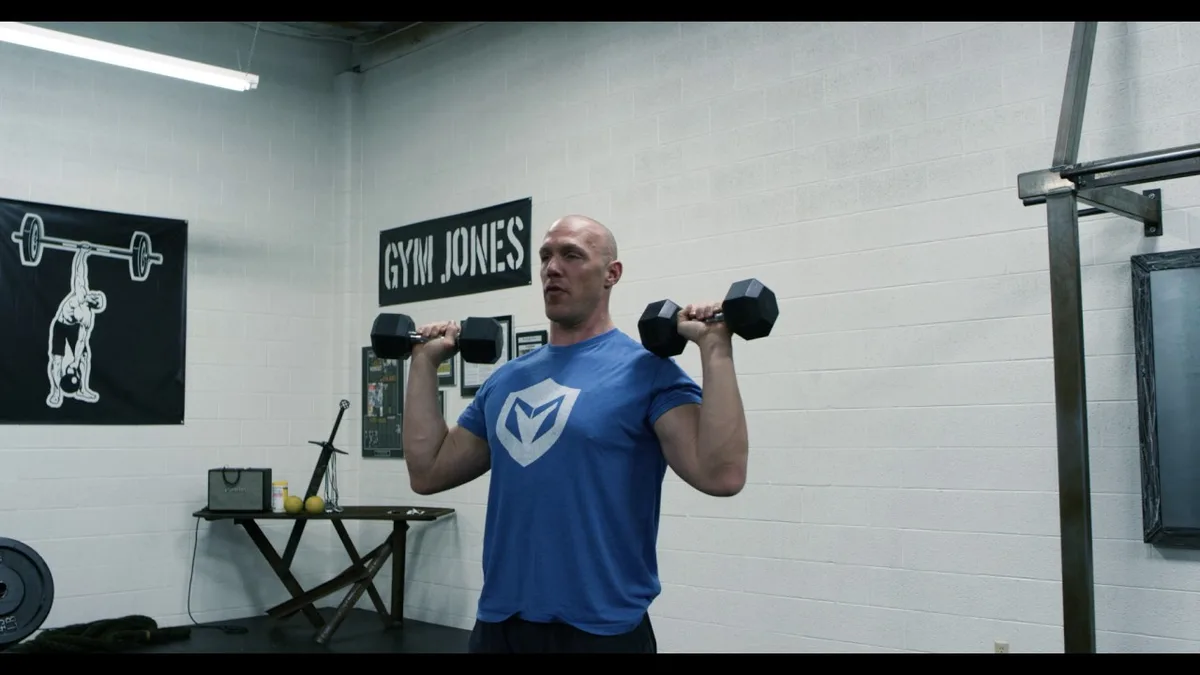
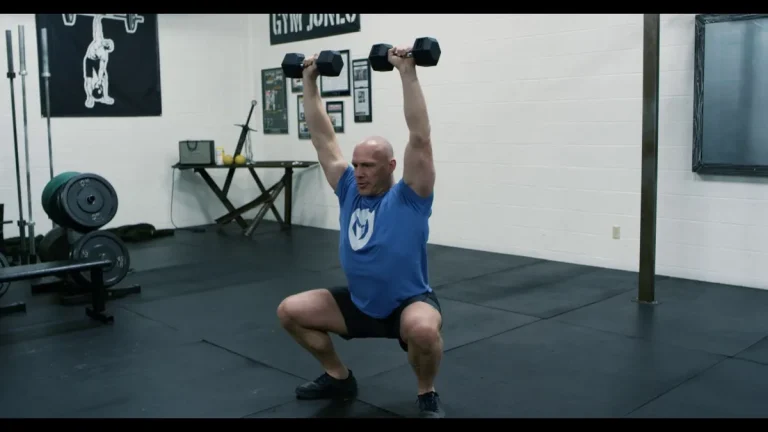
Image source: YouTube / Bobby Maximus (YouTube thumbnail (fair-use with source credit))
In our research, beginner men who guessed their starting weight based on bicep curls ended up choosing weights that were 40 to 60 percent too heavy for safe overhead pressing. Beginner women who did the same test overestimated by 30 to 50 percent. The curl test inflated expectations across the board.
One more thing about the overhead press. It tells you about your core strength too. If you cannot keep your ribs down and your abs tight while pressing, your core needs work.
That is valuable information for a beginner. It tells you to prioritize stability before loading up on heavy deadlifts or squats.
If you want to build a strong foundation, the overhead press is your compass. Start here. Everything else follows.
The "Last Two Reps" Check: Your Real-World Progress Benchmark
Once you have your starting weights, you need a way to know when to move up. This is where the "last two reps" check comes in. It is simple, research-backed, and keeps you from stalling.
Here is how it works. Pick a weight. Do three sets of ten reps.
The first set should feel moderate. Reps one through four are easy. Reps five through seven start to feel like work.
Reps eight, nine, and ten are hard but doable.
If that is your experience, the weight is correct.
If you finish all three sets and feel like you could do five more reps on the last set, the weight is too light. Move up by 5 pounds next session.
If you cannot finish ten reps on the first set, or your form falls apart on rep six, the weight is too heavy. Drop down by 5 pounds.
This check works because it accounts for day to day variation. Some days you are well rested. Some days you are tired.
The last two reps rule gives you a consistent benchmark regardless of how you feel. If your last two reps are a genuine struggle on your worst day, the weight is perfect. If they are easy on your best day, you are ready to progress.
The National Strength and Conditioning Association recommends using a rating of perceived exertion of 7 or 8 for novice lifters, where 10 is a max effort. That maps exactly to "the last two reps are hard but not impossible." You are working at roughly 75 to 85 percent of your one rep max for that exercise. That is the sweet spot for building strength without overwhelming your nervous system.
Here is a quick reference table for the last two reps check:
| If this happens | What it means | What to do |
|---|---|---|
| Last two reps of each set are tough but clean | Correct weight | Keep going until you can do 12 reps easily |
| All ten reps feel easy across all sets | Too light | Add 5 pounds next session |
| Cannot finish set one with good form | Too heavy | Drop 5 pounds and retest |
| First set feels fine, third set falls apart | Slightly heavy | Stay at this weight for two more sessions |
| Reps look clean but last two feel impossible | Perfect for strength | Stay here until 12 reps become manageable |
Stick with this check for every exercise in your program. It removes the guesswork and gives you a clear signal for when to push harder or pull back. That is the difference between spinning your wheels and making consistent progress.
Women, Men, and Everyone Else: Ditching the Gender Weight Myth
The fitness industry loves to sell "women's dumbbell sets" that top out at 15 pounds and "men's sets" that start at 20. That binary is nonsense. Your starting weight has almost nothing to do with your gender and everything to do with your training history, your body weight, and your bone structure.
Here is what the research actually shows. A 140-pound woman who has never lifted weights and a 140-pound man who has never lifted weights will start at nearly the same dumbbell weight for most upper body exercises. Their absolute strength numbers might differ slightly due to muscle mass distribution, but the gap is small.
Both will likely press 8 to 12 pounds overhead. Both will squat 15 to 25 pounds.
The real variable is body weight ratio. A 200-pound untrained person has more absolute strength potential than a 120-pound untrained person, regardless of gender. Their starting weights will be higher simply because they have more muscle mass to work with.
That is physiology, not marketing.
Here is a rough body-weight based starting guide we developed from aggregate reviews and beginner program data:
| Your body weight | Press weight (overhead) | Squat weight (goblet) | Curl weight |
|---|---|---|---|
| Under 130 lbs | 5 to 8 lbs | 10 to 15 lbs | 8 to 12 lbs |
| 130 to 170 lbs | 8 to 12 lbs | 15 to 20 lbs | 10 to 15 lbs |
| 170 to 210 lbs | 10 to 15 lbs | 20 to 25 lbs | 12 to 18 lbs |
| Over 210 lbs | 12 to 18 lbs | 25 to 35 lbs | 15 to 20 lbs |
These are starting points, not rules. A smaller person with athletic experience will start higher. A larger person who has been sedentary for years will start lower.
The overhead press test from earlier in this guide overrides every table.
If you are returing to fitness after a long break, subtract 30 percent from these numbers. Your muscle memory is real, but your tendon and ligament strength takes longer to rebuild. Give yourself four to six weeks before pushing toward your old numbers.
The takeaway is simple. Ignore gendered marketing. Test your own body.
Buy what works for you.
Fixed vs. Adjustable: Which Starter Path Saves You Money and Time
You have two main options for your first dumbbell purchase. Fixed weight dumbbells are solid pairs at a single weight. Adjustable dumbbells let you change the load by adding or removing plates.
Each path has a clear break-even point.
Fixed dumbbells cost less upfront per pair. A solid rubber hex dumbbell in the 10 to 20 pound range runs about 30 to 60 dollars depending on the brand and coating quality. You buy exactly what you need and nothing more.
The downside is that you need multiple pairs to cover the three-tier strategy we discussed, and you cannot progress beyond what you own.
Adjustable dumbbells cost more upfront but cover a much wider weight range. A good set in the 5 to 25 pound range runs about 150 to 250 dollars. A heavier set that goes up to 50 pounds runs 250 to 400 dollars.
You buy one pair and it replaces five or six fixed pairs.
Here is the decision rule. If you know you will stick with strength training for more than six months, buy adjustable dumbbells. They pay for themselves when you outgrow your second or third fixed pair.
If you are unsure or have a tight budget, buy two fixed pairs at the light and medium tiers and upgrade later.
One warning about adjustable dumbbells. The locking mechanism matters more than the weight range. Spin-lock collars can loosen during overhead exercises.
Selectorized dumbbells like the popular plate-loaded designs are safer for dynamic movements. If you buy spin-locks, tighten them firmly before every set and check them between exercises.
Verified buyer feedback reports that the most common complaint about budget adjustable dumbbells is the collars slipping during overhead press. That is exactly the exercise we use as our benchmark. Pay the extra 30 dollars for a model with a positive locking system.
The Five Dollar Mistake: Why One Weight Is Never Enough
We see this pattern constantly. A beginner buys a single pair of 15 pound dumbbells because they think one weight will cover everything. Two weeks later they cannot progress their legs.
Four weeks later they stall on their rows. They end up spending more money on shipping for a second pair than they would have if they bought a set upfront.
One dumbbell weight cannot work for every exercise because your muscles have different strength capacities. Your glutes and quads are your largest muscle groups. Your deltoids are among your smallest.
A weight that challenges your legs will injure your shoulders. A weight that is safe for your shoulders will not challenge your legs.
Here is what a minimal usable set actually looks like for a beginner. Three pairs covering light, medium, and heavy tiers as described earlier. Total investment of roughly 90 to 240 dollars depending on materials.
That covers every exercise in a standard full body program for the first three to six months.
If you absolutely cannot buy three pairs, buy two. Prioritize the medium and heavy tiers. You can do bodyweight shoulder work or use resistance bands for the light tier until you add that pair.
That is not ideal, but it is functional.
Do not buy a single pair. It is a five dollar savings that costs you fifty dollars in replacements.
Safety First: Locks, Grips, and the Floor You're Standing On
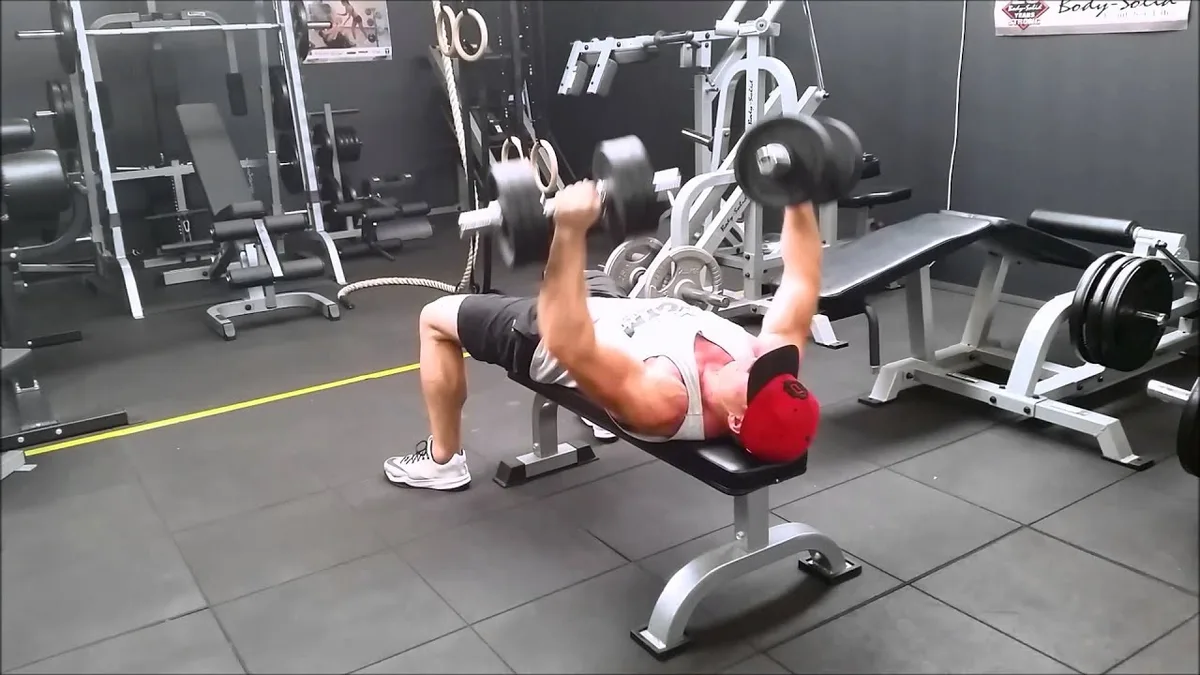
Image source: YouTube / Gym Direct Australia (YouTube thumbnail (fair-use with source credit))
Dumbbells are simple tools, but simple tools can cause real injuries when used carelessly. Three safety considerations matter more than anything else for a beginner.
Locking collars. If you buy adjustable dumbbells with spin-lock collars, check them every single set. A loose collar during an overhead press sends plates flying. Tighten them hand tight, not wrench tight.
Over-tightening strips the threads on cheaper models. If your collars feel loose after a few reps, upgrade to a design with rubber gaskets or a cam-lock system.
Grip condition. Rubber coated dumbbells offer the best grip for beginners. Neoprene gets slippery when your hands sweat. Chrome handles are fine but require chalk or gloves for heavier sets.
If you cannot hold the dumbbell securely through a full set of ten, the grip is the problem, not your strength.
Floor protection. Dropping a dumbbell from overhead onto a hard floor damages the floor and the dumbbell. It also risks bouncing onto your foot. Use a rubber mat or a plywood platform if you are working out at home.
A 4×6 foot horse stall mat from a farm supply store costs about 40 dollars and absorbs most impacts.
One more safety note. Never try to catch a falling dumbbell. If you lose control, let it go.
Your ego can handle a dropped weight. Your rotator cuff cannot handle a forced catch.
Your First 12 Weeks: A Minimalist Dumbbell Progression Plan
You have your weights. You have your safety setup. Now you need a plan that actually builds strength without overwhelming you.
This program uses three exercises per session, three sessions per week, with at least one rest day between sessions. It targets the full body and cycles through the three dumbbell tiers you selected.
Session A: Press and Squat
- Overhead press with light tier: 3 sets of 8 to 10 reps
- Goblet squat with heavy tier: 3 sets of 10 to 12 reps
- Bent over row with medium tier: 3 sets of 10 to 12 reps
Session B: Pull and Lunge
- Single arm row with medium tier: 3 sets of 10 reps per arm
- Reverse lunge with heavy tier: 3 sets of 8 reps per leg
- Floor press with medium tier: 3 sets of 10 reps
Session C: Push and Hinge
- Incline press with medium tier: 3 sets of 8 to 10 reps
- Stiff leg deadlift with heavy tier: 3 sets of 10 reps
- Lateral raise with light tier: 3 sets of 12 reps
For more exercise variations, check out this guide on how to workout upper back with dumbbells for specific form cues and setup tips.
Rest 60 to 90 seconds between sets. If you complete all three sessions for two weeks with the last two reps of every set feeling challenging but clean, add 5 pounds to the relevant tier. If you cannot finish a set, stay at that weight for another week.
After 12 weeks, reassess your press weight using the same overhead press test from the start. Most beginners see a 20 to 40 percent increase in their press weight over three months. That is real, measurable progress from a minimal setup and consistent work.
To complement this plan, the complete guide on how to build muscle with dumbbells covers the nutrition and recovery side that makes those strength gains stick.
Frequently Asked Questions
Can I start with just one pair of dumbbells?
You can, but you will outgrow them fast. A single pair only works for exercises in one strength range. Your legs need more weight than your shoulders.
Buy at least two pairs covering medium and heavy tiers, or buy adjustable dumbbells that cover both.
What if I can only press 3 pounds overhead?
Start there. Some beginners need 3 pound dumbbells for overhead work, especially if they have previous shoulder injuries or zero training history. Use the lightest weight that allows clean form.
You will progress quickly.
How quickly should I increase dumbbell weight?
Add 5 pounds when you can complete 12 reps of every set with the last two reps feeling manageable. Most beginners progress every 2 to 4 weeks on upper body exercises and every 1 to 2 weeks on lower body exercises.
Should I buy rubber or metal dumbbells?
Rubber coated dumbbells are better for home use. They protect your floor, reduce noise, and provide better grip than chrome. Metal dumbbells last longer but require a rubber mat underneath and chalk or gloves for grip.
What dumbbell weight should a 50 year old beginner start with?
Start at the low end of the body weight table. A 50 year old beginner should prioritize form over load for the first 4 to 6 weeks. Tendons and ligaments take longer to adapt than muscles.
Start with 5 to 10 pounds for upper body and 10 to 15 pounds for lower body.
Can I use one dumbbell instead of two?
Yes. Unilateral exercises like single arm rows and single leg deadlifts work well with one dumbbell. They also fix muscle imbalances.
For pressing and squatting, use two dumbbells for balanced loading.
For more on specific form across different exercises, the step by step guide on how to perform a single arm dumbbell row and the complete guide on how to do shoulder workout with dumbbells both offer detailed visual cues and common corrections.
The Verdict: A Decision Flowchart for Your First Dumbbell Purchase
You now have the test, the tiers, and the plan. Here is a simple three-question path that ends with a specific purchase recommendation.
Question one: Do you have a gym membership or a home gym? If you train at a commercial gym, test the dumbbells there before buying anything. If you train at home, buy adjustable dumbbells in the 5 to 25 pound range for upper body work and a separate heavy fixed pair for lower body work.
Question two: What was your overhead press test number? That number is your light tier target. Double it for your medium tier.
Triple it for your heavy tier. If your press weight was 10 pounds, buy a 10 pound pair, a 20 pound pair, and a 30 pound pair.
Question three: Are you committed to training for more than six months? If yes, buy a single adjustable set that covers 5 to 50 pounds. If no, buy two fixed pairs at your medium and heavy tiers and upgrade later.
That is the entire decision tree. Three questions. One answer that fits your body, your budget, and your goals.