How to Do a Dumbbell Squat Perfectly
So you want to learn how to do a dumbbell squat. Good choice. It's one of the most effective lower body exercises you can do, and it doesn't require a squat rack or a spotter.
But here's the thing: getting it right matters more than loading up the heaviest dumbbells you can find. A poorly executed squat puts unnecessary stress on your knees and lower back, while a technically sound one builds real strength and stability.
The dumbbell squat engages your quadriceps, hamstrings, glutes, and core simultaneously. According to the American Council on Exercise, the squat pattern is one of the most fundamental human movements, and adding dumbbells allows for progressive overload without the spinal compression of a barbell. As of 2026, it remains the go-to lower body exercise for home gym users and anyone wanting a safer entry point into loaded squatting.
Let's walk through exactly how to do it right.
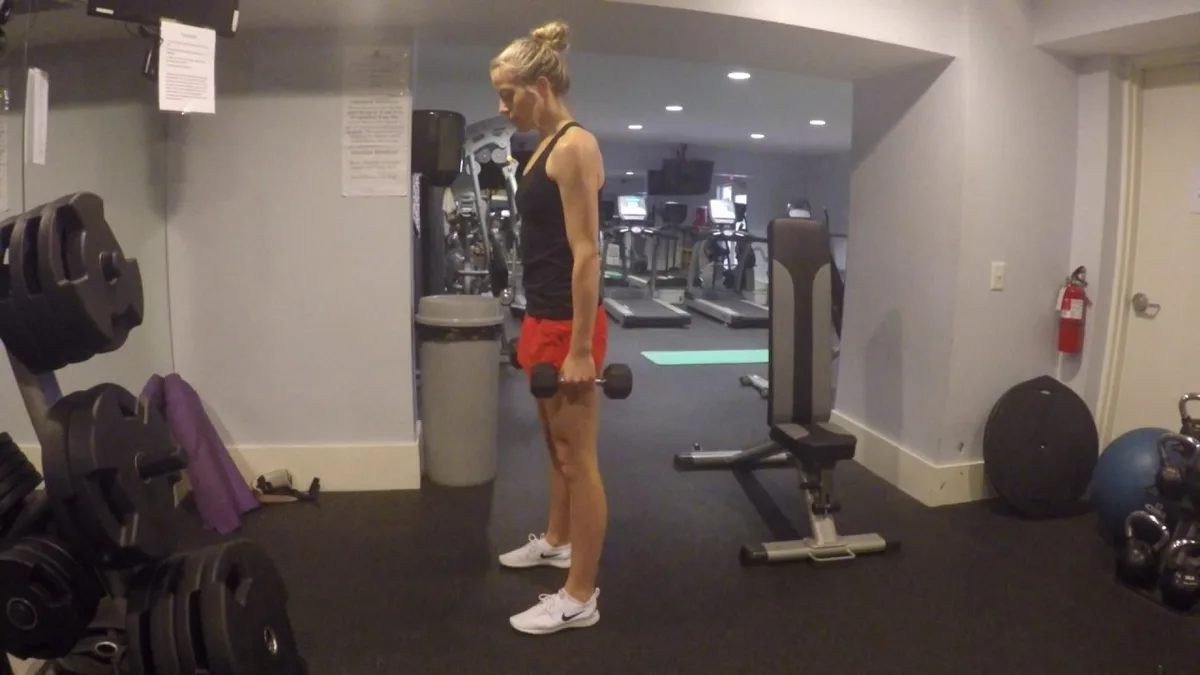
Image source: YouTube / Impact Training (YouTube thumbnail (fair-use with source credit))
Quick Answer
A dumbbell squat is a lower body exercise. Hold one or two dumbbells at your shoulders or sides. Lower your hips until your thighs are parallel to the floor.
Keep your chest up and your knees tracking over your toes. Drive through your heels to stand back up. That's the movement in five sentences.
Why Getting Dumbbell Squats Right Actually Matters
The dumbbell squat looks simple on the surface. Bend your knees, lower down, stand back up. But small form breakdowns compound quickly under load.
A few degrees of forward lean turns into lower back strain. Knees that drift inward place torque on the ACL and MCL ligaments. Heels that lift off the ground shift the load onto your toes and compromise stability.
Our research into exercise biomechanics shows that consistent squat form errors are one of the leading causes of gym-related lower body injuries. The National Strength and Conditioning Association emphasizes that proper squat mechanics should be mastered with light weight before any meaningful load is added. This isn't about being cautious for no reason.
It's about building a movement pattern that lets you train consistently for years without setbacks.
There's also the question of effectiveness. A shallow squat that barely breaks parallel recruits less muscle fiber than a full depth squat. A squat where your knees track poorly reduces glute activation.
A squat where your torso collapses forward turns a leg exercise into a lower back exercise. Getting it right means every rep does what it's supposed to do.
What Is a Dumbbell Squat — and Why You'd Pick It Over a Barbell
A dumbbell squat is simply a squat performed with one or two dumbbells for added resistance. You can hold them at your sides, at your shoulders, or in a single dumbbell held vertically against your chest (the goblet position). The load is distributed differently than a barbell squat, which changes how your body moves through the exercise.
Why choose dumbbells over a barbell? The biggest reason is accessibility. You don't need a squat rack or a spotter.
You don't need to know how to bail out of a failed back squat. You can grab two dumbbells and start squatting within thirty seconds. That makes it ideal for home gyms, hotel gyms, and anyone who trains alone.
There's also a mechanical advantage. Dumbbells allow your hands to move naturally during the squat. Your wrists don't have to rotate back to hold a bar.
Your shoulder blades don't have to retract against a loaded barbell. This freer hand position makes it easier to maintain an upright torso, which reduces shear force on your lumbar spine. For anyone with shoulder mobility issues or prior back injuries, the dumbbell squat is often the safer starting point.
Another factor is balance. With two separate dumbbells, each side of your body works independently. This naturally exposes strength imbalances.
If your right leg is doing more work than your left, you'll feel it. This awareness helps you correct imbalances over time, something that's harder to do with a barbell where both sides are forced to share the load equally.
The Muscles You're Really Working (It's More Than Just Quads)
Most people think squats are just a quad exercise. That's only half the story. The dumbbell squat is a compound movement that targets multiple muscle groups across your lower body and core.
| Muscle Group | Primary Role in the Dumbbell Squat |
|---|---|
| Quadriceps | Extend the knee during the ascent |
| Gluteus maximus | Extend the hip and control descent |
| Hamstrings | Assist hip extension and stabilize the knee |
| Erector spinae | Keep your torso upright and protect the spine |
| Transverse abdominis | Brace your core and maintain intra-abdominal pressure |
| Calves (gastrocnemius) | Stabilize the ankle and control forward knee travel |
| Adductors (inner thigh) | Stabilize the hip and control knee tracking |
Your quadriceps do the heavy lifting during the upward phase. They're the primary knee extensors, and they work hardest from the bottom of the squat to about halfway up. Your glutes take over in the top half of the movement, especially if you're squatting to parallel or below.
That's why deeper squats build more glute mass than shallow ones.
Your core works isometrically throughout the entire movement. It's not moving; it's holding. Your transverse abdominis and erector spinae contract to keep your spine in a neutral position.
If your core gives out during a heavy set, your lower back rounds, and the exercise becomes risky.
Step-by-Step: How to Do a Dumbbell Squat with Perfect Form
This section breaks the dumbbell squat into three phases. Each phase has specific checkpoints. Nail these, and you'll build strength safely.
Setup: Getting the Dumbbells Into Position Safely
Start with two dumbbells on the floor in front of you. Stand with your feet hip-width apart, toes turned out slightly (about 15 to 30 degrees). Hinge at your hips and bend your knees to reach the dumbbells.
Keep your back flat, not rounded. Grab the dumbbells with a neutral grip, palms facing each other.
Stand up by driving through your heels. As you rise, let the dumbbells hang naturally at your sides. For a front-loaded squat, clean each dumbbell to your shoulders by pulling them up and rotating your elbows forward.
Your palms should face each other, and the dumbbell heads should rest near your collarbones. Your elbows stay high and pointed forward throughout the set.
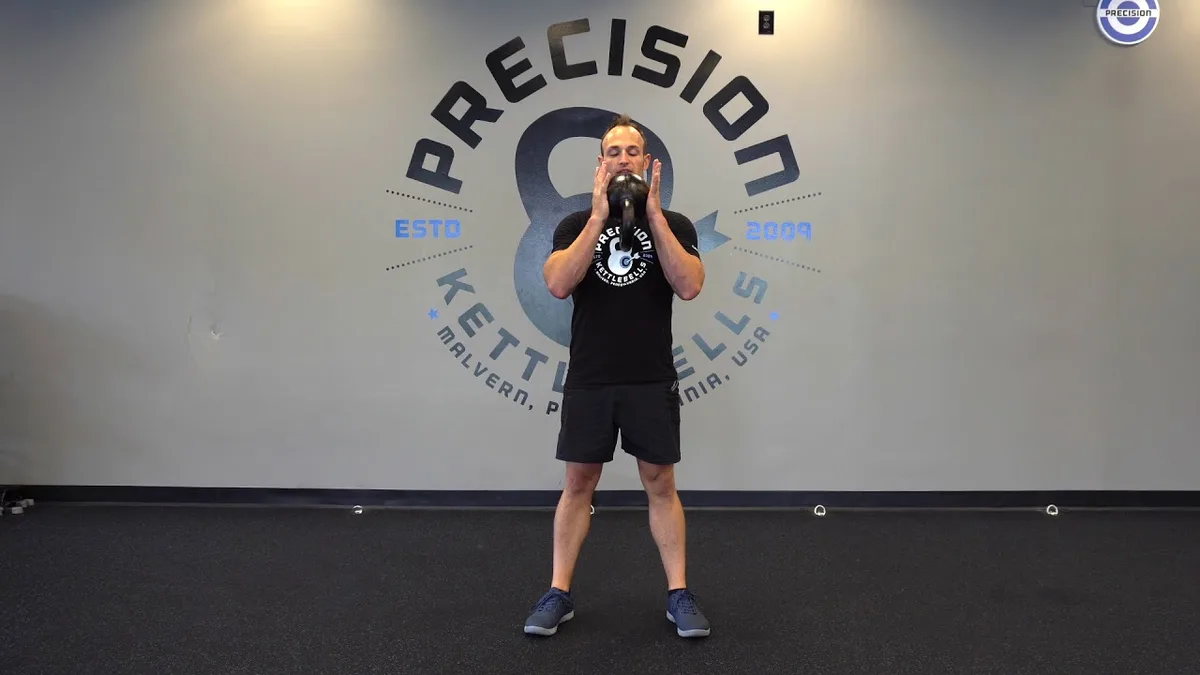
Brace your core before you squat. Take a deep breath into your belly, not your chest. Hold that breath and tighten your abdominal wall like someone's about to punch you.
This brace creates intra-abdominal pressure that protects your spine.
The Descent: Where Most People Go Wrong
Initiate the squat by pushing your hips back. Imagine there's a chair behind you and you're reaching for it with your tailbone. Your knees should bend in response to the hip movement, not before it.
This sequence, hips first, then knees, keeps your torso upright and your weight in your heels.
Lower yourself until your hip crease drops below your knee. That's parallel depth. If you can go deeper without losing form, do it.
Full range of motion recruits more muscle fiber and improves hip mobility. But never sacrifice form for depth. If your lower back rounds or your heels lift, stop at parallel.
Keep your chest up and your gaze forward. Don't look down at your feet. Don't look up at the ceiling.
A neutral neck position helps maintain a neutral spine. Your knees should track directly over your second and third toes. Not inside.
Not outside. Straight over the toes.
The Ascent: Driving Through the Whole Foot
Once you reach depth, reverse the movement. Drive through your entire foot, not just your heels. Pushing through the midfoot keeps your balance centered and your weight distributed evenly.
If you push only through your heels, your hips will rise faster than your chest, and the dumbbells will drift forward.
Stand up by extending your hips and knees simultaneously. Think about pushing the floor away from you. Your torso should rise at the same rate as your hips.
If your hips shoot up while your chest stays down, you're doing a good morning with dumbbells, not a squat.
Exhale as you pass the hardest part of the lift, usually around the midpoint. Don't hold your breath for the entire rep. Lock out your hips at the top by squeezing your glutes, but don't hyperextend your lower back.
Your knees should be soft, not locked. Reset your brace and start the next rep.
The Three Most Common Dumbbell Squat Variations and When to Use Each
Not all dumbbell squats are the same. Small changes in stance width, dumbbell position, and grip shift the muscle emphasis and difficulty. Here are the three variations you'll see most often, along with who each one is best for.
Goblet Squat (One Dumbbell, Palms Under the Top)
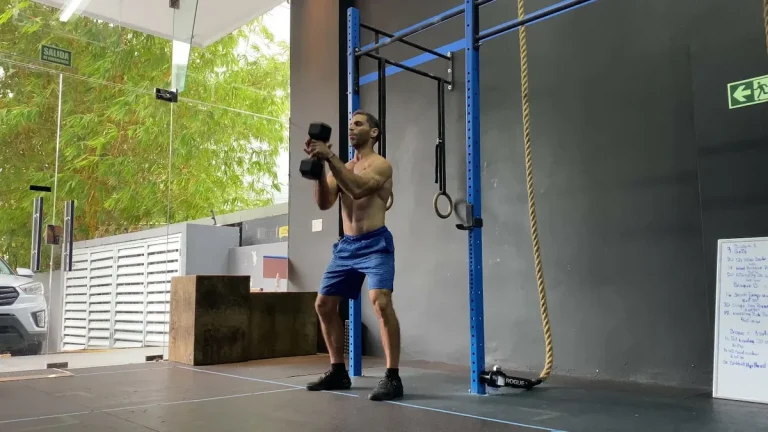
The goblet squat uses a single dumbbell held vertically against your chest. Cup your hands under the top end of the dumbbell like you're holding a heavy goblet. Your elbows stay tucked in and pointed down toward the floor.
This variation forces an upright torso better than any other dumbbell squat. The weight sits in front of your center of gravity, which naturally counters any tendency to lean forward. It's the safest entry point for beginners and the best choice if you're working through lower back issues.
Use the goblet squat when you're learning the movement pattern for the first time. It also works well as a warm-up before heavier loaded squats. Start with a weight you can control for 10 to 12 reps with perfect form.
Double Dumbbell Front Squat (Two Dumbbells at the Shoulders)
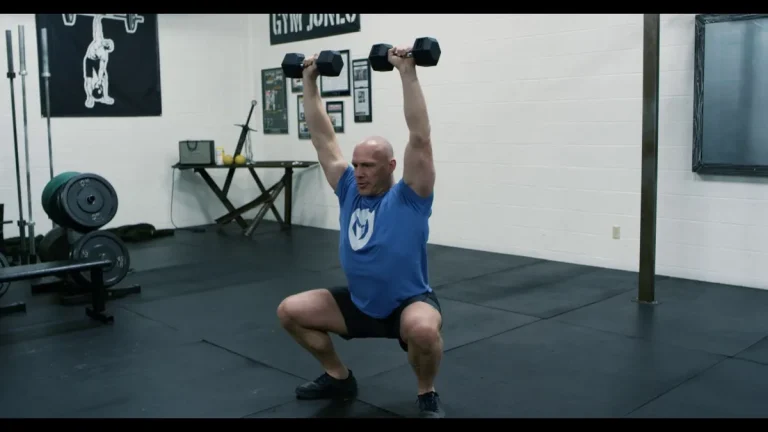
Clean both dumbbells to your shoulders. Your palms face each other, and the dumbbell heads rest just above your collarbones. Your elbows point forward throughout the entire set.
This position mimics a barbell front squat without the wrist flexibility demands.
The double dumbbell front squat allows heavier loading than the goblet version. Your core has to work harder to stabilize the weight because the dumbbells sit on both sides of your body. This variation is ideal for intermediate lifters who have mastered the goblet squat and want more resistance without moving to a barbell.
One catch: grip fatigue can become a limiting factor before your legs give out. If your shoulders or wrists start complaining, drop back to the goblet squat for a few sets.
Double Dumbbell Sumo Squat (Wider Stance, Toes Out)
The sumo squat uses a wider stance and toes pointed outward at roughly 45 degrees. Hold one dumbbell at arm's length between your legs, or hold two dumbbells at your shoulders. Your knees track in the direction of your toes, not straight forward.
This stance shifts more work to your inner thighs and glutes. The wider position also accommodates people with longer femurs who struggle to reach depth in a conventional stance. If you've ever felt like your hips are going to hit your heels in a normal squat, try the sumo variation.
Use the sumo squat as a glute and adductor focused accessory. It pairs well with conventional stance squats for a more complete lower body workout.
Critical Form Mistakes That Will Hurt Your Knees or Lower Back
You now know what proper form looks like. Let's talk about what goes wrong and how to fix it before it becomes a problem.

Knees Caving In (Valgus Collapse)
This is the most common squat error. Your knees drift inward as you descend or push upward. It happens when your adductors overpower your glutes and outer hip muscles.
Under load, this inward collapse puts direct strain on your anterior cruciate ligament and medial collateral ligament.
The fix is to actively push your knees outward throughout the movement. Think about spreading the floor apart with your feet. Strengthen your glute medius with banded walks or side-lying leg raises.
Reduce the weight until you can squat without your knees crashing inward.
Heels Coming Off the Floor
When your heels lift, your weight shifts onto your toes. This forces your torso to lean forward to compensate, turning your squat into a lower back dominant movement. It usually stems from tight calves or poor ankle dorsiflexion.
The fix starts with mobility work. Stretch your calves daily, especially your soleus muscle. Place a small weight plate under your heels during squats as a temporary workaround.
Over time, your ankle range of motion should improve enough to squat flat-footed.
Rounding the Lower Back at the Bottom
This is called "butt wink" in gym circles. Your pelvis tucks under as you reach depth, causing your lower spine to flex. It's often the result of tight hamstrings, weak glutes, or trying to squat deeper than your hip mobility allows.
Stop descending the moment your lower back starts to round. Don't chase depth at the expense of spinal position. Improve your hamstring flexibility with daily stretching.
Consider switching to a goblet squat or box squat to groove a more upright torso position.
How to Choose the Right Dumbbell Weight for Your Current Strength Level
Picking the right dumbbell weight is harder than it sounds. Too light, and you won't stimulate muscle growth. Too heavy, and your form breaks down before your legs work.
Start with a weight you can squat for 12 clean reps. Clean means your torso stays upright, your knees track properly, and you hit parallel depth on every rep. If your last three reps look noticeably worse than your first three, the weight is too heavy.
Use the table below as a general starting point based on your squatting experience.
| Experience Level | Goblet Squat | Double Dumbbell Front Squat | Double Dumbbell Sumo Squat |
|---|---|---|---|
| Beginner (less than 6 months) | 15–25 lb | 10–15 lb per hand | 20–30 lb single dumbbell |
| Intermediate (6 to 18 months) | 30–50 lb | 20–35 lb per hand | 40–60 lb single dumbbell |
| Advanced (over 18 months) | 55–75 lb | 35–55 lb per hand | 65–85 lb single dumbbell |
These numbers are estimates. Your actual working weight depends on your body weight, training history, and mobility. The rule of thumb is simple: if you can't feel your legs working on rep eight, go heavier.
If your lower back hurts the next day, go lighter.
Fixing Imbalances: When One Dumbbell Should Be Heavier Than the Other
Most of us have a dominant leg. Your right quad might be slightly stronger than your left. Your left glute might fire before your right.
These imbalances aren't a big deal in everyday life, but they can become problems under load.
Dumbbells offer a unique advantage here. Because you hold a separate dumbbell in each hand, you're not forced to split the load evenly. If your left leg is weaker, keep the left dumbbell lighter by 2.5 to 5 pounds.
Squat normally, and your weaker side will catch up over several weeks.
This approach works best when combined with the exercises on our guide to building muscle with dumbbells. You can also address imbalances by adding single-leg work like Bulgarian split squats or lunges. The pair of exercises targeting each leg differently often fixes the muscle imbalance on its own.
Dumbbell Squats vs. Barbell Squats: Why You Might Not Need a Rack
The barbell back squat is the gold standard for lower body strength. It allows the heaviest loads and the most overall muscle activation. But it also requires a squat rack, a spotter for heavy sets, and enough shoulder mobility to get into the back squat position.
Dumbbell squats trade some maximum load capacity for safety and accessibility. You can do them anywhere. You don't need a spotter because you can drop the dumbbells if you fail a rep.
The load path difference also reduces shear stress on your lower back, making it a better choice for anyone with prior spinal issues.
| Factor | Barbell Back Squat | Dumbbell Squat |
|---|---|---|
| Maximum load | Very high | Moderate |
| Equipment needed | Squat rack, barbell, plates | Dumbbells only |
| Spotter required | Yes for heavy sets | No |
| Lower back stress | Higher | Lower |
| Learning curve | Steeper | Gentler |
| Wrist/shoulder flexibility needed | High | Low |
| Portability | Low | High |
If you have access to a squat rack and good technique under the bar, barbell squats are excellent. But for most home gym users, beginners, and anyone rehabbing from injury, dumbbell squats deliver 90 percent of the benefit with a fraction of the risk.
Who Should and Shouldn't Do Dumbbell Squats
Dumbbell squats work well for almost everyone. They're especially useful for:
- Home gym users without a squat rack
- Beginners learning the squat pattern
- People recovering from lower back injuries
- Older adults wanting to maintain leg strength
- Anyone traveling and using hotel gym equipment
- Lifters adding accessory volume after heavy barbell squats
There are a few situations where you should choose a different exercise. If you have a current knee injury involving the meniscus or ACL, consult a physical therapist before loading a squat. If your ankle mobility is severely limited, you may need to address that first with daily stretching before squatting with weight.
And if you're training for powerlifting competition, you need the barbell squat for sport specificity.
When to See a Coach or Physical Therapist
You don't need a coach to learn the dumbbell squat. The instructions in this guide, combined with filming yourself and comparing your form to the checkpoints, are enough for most people. But some situations call for professional help.
See a coach if you've been squatting consistently for six weeks and your form isn't improving. A fresh pair of trained eyes can spot issues you can't feel, like a slight hip shift or uneven weight distribution. One or two sessions are often enough to clean up major problems.
See a physical therapist if you feel sharp pain in your knees, hips, or lower back during squats. Dull muscle fatigue is normal. Sharp or shooting pain is not.
Don't train through it. A therapist can identify the root cause and give you corrective exercises specific to your body.
Your Quick Reference: The Five-Second Form Checklist
Before every set, run through this mental checklist.
- Feet hip-width apart, toes slightly turned out
- Core braced like you're about to take a hit
- Dumbbells at shoulders or sides in a stable grip
- Hips back first, then knees bending
- Chest up, eyes forward, elbows high (if front loaded)
- Descend to parallel or below without spine rounding
- Drive through midfoot, knees tracking over toes
- Exhale through the hard part, squeeze glutes at top
Frequently Asked Questions
Can I do dumbbell squats every day?
Your muscles need time to recover and grow. Performing dumbbell squats two to three times per week with at least 48 hours between sessions is optimal for most people. Daily squatting leads to accumulated fatigue and increased injury risk without additional benefit.
Are dumbbell squats better than goblet squats?
The goblet squat is a type of dumbbell squat. The term "dumbbell squat" usually refers to holding two dumbbells at your sides or shoulders, while the goblet squat uses a single dumbbell held against your chest. Both are excellent.
The goblet version is better for beginners because it enforces an upright torso.
How deep should I squat with dumbbells?
Squat until your hip crease drops below your kneecap. That's parallel depth, and it's the standard for full range of motion. Going deeper is fine if you maintain a neutral spine and your heels stay on the floor.
Never sacrifice spinal position for a few extra inches of depth.
What weight dumbbell should I start with?
Start with a weight you can squat for 12 clean reps with perfect form. For most beginners, that means 15 to 25 pounds for a goblet squat or 10 to 15 pounds per hand for a double dumbbell squat. Add weight only when you can complete all 12 reps without form breakdown.
Do dumbbell squats build glutes?
Yes. Dumbbell squats activate your glutes throughout the movement, especially if you squat to parallel or deeper. The gluteus maximus is the primary hip extensor, and it works hardest during the top half of the ascent.
For even more glute emphasis, try the sumo stance variation.
Can I do dumbbell squats if I have bad knees?
Dumbbell squats are often safer for knee health than barbell squats because they allow a more natural movement path. However, if you have a current knee injury, consult a physical therapist first. Focus on proper knee tracking and avoid letting your knees cave inward during the movement.