How Many Dumbbell Curls Should You Do
You've probably typed "how many dumbbell curls should i do" into a search bar and got a dozen different answers. Eight to twelve reps. Three sets.
Do them until you feel the burn. None of that is wrong exactly, but none of it accounts for you, your experience, your goals, and whether your arms have actually been growing lately. The truth is, the right number changes depending on why you're curling in the first place.
A 2021 position stand from the American College of Sports Medicine confirms that resistance training outcomes vary significantly based on volume, load, and rest intervals. So the one-size-fits-all rep range you've been hearing? It doesn't exist.
What does exist is a simple decision framework that lets you plug in your own situation and get a real answer. Let's walk through it.
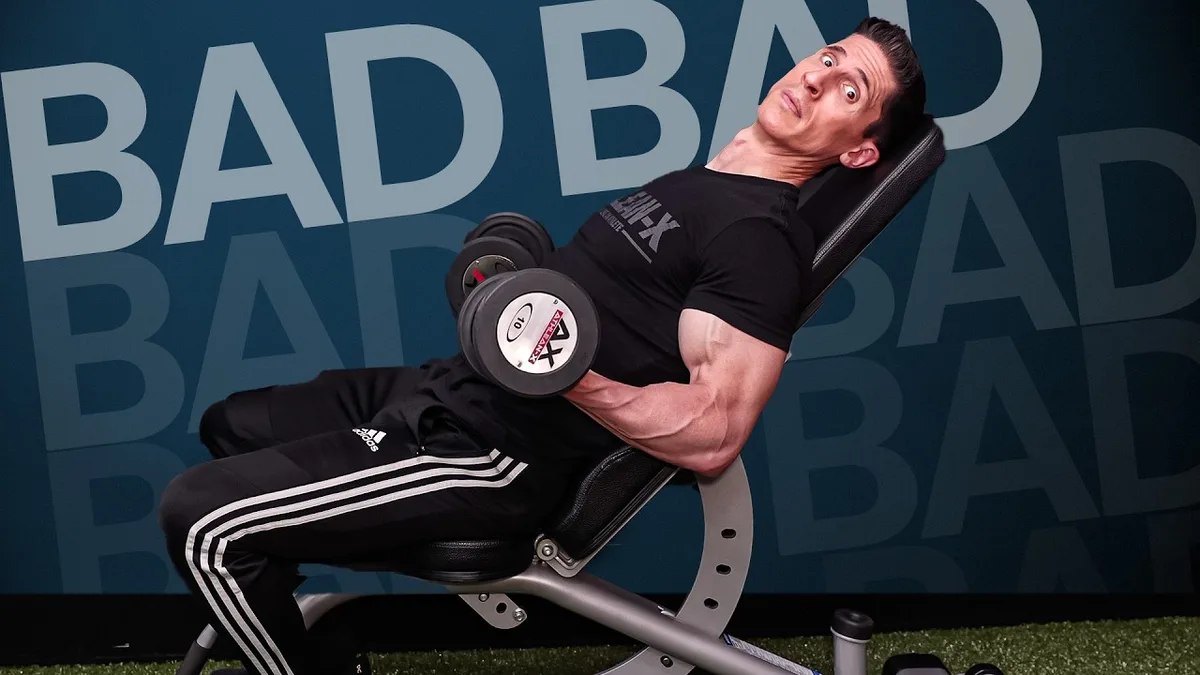
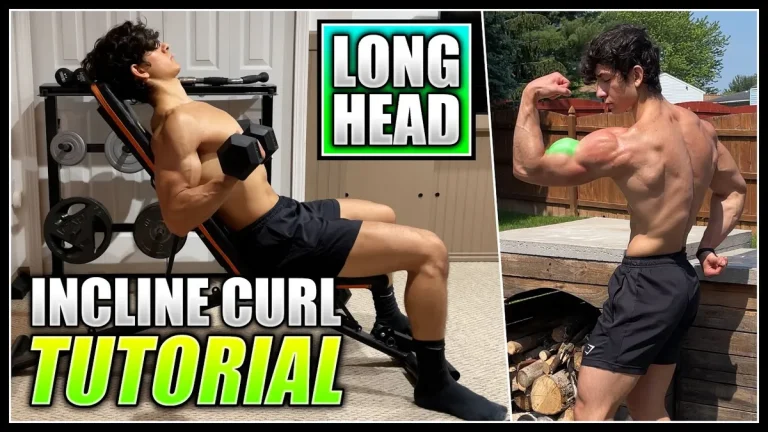
Image source: YouTube / ATHLEAN-X™ (YouTube thumbnail (fair-use with source credit))
Quick Answer
The number depends on your primary goal. For muscle growth, do 3 to 4 sets of 6 to 12 reps. For pure strength, do 4 to 5 sets of 4 to 6 reps with heavier weight.
For muscular endurance and definition, do 2 to 3 sets of 15 to 20 reps. Pick your goal, match the range, and adjust weight so the last 2 reps are genuinely hard.
First, What Are You Training For? (The 3 Goals That Change Your Reps)
Before you pick a number, you need to decide what "working" looks like to you. Do you want sleeves that feel tighter? Do you want to curl more weight than your buddy?
Or do you want arms that look defined without adding much size? Each answer leads to a different rep range.
Goal 1: Bigger, Rounder Biceps (Hypertrophy)
This is the most common goal. You want visible peaks when you flex. Muscle hypertrophy happens when you accumulate enough mechanical tension and metabolic stress in a moderate rep range.
Research consistently shows that 6 to 12 reps per set produces the strongest growth signal for most people.
You'll want to choose a weight that puts the last two reps of each set right at the edge of failure. Not so heavy that you're swinging. Not so light that you could do 20 without breaking a sweat.
If you can finish all 12 reps and feel like you could do three more, the weight is too light. If you can't get past rep 6 without losing form, it's too heavy.
Stick with 3 to 4 working sets per session. More than that and you risk overtraining such a small muscle group. Less than that and you might not generate enough stimulus to force adaptation.
Goal 2: Stronger Arms Without the Bulk (Strength Focus)
You might not care about sleeve-busting peaks. Maybe you want stronger pulling power for rows, pull-ups, or deadlifts. That's a different game.
Strength is best built with heavier loads and lower reps. Think 4 to 6 reps per set, sometimes as low as 3. You're looking at 4 to 5 sets per session.
The weight should be heavy enough that you can barely lock in that sixth rep with perfect form. Rest periods stretch longer here, 90 seconds to 2 minutes between sets, because you need full ATP recovery to lift heavy again.
Be careful with this approach on curls. The biceps are a relatively small muscle group with a tendon that runs right into the elbow joint. Loading too heavy too fast is a direct ticket to medial epicondylitis, golfer's elbow.
If you feel any sharp pain on the inside of your elbow, back the weight down immediately.
Goal 3: Leaner, More Defined Arms (Endurance / Toning)
"Toning" gets thrown around a lot in fitness marketing. What people usually mean is visible muscle definition without a lot of bulk. That's a combination of lower body fat and enough muscle endurance to keep the muscle firm at rest.
For this, you'll use lighter weight and higher reps. Aim for 15 to 20 reps per set, 2 to 3 sets per session. Rest periods are short, 30 to 45 seconds.
The goal isn't muscle failure. It's fatigue accumulation. You want the muscle to burn and pump up, but you don't need to reach mechanical failure.
This approach works well if you're in a caloric deficit or early in your training journey. It builds a solid foundation of work capacity without demanding heavy recovery.
How Much Weight Changes Everything
You can do the perfect number of reps with the wrong weight and get nothing out of it. Weight selection is the variable people mess up most often.
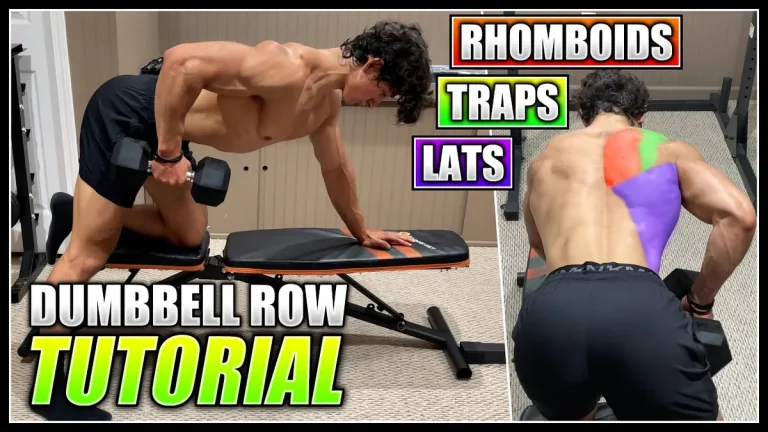
Image source: YouTube / I Review for You (YouTube thumbnail (fair-use with source credit))
For the hypertrophy range of 8 to 12 reps, your dumbbells should be heavy enough that rep 8 feels challenging and rep 12 requires real effort. If you breeze through all 12 and could keep going, the weight is too low. If your form breaks before rep 8, it's too high.
A practical test: do one set of curls with your chosen weight. If you hit 15 reps easily before failure, move up 5 pounds next session. If you can't get past 5 reps without arching your back or swinging your elbows, move down.
This is called auto-regulation. It works better than any chart.
For the strength range of 4 to 6 reps, you're working at roughly 80 to 85 percent of your one-rep max. That's heavy enough that you need full concentration. Beginners should not start here.
Build a foundation in the 8 to 12 range first.
The Set and Rep Decision Table
This table summarizes the three paths. Find your goal, then match the numbers.
| Goal | Reps Per Set | Sets Per Session | Rest Between Sets | Weight |
|---|---|---|---|---|
| Muscle growth (hypertrophy) | 6 to 12 | 3 to 4 | 60 to 90 seconds | Moderate — last 2 reps are hard |
| Strength | 4 to 6 | 4 to 5 | 90 seconds to 2 minutes | Heavy — 80 to 85% of max |
| Endurance / definition | 15 to 20 | 2 to 3 | 30 to 45 seconds | Light — enough to feel fatigue |

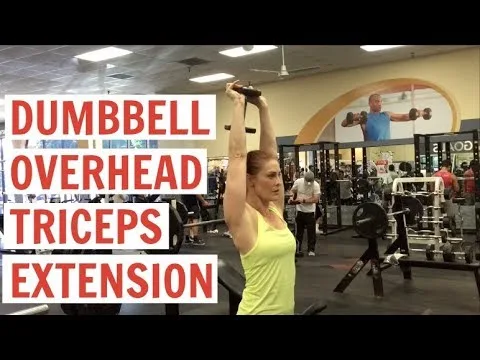
Image source: YouTube / Bobby Ojala (YouTube thumbnail (fair-use with source credit))
Notice that the strength path demands the most sets and the longest rest. Endurance is the opposite, more reps but fewer sets and shorter rests. Hypertrophy sits in the middle, which is why it's the most forgiving and the most common starting point.
How Many Days Per Week Should You Curl?
You can't grow muscle if you never give it a break. Biceps are small and they recover faster than your quads or back, but they still need recovery time.
Two sessions per week is the sweet spot for most people. Space them at least 48 hours apart. So if you train arms on Monday, hit them again on Thursday.
That gives the muscle fibers enough time to repair and supercompensate.
Three sessions per week can work if you keep the volume low per session, maybe 2 sets instead of 4. This is called high frequency training. Some advanced lifters use it to overcome plateaus.
But for most people, two sessions per week yields better results than three because each session can be more intense.
One session per week is the minimum for maintenance. If you're already happy with your arms and just want to keep what you have, one session with moderate volume is enough.
If you train biceps on back day, which is common, make sure you're not overdoing it. Back exercises like rows and pull-ups already hit the biceps as synergists. If you do 15 sets of back work followed by 12 sets of curls, you're probably overtrained.
Drop the curl volume on back day to 3 or 4 sets total. Save the heavier curl work for a separate arm day or leg day when your biceps are fresh.
Are You a Beginner, Intermediate, or Advanced Lifter?
Your experience level changes what "enough" looks like. A beginner grows from almost any stimulus. An advanced lifter needs precise volume and intensity to force progress.
Beginners (less than 6 months of consistent training) can grow with as few as 6 to 8 sets per week spread across 2 sessions. Don't overcomplicate it. Pick a weight in the 10 to 12 rep range, do 3 sets, and focus on form.
You'll see progress for weeks just from learning the movement pattern and building neuromuscular connection.
Intermediate lifters (6 months to 2 years) need more. Aim for 12 to 16 working sets per week for biceps. That means 3 to 4 sets per session across 2 or 3 weekly sessions.
You also need progressive overload. If you did 10 reps with 25 pounds last week, push for 11 or 12 this week before adding weight.
Advanced lifters (2+ years) often need 16 to 20 sets per week to break plateaus. That's 4 to 5 sets per session across 4 sessions, or higher volume on fewer days. Advanced lifters also benefit from periodization, cycling between heavy, moderate, and light weeks to avoid staleness and tendon stress.
Here's a quick gauge. If you've been curling the same weight for the same reps for over a month with no change, you're likely intermediate or advanced and your program needs adjustment.
Common Mistakes That Steal Your Gains
Let's clean up three errors that keep people stuck. These are the reasons someone does 100 curls a week and never sees their arms change.
Mistake 1: Shifting Weight With Momentum
The most common mistake in any gym. You lean back slightly, swing your shoulders, and use your lower back to launch the dumbbell up. That transfers tension away from the biceps.
You're working your spinal erectors more than your arms.
Fix it. Pin your elbows to your ribs. Keep your torso still.
If you can't lift the weight without swaying, go down in poundage. Controlled reps with lighter weight build more muscle than sloppy reps with heavy weight.
Mistake 2: Curling With a Straight Wrist
Watch people curl sometime. Most keep their wrists straight or slightly extended. That shifts load into the forearm flexors and reduces bicep activation.
You want a neutral wrist or a very slight extension, think of pouring a pitcher, through the entire movement.
Keeping a slight supination (palm turning upward) at the top of the curl maximizes peak contraction. This small adjustment can add noticeable size over time.
Mistake 3: Not Progressing Reps or Weight Over Time
Your muscles don't grow because you show up. They grow because you give them a reason to adapt. That reason is progressive overload.
If you curl 20 pounds for 10 reps every session for three months, your body has no incentive to change. It already handled that load easily.
Add one rep per set each week. When you hit the top of your rep range with good form, add 2.5 or 5 pounds. Even small jumps create the stimulus for growth.
What If Your Arms Aren't Growing? (The Plateau Fix)
You've been consistent. You're not swinging. You're eating enough protein.
But your arms look the same as they did two months ago.
Start with total weekly volume. Are you doing fewer than 10 hard sets per week? That's probably too low.
Are you doing more than 20? That might be too high, especially if you're not eating in a surplus. The sweet spot for most people is 12 to 16 sets.
Next check your recovery. Are you sleeping less than 7 hours a night? Sleep is when growth hormone spikes and muscle repairs.
Short sleep sabotages arm growth faster than any programming mistake.
Finally, vary your curl angle. Your biceps have two heads, the long head and the short head. Standard standing curls emphasize the short head.
Incline curls or bayesian curls stretch the long head more. Switching angles for a few weeks can kickstart growth when standard curls stall.
Quick Warm-Up That Protects Your Elbows
Cold elbows and curls don't mix. A 3 minute warm-up before your first set reduces injury risk and improves the mind muscle connection.
Start with 10 to 15 arm circles forward and backward. Then do 10 slow wrist flexor and extensor stretches. Follow with 15 band pull-aparts to wake up your upper back and shoulders.
Finally, do one light set of curls with 50 percent of your working weight for 10 to 15 reps.
That's it. Takes longer to describe than to do. Skip it only if you enjoy elbow pain.
How to Know When You're Doing Too Many Curls
More isn't always better. Overtraining biceps shows up in specific ways.
You feel elbow tenderness, especially on the inside. Your curls feel heavy even with light weight. Your arms ache more than 48 hours after training.
Your performance drops from session to session rather than improving. You wake up with stiff forearms or a dull ache near the elbow.
If any of these sound familiar, take a full week off from direct arm work. Do your normal back and leg workouts, but skip curls entirely. After a week, come back with 50 percent of your usual volume and see how you feel.
Most people return stronger, not weaker, after a proper deload.
Sample Curl Workouts for Each Goal
For Size: 3 Sets of 8 to 12 Reps
- Standing dumbbell curl: 3 sets x 8 to 12 reps
- Seated incline curl: 3 sets x 10 to 12 reps
- Hammer curl: 2 sets x 10 to 12 reps
- Rest 60 seconds between sets
Do this twice per week with at least 48 hours between sessions.
For Strength: 4 to 5 Sets of 4 to 6 Reps
- Standing dumbbell curl: 5 sets x 4 to 6 reps
- Weighted chin-up (alternate day): 4 sets x 3 to 5 reps
- No hammer curls or isolation work on strength days
- Rest 90 seconds to 2 minutes between sets
Do this once per week. Add a lighter pump session later in the week with higher reps and lower weight for blood flow.
For Endurance: 2 to 3 Sets of 15 to 20 Reps
- Standing dumbbell curl: 3 sets x 15 to 20 reps
- Hammer curl: 2 sets x 15 reps
- Concentration curl: 2 sets x 15 to 20 reps
- Rest 30 to 45 seconds between sets
Do this 2 to 3 times per week. You can superset with tricep work to save time.
One Last Thing: The Triceps Matter Too
Your biceps make up about one third of your upper arm mass. The triceps are the other two thirds. If you only curl, you're building a lopsided arm.
That's why you can have big biceps but still not have impressive arms.
Spend equal effort on tricep extensions, dips, or close-grip pressing. You don't need a separate section for triceps in every workout, but make sure they're in the rotation. Balanced arms look bigger and function better.
Frequently Asked Questions
Can I do dumbbell curls every day?
No. Biceps need 48 hours between sessions to repair and grow. Daily curling leads to tendonitis and stalled progress.
Stick to 2 or 3 sessions per week.
How many curls should a beginner start with?
Beginners should start with 3 sets of 10 to 12 reps, twice per week. Focus on form first. Add weight or reps only after you can complete every rep with controlled movement.
Is 20 pound dumbbells too heavy for curls?
It depends on your strength level. For many women, 20 pounds is heavy for high reps. For many men, it's a moderate starting weight.
Choose a weight where the last two reps of each set feel genuinely hard.
How many sets of curls per week for bigger arms?
Aim for 12 to 16 working sets per week total for biceps. That's 3 to 4 sets across 2 sessions, or 2 to 3 sets across 3 sessions. Adjust based on how your elbows feel.
Should I do curls before or after back exercises?
Do curls after back work to avoid pre-fatiguing your biceps. If you curl first, your biceps may fail during rows and pull-ups, limiting your back gains.
How many reps should I do for dumbbell curls to see results?
Aim for 8 to 12 reps per set if muscle growth is your goal. That range consistently produces the best results for hypertrophy. Do 3 to 4 sets per session and increase reps or weight every one to two weeks.
What is the best curl variation for bigger biceps?
The standing dumbbell curl is the most effective overall because it allows the heaviest load and full range of motion. Alternating arms helps with focus and mind muscle connection. Add incline curls for long head development and hammer curls for brachialis thickness.
Should I go to failure on every set of curls?
No. Reserve failure for your last set of the final exercise. Going to failure on every set increases injury risk and slows recovery.
Stop each set one or two reps shy of failure for the first two sets, then push the last set to technical failure.
How long does it take to see bicep growth from curls?
Visible growth takes 8 to 12 weeks with consistent training and adequate protein intake. Beginners often see changes sooner. Advanced lifters may need 16 weeks or longer.
Progress photos every two weeks are more reliable than daily mirror checks.
That's the full picture. The right number of dumbbell curls depends entirely on your goal, your experience level, and how well you recover. Pick a path from the table, stick with it for 8 weeks, and adjust based on what your elbows and your progress tell you.
Your arms will respond if you give them the right stimulus and enough time to adapt.
How to Pair Curls With Other Exercises
Curls work best when you pair them intelligently with other movements. The biceps are a pulling muscle. They get hammered during back exercises, rowing movements, and chin-ups.
If you do a heavy back workout and then smash curls, you risk overtraining.
A smarter approach is to pair biceps with a pushing movement instead. Triceps push. Biceps pull.
They don't compete for recovery. Pairing dumbbell curls with overhead tricep extensions or close-grip presses lets you train opposing muscles in the same session without overlap. This is called an antagonistic superset.
You get more work done in less time with better recovery.
If you prefer training arms on a dedicated day, put curls second after triceps. Triceps are larger and benefit from fresh strength. Curls respond well to pre-exhausted triceps because the biceps are fresh and ready to work.
When to Add Weight vs When to Add Reps
This is the progressive overload question that trips people up. Do you add weight first or reps first?
Add reps first. If you're doing 8 reps with 25 pounds, aim for 9 next week. Then 10.
Then 11. Once you hit 12 clean reps, add 2.5 or 5 pounds and drop back to 8 reps. Then repeat the cycle.
This method is safer for your elbow tendons. Jumping weight too fast on curls is the fastest route to golfer's elbow. Slow, steady progression through rep increases before weight jumps keeps tension on the muscle and off the tendon.
One exception. If you can comfortably hit 15 reps with your current weight but you're training for strength, jump up 5 pounds and drop to 6 reps. Strength goals skip the rep creep and go straight to heavier loads.
How to Fix Stalled Curl Progress
You've been consistent for weeks. You're eating right. But the dumbbells feel exactly as heavy as they did a month ago.
Something has to change.
Try a different angle first. Switch from standing curls to incline curls. The incline position stretches the long head of the biceps at the bottom, creating a different tension curve.
That alone can break a plateau.
Next try changing your tempo. Slow down the lowering phase to 3 or 4 seconds. The eccentric portion of a curl is where most of the muscle damage and growth signal happens.
A controlled negative forces your biceps to work harder without adding weight.
If that doesn't work, reduce volume for a week. Drop from 4 sets per session to 2. The lighter load gives your nervous system a reset.
When you come back to full volume the following week, you'll often be stronger.
The Role of Grip in Curl Effectiveness
Your grip changes which muscles get worked. Standard supinated grip (palms facing up) targets the biceps brachii directly. Neutral grip (palms facing each other, like a hammer curl) shifts load to the brachialis, a muscle under the biceps that pushes it upward for more peak.
Pronated grip (palms facing down) hits the brachioradialis in your forearm. That builds forearm thickness but barely touches the biceps. Use it selectively.
Rotate your grips across sessions. Do one session with supinated curls as your main movement. Next session lead with hammer curls.
This ensures balanced development and reduces repetitive strain on the same tendon attachment point.
How Many Curls Is Too Many
There is a ceiling. Most research on weekly volume for small muscle groups suggests that beyond 20 hard sets per week, the risk of overuse injury climbs faster than the muscle growth benefit.
If you're doing 5 sets of curls, 4 times per week, that's 20 sets. For natural lifters not using performance enhancing drugs, that's the upper limit. Your elbows will tell you if you're over that line.
Listen to them.
A better approach is 12 to 16 sets per week for growth, with a deload week every 6 to 8 weeks where you cut volume in half. That keeps your tendons healthy and your progress sustainable.
How to Progress After 6 Months of Curling
If you've been curling consistently for half a year, your body has adapted. The beginner gains are behind you. Now you need more sophisticated stimulus to keep growing.
Start adding intensity techniques. Drop sets work well for curls. Do your working set to near failure, then immediately drop the weight by 5 to 10 pounds and squeeze out more reps.
One drop set per session is enough.
Another option is rest pause sets. Take 15 seconds of rest mid set, then complete the remaining reps. This increases time under tension without adding weight.
Use it sparingly, once every two weeks, to avoid tendon strain.
How to Structure a Full Arm Day
A balanced arm day has equal volume for triceps and biceps. Here's a simple template.
| Exercise | Sets | Reps | Rest |
|---|---|---|---|
| Close grip bench press | 3 | 8 to 12 | 60 sec |
| Standing dumbbell curl | 3 | 8 to 12 | 60 sec |
| Overhead tricep extension | 3 | 10 to 15 | 45 sec |
| Hammer curl | 3 | 10 to 12 | 45 sec |
Start with the compound movement, then alternate between triceps and biceps isolation. This keeps blood flow high and recovery balanced. Do this once per week alongside your back and chest days.
When to Deload From Curls
Deloading means reducing volume intentionally. Do it every 6 to 8 weeks of consistent curling. Drop your sets from 3 or 4 down to 1 or 2.
Keep the same weight or go lighter. The goal is maintenance, not stimulus.
Signs you need a deload sooner include chronic elbow soreness, declining rep counts, and lack of pump even after warm up. Ignoring these signs leads to tendonitis and forced time off. A planned deload is always better than an unplanned injury break.
How Curls Fit Into Full Body Workouts
If you train full body three days per week, curls go at the end. Your biceps are already fatigued from pulling exercises like rows and pull downs. One or two sets of curls after your main work is enough.
Don't try to match the volume of an arm day in a full body split. Two sets of 10 to 12 reps per session is sufficient for maintenance and modest growth. Your biceps get enough indirect work from the pulling compounds to justify lower curl volume.
Final Checklist for Curl Success
Here's your quick reference for the next 8 weeks.
- Pick your goal from the decision table at the top of this article
- Choose a weight that makes the last two reps genuinely hard
- Do 3 to 4 sets, 2 to 3 times per week
- Increase reps first, then weight
- Listen to your elbows before your ego
- Deload every 6 to 8 weeks
- Train triceps with equal effort
Stick with this framework and adjust based on your recovery and results. Your arms will respond.