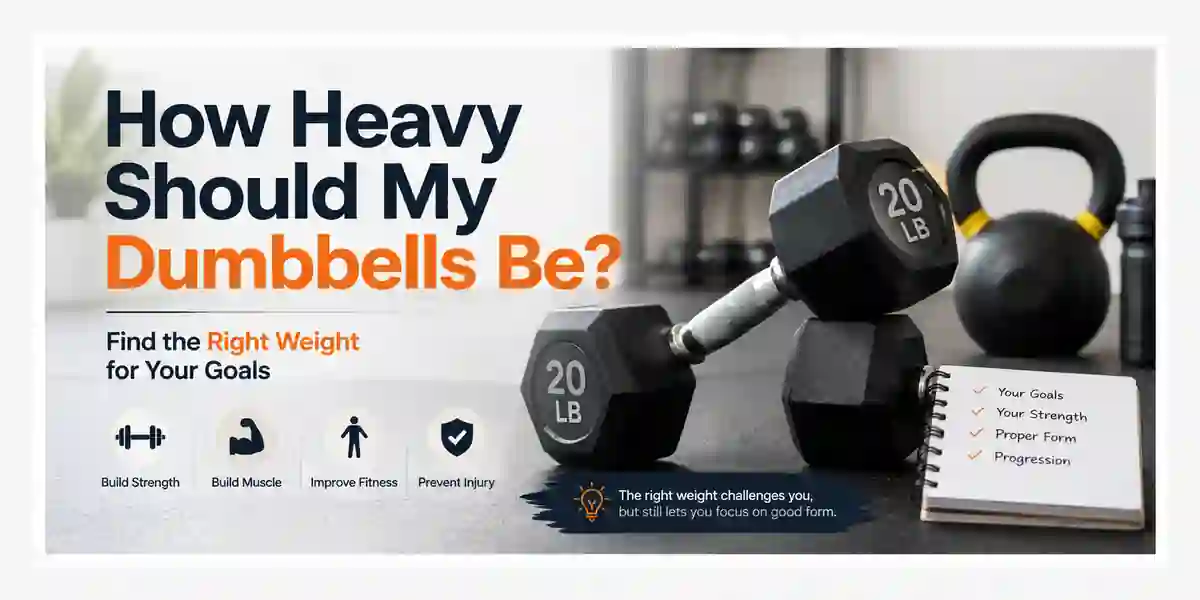
How Heavy Should My Dumbbells Be?
If you’ve ever stood in front of a dumbbell rack feeling completely lost, you’re not alone. Most people guess wrong. They either grab something that’s way too heavy and end up using momentum, or they pick something so light that they don’t feel a thing.
Neither option gets you results.
The American College of Sports Medicine recommends that beginners start with a weight they can lift for 8 to 12 reps with good form, where the last two reps feel genuinely challenging. That’s a solid starting point, but it still leaves a lot of room for guesswork. The truth is, the right weight depends on your body, your experience, and the specific exercise you’re doing.
Let’s break down why most people get this wrong and how to fix it.
Quick Answer
Start with your lightest dumbbell. Do 10 reps with perfect form. If the last two reps are hard, that weight works.
If they’re easy, go up. If you can’t finish, go down. Each exercise needs its own test.
Why Most People Get This Wrong (And It’s Not Your Fault)
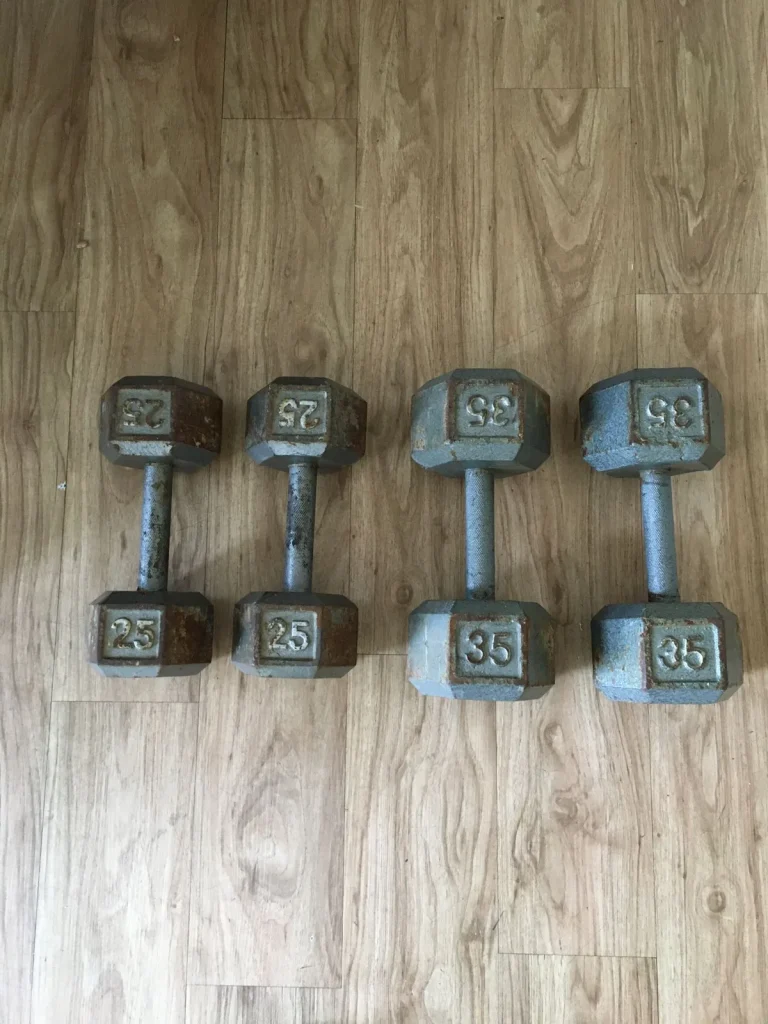
The biggest mistake is picking a weight based on what someone else is using. You see a person next to you curling 35 pounds, so you grab the same. But that person might have been training for years.
You might be in your first week. That comparison is useless.
Another common error is what trainers call ego lifting. You choose a weight that looks impressive, but your form falls apart. Your back starts arching.
Your hips start swinging. You’re not actually working the target muscle. You’re just moving the weight by any means necessary.
This is how injuries happen.
The third mistake is assuming one weight works for everything. The weight you use for a goblet squat will be much heavier than what you use for a lateral raise. They’re different movements working different muscle groups.
Treat each exercise as its own test.
Getting the right weight starts with proper positioning and control. Pay attention to your form before adding load. Once you have the technique down, you can test heavier weights safely.
What “Heavy” Actually Means for Your Body (It’s Not What You Think)
“Heavy” is not a number on a dumbbell. It’s a feeling. Specifically, it’s how hard your muscles have to work to complete a movement.
For a beginner, 10 pounds can feel heavy. For an experienced lifter, 50 pounds might feel moderate. Your personal strength level determines what’s heavy for you.
And that changes over time as you get stronger.
Heavy is also relative to the exercise. A 20-pound dumbbell for a bicep curl might feel very challenging. But 20 pounds for a Romanian deadlift would feel almost nothing.
Compound movements that use multiple joints and larger muscle groups can handle more weight. Isolation movements that target a single muscle group need less.
This is why following a generic weight chart doesn’t work. A chart might say “beginner women should use 5 to 10 pounds,” but that doesn’t account for your individual strength. You might be stronger than average in your legs but weaker in your shoulders.
The right weight is personal to you and to each movement. As of 2026, the most current strength training guidelines from the National Strength and Conditioning Association reinforce this individualized approach.
The Three Factors That Determine Your Dumbbell Weight
Three variables control what weight you should use. Change any one of them, and your ideal weight changes too.
Your Current Strength Level
This is the most obvious factor. Your strength level is determined by your training history, genetics, and even your body mechanics. A beginner needs to start lighter and build a foundation.
An experienced lifter can handle more load from the start.
If you’re new to lifting, err on the lighter side. You can always go up next week. You cannot undo an injury.
Progressive overload works best when you build gradually over time.
The Specific Exercise You’re Doing
As mentioned, compound exercises allow heavier loads. Isolation exercises need lighter weights. Here’s a quick reference:
| Exercise Type | Examples | Typical Weight Range (Beginner) |
|---|---|---|
| Compound (lower body) | Goblet squat, deadlift, lunge | 20-40 lbs per hand |
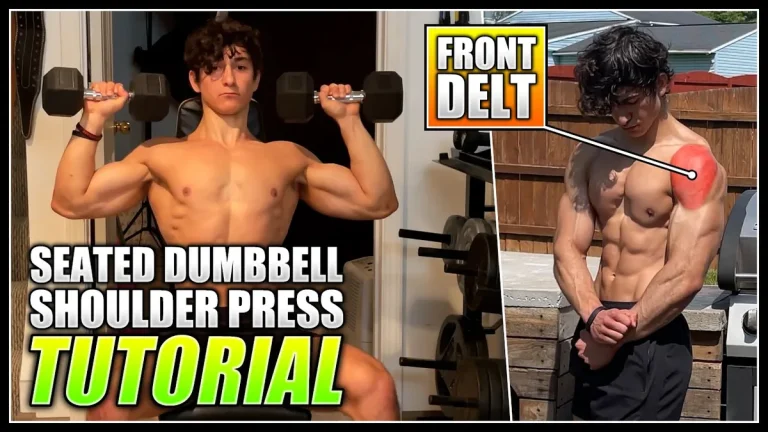
| Compound (upper body) | Bench press, row, overhead press | 10-25 lbs per hand |
| Isolation (upper body) | Bicep curl, triceps extension, lateral raise | 5-15 lbs per hand |
| Isolation (lower body) | Leg extension, hamstring curl | 10-20 lbs per hand |
These are rough estimates. Your actual weight depends on your strength and the specific exercise. Using the right weight for a compound movement like a goblet squat will feel very different from what you need for an isolation exercise.
Your Training Goal (Strength vs. Size vs. Endurance)
What you want to achieve changes the weight you need:
- Strength (1 to 6 reps): Heavy weight. You want a load that limits you to 6 or fewer reps with perfect form.
- Size (8 to 12 reps): Moderate weight. You want a load that makes the last two reps of a set of 12 feel very difficult.
- Endurance (15 to 20 reps): Lighter weight. You want a load you can control for 15 or more reps before your form breaks.
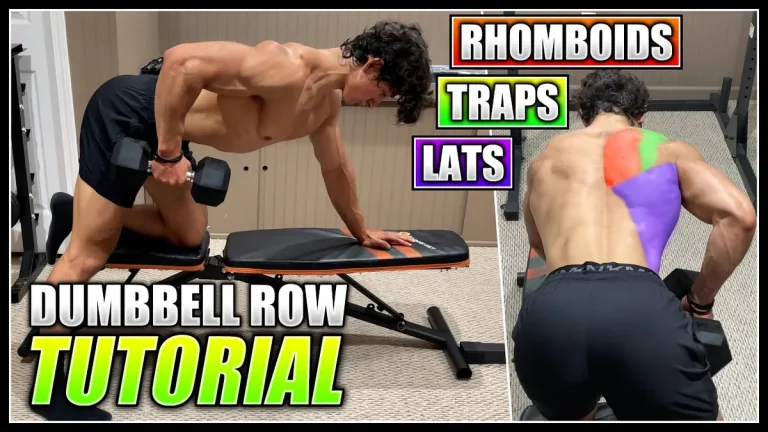
Match your weight to your goal. If you’re building muscle, stay in the 8 to 12 rep range and adjust the weight accordingly. The weight you use for a single arm row will differ from what you use for a lateral raise, and that’s completely normal.
The Rep Range Rule: How to Test If a Weight Is Right for You
This is the most practical method you can use. It removes guesswork and gives you a clear answer every time. The rule works for any exercise, any goal, and any experience level.
The “Last Two Reps” Test
Pick a weight. Do a set of 10 to 12 reps with perfect form. Pay attention to the last two reps.
If the last two reps are very hard, you’re using the right weight. If you could easily do 3 or 4 more reps, the weight is too light. If you can’t complete 10 reps without cheating, the weight is too heavy.
This test works for every exercise. Use it every time you try a new movement. It’s especially useful when you’re learning a new exercise for the first time.
The Reps in Reserve (RIR) Method
RIR stands for “reps in reserve.” It’s a simple question. After you finish your set, how many more reps could you have done with perfect form?
- 0 RIR: You could not do another rep. This is your maximum effort.
- 1 RIR: You could have done one more rep, but only one.
- 2 RIR: You could have done two more reps.
For most training goals, 1 to 2 RIR is the sweet spot. You’re working hard enough to stimulate growth, but not so hard that your form breaks down. This is a more nuanced version of the last two reps test.
It gives you a more precise way to gauge your effort.
The Warm-Up Set Protocol
Never jump straight into your working weight. Start with a light warm-up set to prepare your muscles and joints.
For a compound exercise, do 1 to 2 warm-up sets at 50% of your estimated working weight. For an isolation exercise, one warm-up set at 50% is usually enough.
After your warm-up, add weight and test your working set using the last two reps rule. If the weight feels too easy or too hard, adjust immediately. Don’t be afraid to drop down.
Your body will thank you later. A proper warm-up also helps you gauge whether a weight is appropriate before you commit to a full set.
Dumbbell Weight by Exercise: A Practical Guide
Not all exercises are created equal. Your squat weight will be different from your curl weight. That’s normal.
Here’s how to think about each category.
Compound Lifts (Squats, Rows, Presses)
Compound movements use multiple joints and muscle groups. They allow you to handle more weight. A dumbbell goblet squat might feel comfortable at 30 pounds per hand.
A dumbbell bench press might feel right at 25 pounds per hand.
The key is to start conservatively. Use the rep range test from the previous section. For compound lifts, your warm-up set is especially important.
These movements require more coordination and joint preparation. A proper warm-up with a lighter weight helps you gauge whether your working weight is appropriate.
Isolation Lifts (Curls, Lateral Raises, Triceps Extensions)
Isolation exercises target a single muscle group. They need much lighter weights. A bicep curl at 15 pounds might feel very challenging.
A lateral raise at 10 pounds might be your max.
This is where most people go wrong. They try to lift too heavy, so they swing their body or use momentum. That defeats the purpose.
The goal of an isolation exercise is to feel the target muscle working. If you’re using momentum, you’re not working the muscle. You’re just moving weight.
Why You Should Never Use the Same Weight for Everything
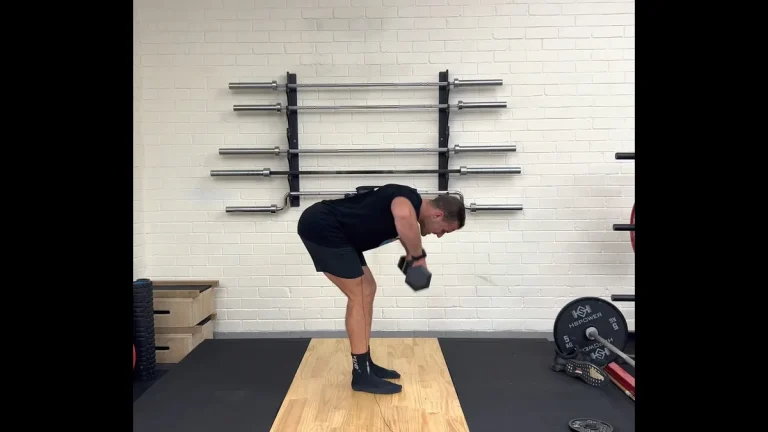
Each exercise demands its own weight. Your dumbbell row weight will be heavier than your lateral raise weight. Your triceps extension weight will be lighter than your overhead press weight.
Make a habit of testing each movement separately. Start with a light weight for the first set. If it’s too easy, go up for the next set.
If it’s too hard, drop down. This takes practice, but it becomes second nature quickly.
The Biggest Mistakes People Make When Choosing Dumbbell Weight
Even experienced lifters slip up sometimes. Here are the most common errors and how to avoid them.
Ego Lifting and the Injury Trap
Ego lifting is the number one mistake. You see a heavier weight, and you want to prove something. So you grab it.
Your form breaks. Your back rounds. Your shoulders shrug.
You’re not building muscle. You’re building risk.
Research consistently shows that lifting with poor form increases injury rates. The shoulder, lower back, and elbow are the most common sites. If you feel pain during a lift, stop immediately.
Lower the weight. Check your form. Pain is not weakness leaving the body.
It’s a warning sign.
Using Momentum Instead of Muscle
This is especially common in bicep curls and shoulder raises. People swing their body to get the weight up. That’s not training the muscle.
That’s physics.
The solution is simple. Slow down. Control the movement on the way up and the way down.
If you cannot control the negative, the weight is too heavy. Check your form before you worry about the number on the dumbbell. Proper positioning prevents injury and ensures you’re working the right muscles.
Thinking “Light Weights” Are a Waste of Time
Some people think light weights are useless. They believe only heavy weights build muscle. That’s not true.
Research shows that lifting lighter weights to near failure can also stimulate muscle growth. The key is intensity. If you take a light weight and do 20 reps where the last two are very hard, you’re still getting a stimulus.
Light weights have a place in warm-ups, rehab, and endurance training. Do not dismiss them.
When to Go Up (And When to Stay Put)
Progressing your weight is not automatic. You need to earn it. Here’s how to know when it’s time to move up.
Signs You’re Ready to Increase Weight
You can easily complete all your reps with perfect form. The last two reps feel manageable, not brutal. You can feel the target muscle working, but you’re not struggling to maintain control.
A good rule of thumb is the 2 for 2 rule. If you can complete two more reps than your target in the last set of an exercise for two consecutive workouts, you’re ready to increase the weight. For example, if your goal is 10 reps and you can do 12 with good form for two sessions in a row, go up.
Signs You Should Drop Down or Stay
You’re using momentum. Your form is breaking. You feel pain in your joints, not your muscles.
You cannot complete your target reps with control.
Stay at the same weight until you fix these issues. Dropping down is not a failure. It’s a smart decision that protects your progress.
Keep your form consistent before adding load.
The 5% Rule for Progressive Overload
When you increase weight, do it gradually. The 5% rule is a safe guideline. Increase your dumbbell weight by no more than 5% per week for upper body exercises.
For lower body exercises, 5 to 10% is acceptable.
For example, if you’re using 20 pounds for a dumbbell row, your next step would be 21 pounds. That’s a small jump. Many adjustable dumbbells allow this kind of micro-loading.
If your gym has fixed dumbbells, you might need to jump 5 pounds. That’s okay. Just make sure you can still complete your reps with good form.
How to Find Your Starting Weight (Without Guessing or Getting Hurt)
If you’re completely new to lifting, you don’t need to guess. Use these methods to find your starting point safely.
The Rep-Out Test
Choose a weight that feels light. Do as many reps as you can with perfect form. Stop when your form breaks or you cannot complete another rep.
If you did 15 reps or more, the weight is too light. Go up. If you did 5 reps or fewer, the weight is too heavy.
Go down. If you did 8 to 12 reps, you found your starting weight. This is a reliable method for any exercise, from a single arm row to a triceps extension.
The RPE Scale (Rate of Perceived Exertion)
RPE is a scale from 1 to 10. It measures how hard the set feels. A 1 is barely any effort.
A 10 is maximal effort. For most training goals, you want an RPE of 7 to 8. That means the set feels hard, but you could have done one or two more reps.
Use the RPE scale to adjust your weight on the fly. If a set feels like a 5, go up. If it feels like a 9, drop down.
Per ACSM guidelines, this subjective scale is a valid tool for dose-response monitoring.
Starting Light vs. Starting Heavy: What the Research Says
The evidence favors starting light. A systematic review in the Journal of Strength and Conditioning Research found that beginners who start with conservative weights and focus on form have lower injury rates and better long-term adherence. They also build strength faster because they’re not constantly recovering from poor form.
Starting heavy has no benefit for beginners. It only increases risk. Err on the lighter side every time.
You can always add weight next week.
Who Needs Lighter Weights (And Who Needs Heavier)
Different people have different needs. The right weight depends on your situation.
Beginners and Returning Lifters
If you’re new to lifting or coming back after a long break, start light. Use the rep-out test to find your baseline. Expect to use lighter weights for the first few weeks.
Your body needs time to rebuild connective tissue and neuromuscular coordination.
Seniors and Older Adults
For older adults, lighter weights with higher reps (15 to 20) are often recommended. The focus should be on joint health and mobility. A weight that allows controlled, pain-free movement is ideal.
The American College of Sports Medicine recommends progressive resistance training for older adults, starting with low to moderate loads.
Athletes and Advanced Lifters
If you have training experience, you can handle heavier weights. But you should still test each exercise individually. A 50-pound dumbbell row might feel easy, but a 15-pound lateral raise might be your limit.
Don’t assume your strength transfers across all movements.
Postpartum and Rehabilitation
If you’re returning from injury or postpartum, start with very light weights or bodyweight only. Focus on rebuilding core stability and joint control. A weight that feels challenging but pain-free is the right choice.
Consider working with a physical therapist or certified trainer for personalized guidance.
What About Adjustable Dumbbells? (How to Choose the Right Range)
If you’re shopping for a home gym, adjustable dumbbells save space and money. But you need to pick the right weight range.
Most adjustable sets start at 5 pounds and go up to 25, 50, or 80 pounds per hand. For most people, a set that goes to 50 pounds is enough for the first year of training. If you’re an experienced lifter, look for a set that reaches 80 or 90 pounds.
The key is to buy a range that covers your compound lifts. Your isolation exercises will rarely need more than 30 pounds. But your rows and presses might need more.
Check the maximum weight before you buy. A set that maxes out at 25 pounds will feel limiting quickly.
A Quick Decision Guide: What Weight Should You Use Right Now?
If you’re standing in front of a rack right now, here’s what to do.
Pick the lightest dumbbell you think might work. Do 10 reps with perfect form. If the last two reps are hard, that’s your weight.
If you could do 3 more, go up 5 pounds. If you couldn’t finish, drop down 5 pounds.
Repeat this test for each exercise. Your squat weight will not match your curl weight. Trust the test, not your ego.
Frequently Asked Questions
Can you build muscle with light dumbbells?
Yes, if you take the set close to failure. Research shows that lifting lighter weights for higher reps (15 to 25) can stimulate muscle growth. The key is intensity.
The last few reps should feel very hard. Light weights work best for isolation exercises, not heavy compounds.
Is it better to go heavy or light for fat loss?
Neither matters more than total effort and calorie burn. Heavy weights build strength and muscle. Light weights with higher reps increase endurance and calorie burn.
Both work. Pick the approach you enjoy and can stick with consistently.
Should I increase weight every week?
Not necessarily. Increase weight only when you can complete all your target reps with perfect form for two consecutive workouts. That might take one week or three weeks.
Rushing progression leads to injury and stalled progress.
How do I know if I’m strong enough to go up?
Use the 2 for 2 rule. If you can complete two more reps than your target in your last set for two workouts in a row, you’re ready. For example, if your goal is 10 reps and you hit 12 twice, go up 5 pounds.
A Final Word: The One Thing That Matters More Than the Number on the Dumbbell
The weight on the dumbbell is just a tool. Your form and consistency matter more.
A perfect rep with a light weight builds more muscle than a sloppy rep with a heavy one. Control the movement. Feel the muscle work.
Progress slowly. That’s how you get results without getting hurt.
The right weight is the one you can control. Everything else is just noise.