Complete Guide to What Is Incline Dumbbell Press
You walk into the gym, grab a pair of dumbbells, and set the bench to an incline. But are you doing the incline dumbbell press right? More importantly, are you doing it safely?
This movement can be a game-changer for upper chest development when done correctly, but it’s also one of the easiest exercises to mess up in a way that leaves your shoulders angry for days.
So what is incline dumbbell press exactly? It’s a compound pressing exercise performed lying on an adjustable bench set to a 30 to 45 degree angle, pressing dumbbells upward from your chest while keeping each arm working independently. Per EMG research from the American College of Sports Medicine, the 30 to 45 degree range produces the highest activation of the upper pectorals while minimizing anterior deltoid dominance.
Let’s walk through what makes this lift worth your time and how to keep your shoulders happy while doing it.

Image source: YouTube / Renaissance Periodization (YouTube thumbnail (fair-use with source credit))
Quick Answer
The incline dumbbell press is a chest exercise performed on a bench angled at 30 to 45 degrees. You press two dumbbells upward from your chest while lying back. It targets the upper chest more than a flat bench press.
The independent arm movement helps correct muscle imbalances. Proper form matters more than heavy weight.
Why This Lift Deserves Your Attention
Most guys spend years hammering the flat bench press and wonder why their upper chest looks flat. The incline dumbbell press fills that gap by targeting the clavicular head of the pectoralis major. That’s the part of your chest that sits near your collarbone, and it’s notoriously stubborn to grow with flat pressing alone.
The incline angle shifts the line of pull so your upper chest fibers work harder than they would during a flat press. Your front delts and triceps still help, but the incline bias forces your upper pecs to take more of the load. Over time, this creates a fuller, more balanced chest appearance, especially when viewed from the side.
Another reason this exercise stands out: dumbbells let each arm work independently. If you’ve ever noticed one side of your chest is lagging, a barbell lets your strong side compensate without you even realizing it. Fixing that imbalance starts with exercises where both sides have to pull their own weight.
Here’s what you get from adding this movement consistently:
- Better upper chest definition and fullness
- Improved shoulder stability through a natural pressing arc
- Reduced risk of shoulder impingement compared to barbell incline pressing
- Correctable strength imbalances between left and right sides
If you’re looking for smart dumbbell technique across multiple exercises, understanding how to keep your shoulders safe while pressing ties directly into proper lifting form.
What Exactly Is the Incline Dumbbell Press (And What It’s Not)
Let’s clear up confusion right now. The incline dumbbell press is not the same as a flat dumbbell press with the bench slightly tilted. It’s also not the same as a shoulder press done on an incline bench.
The distinction matters because people get hurt when they blur the lines between these movements.
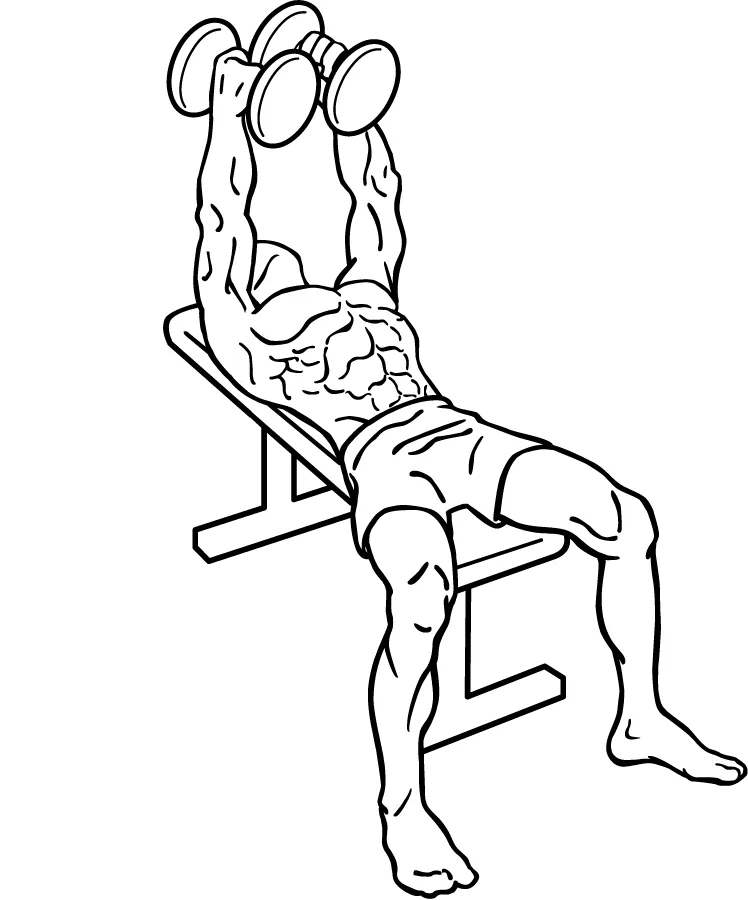
The incline dumbbell press is a compound pushing exercise where you lie on a bench angled 30 to 45 degrees above horizontal. You hold a dumbbell in each hand at shoulder height, elbows bent to about 90 degrees. From there, you press the weights upward until your arms are extended but not locked out, then lower them back down under control.
Here’s what this exercise is NOT:
- A shoulder exercise. If your bench is steeper than 45 degrees, you’re doing a shoulder press variation, not a chest exercise.
- A flat bench replacement. The incline targets upper chest more than mid or lower chest.
- A barbell exercise with dumbbells swapped in. The movement path is different because dumbbells don’t force a fixed bar path.
- A “go heavy or go home” movement. Form breaks faster on incline than flat, and shoulder injuries happen fast.
The key difference from flat pressing comes down to the angle of your torso relative to the floor. At 30 to 45 degrees, your upper chest is placed in a mechanically advantageous position to produce force. Your lower chest and mid-chest still activate, but less than they would on a flat bench.
This exercise belongs in the same family as the flat dumbbell press, but it’s a distinct variation with a specific job: building upper chest mass and improving pressing mechanics that carry over to other movements.
The 30–45 Degree Rule: Why Angle Matters More Than Weight
You might think adding more weight to the bar is the only way to grow. With the incline dumbbell press, the angle you choose matters just as much as the load on the dumbbells. Get the angle wrong, and you’re either wasting your time or setting yourself up for shoulder pain.
Image source: YouTube / GAF Shorts (YouTube thumbnail (fair-use with source credit))
Research consistently shows that the 30 to 45 degree range activates the upper chest significantly more than steeper or shallower angles. A bench set to 60 degrees shifts most of the work to your front delts. Your upper chest is still involved, but you’re no longer training it effectively for size gains.
A bench set to 20 degrees behaves more like a flat press with slightly more upper chest involvement, but you miss the peak activation that 30 to 45 degrees provides.
Here’s what each angle does in practice:
| Bench Angle | Primary Target | Shoulder Stress | Best For |
|---|---|---|---|
| 15–20 degrees | Mid to upper chest transition | Low | Beginners or shoulder rehab |
| 30–45 degrees | Upper chest (clavicular head) | Moderate | Hypertrophy and strength |
| 45–60 degrees | Upper chest and front delts | Higher | Advanced lifters, shoulder dominant |
| 60+ degrees | Front delts primarily | Highest | Shoulder pressing, not chest |
The sweet spot for most people is 30 degrees. That’s enough angle to bias the upper chest without dumping too much load onto your front delts. If your bench is adjustable, mark the angle setting you use so you don’t guess next session.
Keeping the same angle week to week lets you track progress accurately.
As of 2026, many commercial gym benches still lack clear angle markings. If yours is one of them, use a angle finder app on your phone or a physical protractor to set it once and remember the setting.
How the Incline Dumbbell Press Compares to Other Chest Work
You’ve got options for building chest mass, and knowing which tool fits the job saves time and protects your joints. Let’s break down how the incline dumbbell press stacks up against the alternatives.
vs. Flat Dumbbell Press
The flat dumbbell press targets the mid and lower chest more heavily. If you want a thick sternal region and lower pec development, flat pressing is your go-to. The incline version shifts emphasis upward.
If your chest looks square at the bottom but flat near the collarbone, you’re likely overdoing flat pressing and skipping incline work. Run both in the same training block for the most balanced chest development.
vs. Incline Barbell Press
This is where form differences really matter. The barbell locks your hands into a fixed bar path, which can force your shoulders into internal rotation at the bottom. That’s a recipe for impingement over time.
The incline dumbbell press allows a more natural arc that follows your shoulder’s preferred movement pattern.
The tradeoff is that you can typically handle more weight with a barbell, and progressing load is simpler. Dumbbells require more stabilization, which limits how heavy you can go safely.
vs. Decline Dumbbell Press
Decline pressing targets the lower chest preferentially. Some lifters use it to fill out the bottom of their chest, especially if they have a naturally high insertion point. The decline angle reduces shoulder stress compared to flat pressing, but it doesn’t do much for the upper chest.
If your goal is upper chest development, skip the decline and keep your bench at 30 to 45 degrees.
vs. Machine Incline Press
Machines offer stability and safety because the weight path is guided. You don’t have to worry about dumbbells falling or stabilizer muscles fatiguing before your chest is worked. The downside is that machines often lock you into a fixed movement pattern that doesn’t match your individual anatomy.
Free weights like dumbbells force your stabilizers to activate, which builds functional strength and shoulder health. If you’re training for general fitness or bodybuilding, dumbbells are typically the better choice. If you’re rehabbing from an injury or training alone with heavy loads, machines offer a safer alternative.
Who Should Do This Exercise (And Who Should Skip It)
The incline dumbbell press isn’t for everyone. Some lifters benefit massively from it. Others should avoid it until they fix underlying issues.
This exercise is ideal for you if:
- You want to build upper chest size and fullness
- You’ve noticed your chest looks flat near the collarbone
- You have shoulder issues with barbell pressing but tolerate dumbbells well
- You’re a beginner learning proper pressing mechanics
- You compete in a sport that requires overhead or horizontal pushing power
Consider skipping or modifying this exercise if:
- You have active shoulder impingement or rotator cuff tendinitis
- Your bench angle setting goes past 45 degrees (move to 30)
- You can’t control the dumbbells on the way down (drop weight)
- You feel sharp pain in the front of your shoulder during the movement
- You have limited shoulder mobility that prevents you from getting into the starting position safely
For most lifters, the incline dumbbell press is a staple exercise that belongs in weekly programming. If you’re still learning the basics of dumbbell work, you can build foundational form with a lighter weight before progressing.
Step-by-Step: How to Set Up and Execute Safely
Getting this exercise right starts before you even pick up the dumbbells. The setup determines whether you hit your upper chest or jack up your shoulder. Follow these steps in order every single time.
Setting the Bench and Picking Your Weight
First, adjust your bench to 30 degrees. If your bench only has preset notches, choose the one closest to 30 rather than the 45-degree option. Place two dumbbells on the floor beside the bench, one on each side.
Your starting weight matters. For most men with some training experience, 25 to 35 pounds per hand is a safe starting point. For women or complete beginners, 10 to 15 pounds per hand works well.
The goal on day one is perfect control, not impressing anyone.
Getting Into Position
Sit on the edge of the bench with the dumbbells resting on your thighs near your knees. Lean back in one controlled motion while using your legs to kick the dumbbells up to shoulder height. Your elbows should be below the handles at the bottom position.
Keep your feet flat on the floor. Drive your heels down for stability. Your glutes and upper back should stay in contact with the bench throughout the entire set.
If your lower back arches off the pad, your core isn’t braced properly.
The Pressing Motion
Press the dumbbells up in a slight arc. Think of pushing them toward the ceiling above your face rather than straight up from your shoulders. This arc keeps your shoulders in a safer position and maximizes upper chest activation.
Lower the dumbbells under control until your elbows reach about 90 degrees or slightly below. Going deeper than that shifts tension from your chest to your shoulders. Stop when you feel a stretch in your upper chest, not your front delts.
Breathing and Tempo
Exhale as you press the dumbbells up. Inhale as you lower them down. Control the lowering phase to about two seconds, then press up in one second.
This tempo keeps tension on the chest and prevents you from using momentum.
If you’re following a full program, you can pair this exercise with a tricep-focused movement for a productive chest and arm session.
The Biggest Mistakes That Wreck Your Shoulders
More lifters get hurt on the incline dumbbell press than on any other dumbbell chest exercise. The mistakes are predictable. Here’s what to watch for and how to fix each one.
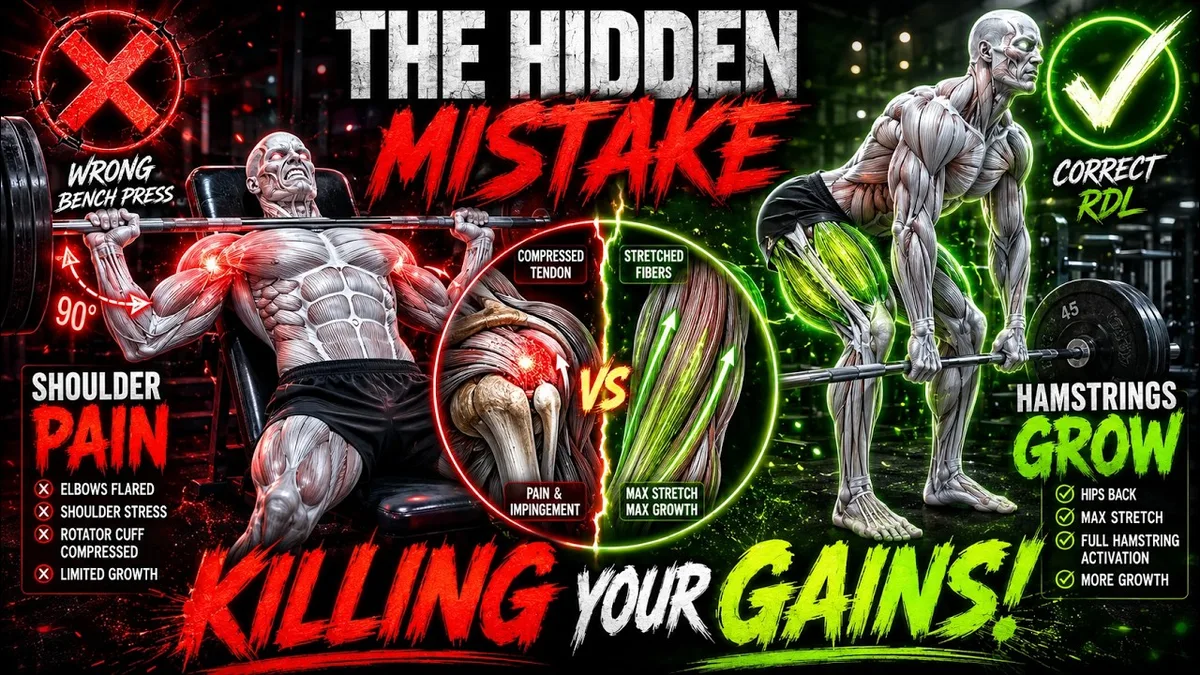
Image source: YouTube / Gym Correct (YouTube thumbnail (fair-use with source credit))
Elbow Flare
This is the number one culprit. When your elbows point straight out to the sides at 90 degrees from your torso, you compress the space in your shoulder joint. The rotator cuff tendons get pinched.
Over time, that creates impingement.
Keep your elbows at roughly 45 to 60 degrees from your torso. Imagine holding a grapefruit under each armpit. If the grapefruit falls, your elbows are flaring too wide.
Bench Angle Too Steep
Setting the bench to 60 or 70 degrees turns this into a shoulder press. Your upper chest stops being the primary mover. Your front delts take over, and they’re smaller muscles that fatigue faster and get irritated sooner.
If your shoulders hurt during or after incline pressing, check your bench angle first. Drop it to 30 degrees and see if the pain disappears.
Arching the Lower Back
A small arch is natural and keeps your shoulders packed. A huge arch where your lower back lifts off the bench shifts the load to your lower chest and reduces upper chest activation. It also puts your lumbar spine at risk under heavy loads.
Keep your ribcage pulled down. Your lower back should have a small gap from the bench, not enough to slide your whole hand through.
Dropping the Dumbbells at the Bottom
Letting the dumbbells crash down to your chest at the bottom of each rep removes tension from the working muscles. Worse, it jars your shoulder joint and can strain the connective tissue around your rotator cuff.
Lower the weights under control for a full two count. The negative phase is where most of the muscle growth happens anyway.
Going Too Heavy Too Fast
Your incline press weight will never match your flat press weight. That’s normal. Trying to force it by loading up dumbbells you can’t control is the fastest route to a shoulder injury.
If you can’t lower the dumbbells without your elbows shaking or your hips lifting, the weight is too heavy. Drop down by 5 to 10 pounds per hand.
What the Research Says About Muscle Activation
Several EMG studies have measured how different bench angles affect muscle activation in the chest, shoulders, and triceps. The findings are consistent enough to guide your training decisions.
A study published in the Journal of Strength and Conditioning Research looked at muscle activation across flat, 30-degree, 45-degree, and 60-degree bench angles. The results showed that the 30-degree angle produced the highest upper chest activation. The 45-degree angle was close but also increased anterior delt activation significantly.
At 60 degrees, upper chest activation dropped while front delt activation rose to its highest point. That confirms what we covered earlier: steep benches turn chest work into shoulder work.
The same research showed that the flat bench produced the highest overall pectoral activation but the lowest upper chest activation. That’s why running both flat and incline pressing in your routine gives you the most complete chest development.
Here’s what the research tells us in practical terms:
- 30 degrees is the sweet spot for upper chest bias with minimal shoulder risk
- 45 degrees works well for variety but increases delt involvement
- Flat or 15 degrees hits the overall chest mass but neglects the upper region
- 60+ degrees should be reserved for shoulder pressing, not chest work
The takeaway is straightforward. If your goal is upper chest hypertrophy, set your bench to 30 degrees. If you want to rotate angles across training cycles, stick between 30 and 45 degrees and never go steeper.
How to Progress Without Getting Hurt
Progressive overload drives muscle growth, but it has to work for your joints too. The incline dumbbell press responds best to small, consistent increases in load or volume. Jumping up too fast is where people stall out or get hurt.
Starting Weights and Early Progression
If you’re new to this movement, spend your first two to three sessions perfecting form at a weight you can control for 12 to 15 reps. Don’t worry about how light it feels. The goal is building the movement pattern and connective tissue tolerance.
After that, follow a simple progression scheme:
| Phase | Rep Range | Sets | Increase When |
|---|---|---|---|
| Form foundation | 12–15 | 3 | You hit 15 reps on all sets with perfect form |
| Hypertrophy buildup | 8–12 | 3–4 | You hit 12 reps on the last set two sessions in a row |
| Strength phase | 4–6 | 3–5 | You hit 6 reps on the top set with controlled reps |
Add 2.5 to 5 pounds per hand when you hit your rep targets consistently. Dumbbells usually jump in 5-pound increments, so if you can’t find 2.5-pound plates for micro-loading, use magnets or simply stay at the same weight until you can add a full rep to every set.
Rep Ranges for Specific Goals
Your rep range should match what you’re trying to achieve:
- 8 to 12 reps is the sweet spot for muscle growth (hypertrophy)
- 4 to 6 reps builds strength with some size
- 12 to 15 reps builds endurance and refines form
- 15 to 20 reps works for blood flow and active recovery days
Most lifters get the best results by staying in the 8 to 12 rep range for the majority of their training and cycling into lower reps every 6 to 8 weeks.
Deload Weeks
Every 4 to 6 weeks, take a deload week. Drop your working weight by 30 to 40 percent and cut your sets in half. This gives your shoulders and connective tissue a chance to recover from the accumulated stress of heavy pressing.
Skipping deloads is one of the main reasons lifters develop chronic shoulder pain from incline pressing. A week of lighter work keeps you training for years instead of months.
Real Talk: What This Exercise Can and Can’t Do for Your Chest
The incline dumbbell press is a fantastic tool, but it’s not magic. Setting realistic expectations keeps you from getting frustrated when the results don’t come overnight.
What it can do:
- Build visible upper chest mass over 8 to 12 weeks of consistent training
- Improve the shape and fullness of your chest when combined with flat pressing
- Strengthen your front delts and triceps as supporting muscles
- Correct strength imbalances between your left and right sides
- Reduce shoulder strain compared to barbell incline pressing
What it can’t do:
- Replace flat pressing for overall chest mass. You still need a flat pressing movement in your routine.
- Fix a naturally high chest insertion point. Your muscle insertions are genetic and no exercise changes them.
- Spot-reduce chest fat. No exercise targets fat loss in one area. That’s controlled by diet and overall body composition.
- Build massive lower chest development. For that, you need decline pressing, dips, or flat pressing with a lower focus.
Quick Reference: Safe Angles, Reps, and Rest Times
Here’s a cheat sheet for your next session. Bookmark this or write it on your gym log.
| Variable | Recommendation | Why |
|---|---|---|
| Bench angle | 30 degrees | Best upper chest activation, lowest shoulder risk |
| Rep range | 8-12 | Optimal for hypertrophy |
| Sets | 3-4 | Enough volume without overloading shoulders |
| Rest between sets | 60-90 seconds | Full recovery without losing muscle tension |
| Tempo | 2-0-1-0 | Two seconds down, press up in one second |
| Grip | Neutral or pronated | Palms facing each other or forward |
| Elbow angle | 45-60 degrees from torso | Protects rotator cuff |
When to See a Coach or Physical Therapist Instead
Some problems won’t fix themselves with form tweaks and lighter weights. If you experience any of these signs, stop the incline dumbbell press and get professional guidance.
Sharp pain in the front of your shoulder during the press is a red flag. Dull ache in the same spot after training for more than two weeks also needs attention. If you can’t raise your arm overhead without pain the next day, something deeper is going on.
A certified personal trainer can spot form errors you can’t feel. A physical therapist can diagnose underlying issues like rotator cuff weakness or glenohumeral instability. Both are better than guessing and making the problem worse.
If you’ve been pressing for months with no upper chest growth despite progressive overload, a coach can help you adjust your setup, rep scheme, or overall programming. Sometimes the issue isn’t the exercise itself but how it fits into your training week.
Frequently Asked Questions
Is the incline dumbbell press better than flat bench for upper chest?
Yes, significantly. EMG research shows the incline dumbbell press activates the upper chest more than flat pressing. The flat bench hits the mid and lower chest harder.
Both belong in a well-rounded chest routine.
What angle should I set the bench to?
Set your bench to 30 degrees. That angle provides the best upper chest activation with the least shoulder strain. Avoid going past 45 degrees unless you’re specifically training your front delts.
Can I build a big chest with just incline dumbbell press?
Not fully. The incline press builds the upper chest well, but you need flat or decline pressing to develop the mid and lower chest. Combine both for balanced mass and shape.
Why do my shoulders hurt when I do incline dumbbell press?
Most likely your elbows are flaring too wide or your bench angle is too steep. Drop the angle to 30 degrees and keep your elbows at 45 to 60 degrees from your torso. If pain persists, see a physical therapist.
How heavy should I go on incline dumbbell press?
Stay in a range where you can control the weight through the full range of motion. Most lifters use 10 to 20 percent less weight on incline than flat bench. If your form breaks down, the weight is too heavy.
Can beginners do the incline dumbbell press?
Absolutely. Beginners benefit from learning this movement early because it builds shoulder stability and teaches proper pressing mechanics. Start with light dumbbells and focus on control before adding weight.