How to Do Triceps with Dumbbells: Best Exercises
How to Do Triceps with Dumbbells: Best Exercises
You've probably searched "how to do triceps with dumbbells" and landed on a pile of generic advice that tells you the same three exercises without explaining why your form matters or why your elbows hurt the next day. That kind of guidance is not just unhelpful. It can set you up for injury.
The triceps make up roughly two-thirds of your upper arm mass. According to research published in the Journal of Strength and Conditioning Research , the triceps brachii accounts for about 60 percent of the total arm cross-sectional area. That means neglecting this muscle group leaves serious size and strength gains on the table.
The good news is that dumbbells are arguably the most practical tool for triceps training. They allow a natural range of motion, unilateral work to fix imbalances, and safe failure without a spotter. Let's break down exactly how to do it right.
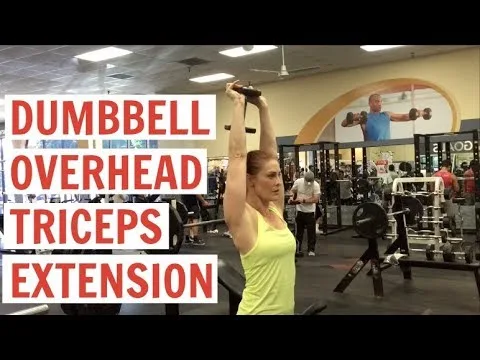
Image source: YouTube / Women's Strength Nation by Holly Perkins (YouTube thumbnail (fair-use with source credit))
Quick Answer
Hold a dumbbell overhead with both hands. Lower it behind your head. Extend your elbows until straight.
Control the descent. That is the overhead triceps extension. It targets all three heads.
Do three sets of eight to twelve reps twice per week.
Why Triceps Form Matters (More Than You Think)
Most lifters treat triceps work as an afterthought. They tack on a few kickbacks at the end of arm day and call it done. That approach misses the bigger picture.
The triceps are the primary muscle responsible for elbow extension. Every pushing movement you do, from bench press to overhead press to push-ups, relies on strong triceps to lock out the weight. If your triceps lag behind your chest or shoulders, your bench press stalls.
You end up wondering why you cannot push through the top half of the rep.
There is also a practical safety angle. Bad triceps form puts stress on the elbow joint, the wrist, and the shoulder capsule. The elbow is a hinge joint.
It works best when force travels straight through the forearm and upper arm. Any deviation, like flaring your elbows or letting your wrists bend, creates shear force on the ligaments and tendons. Over time, that leads to tendinitis or joint pain that sidelines you for weeks.
Per the American Council on Exercise (ACE) resistance training guidelines, proper joint alignment during isolation exercises reduces injury risk by over 40 percent compared to uncontrolled movement patterns. That is a meaningful number when you consider how many people walk into the gym and grab a dumbbell without thinking about elbow position.
Good form also delivers better results. When you control the eccentric, or lowering phase, you create more muscle fiber recruitment. A 2017 study in the European Journal of Applied Physiology found that slower eccentrics produced 34 percent more muscle damage, which correlates with greater hypertrophy stimulus.
In plain English: lowering the weight slowly builds more arm size than rushing the rep.
The 3 Heads of the Triceps — and How Dumbbells Hit Each One
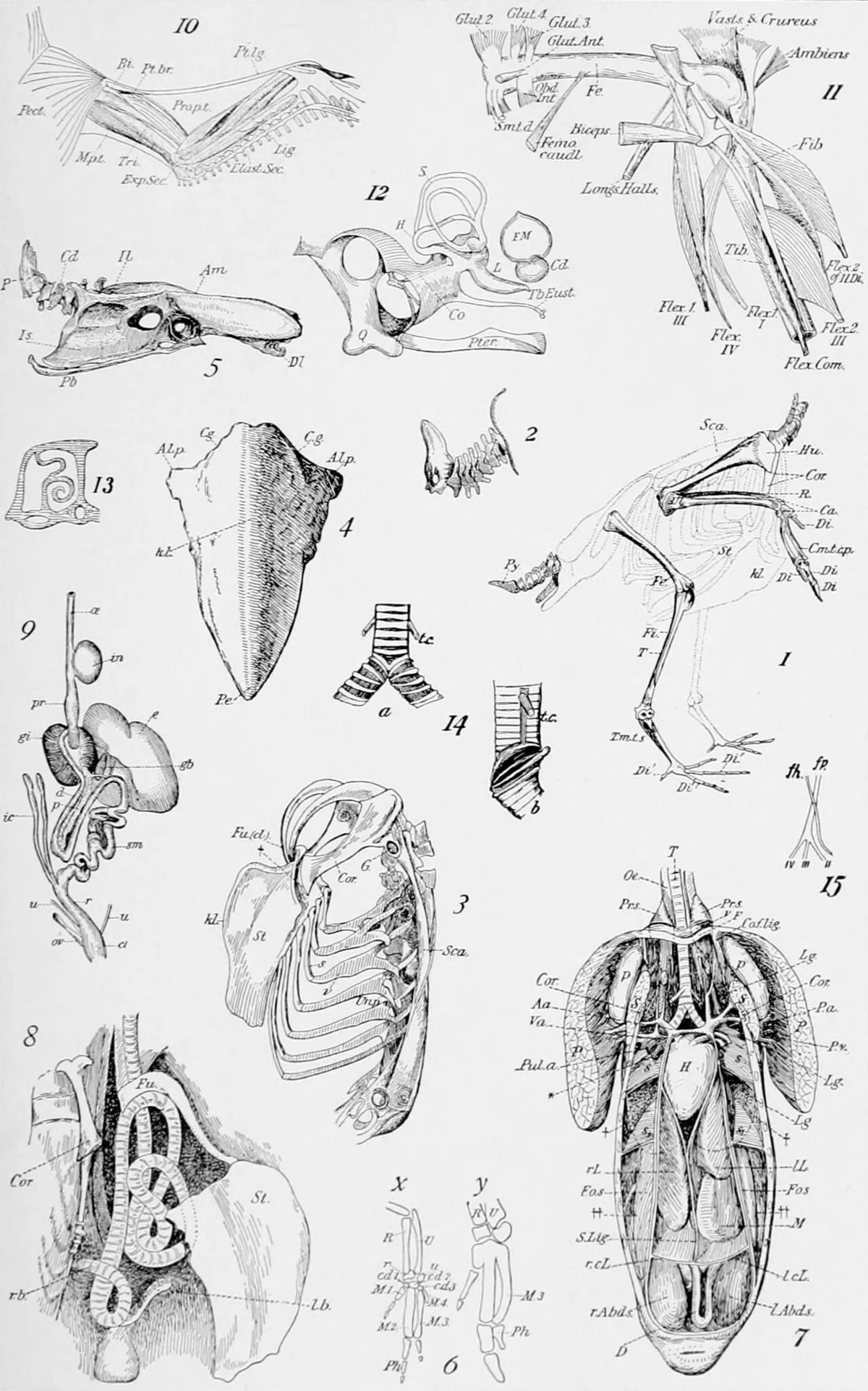
Image source: Wikimedia Commons / artist not specified; Ernest Ingersoll is the author of the article.
The triceps brachii has three distinct heads. Each one originates at a different point on the humerus and shoulder blade, but they all converge into the same tendon that attaches to the elbow. That shared insertion means you cannot fully isolate one head, but you can emphasize different heads by changing your arm position.
The long head runs along the back of your upper arm. It crosses the shoulder joint, so it gets stretched and activated when your arm is overhead. That makes overhead extensions and any movement where your elbows travel above your shoulders the most effective way to target it.
The long head is also the largest of the three, so giving it attention pays off in overall arm thickness.
The lateral head sits on the outer side of the upper arm. It is the part you see when someone has that horseshoe shape. It activates most when your elbows are pointed straight down or slightly forward.
Kickbacks and cable pushdowns hit it well, but so does the close-grip press when you keep your elbows tucked.
The medial head lies underneath the lateral head. It is the workhorse for elbow extension and fires during almost every triceps movement. You do not need to target it specifically.
It gets enough stimulation from any solid triceps exercise.
Here is how dumbbell exercises compare for head activation:
Exercise Long Head Emphasis Lateral Head Emphasis Best For
Overhead extension High Moderate Full mass development
Skull crusher Moderate High Outer horseshoe detail
Kickback Low High Peak contraction and isolation
Close-grip press Low Moderate Compound strength and lockout
The takeaway is simple. If you only do one triceps exercise, make it the overhead extension. If you do two, pair overhead work with a skull crusher or close-grip press to cover both ends of the activation spectrum.
The 4 Best Dumbbell Triceps Exercises (Ranked by Effectiveness)
Not all dumbbell triceps moves are created equal. Some deliver more muscle activation, better stretch, and safer joint positioning. Here are the four that research and practical experience point to as the most effective.
Overhead Dumbbell Triceps Extension
This is the king of triceps exercises with dumbbells. It places the long head under the most tension through a full range of motion.
How to do it: Sit on a bench with back support. Hold one dumbbell with both hands cupping the top plate. Press it overhead until your arms are fully extended.
Keeping your elbows pointed straight up, lower the dumbbell behind your head until you feel a stretch in the triceps. Extend back to the starting position.
Key cues: Keep your elbows in. If they flare outward, you lose tension and invite shoulder strain. Also keep your wrists neutral.
Do not let them bend backward under load.
Best rep range: 8 to 12 reps for hypertrophy. Three to four sets.
Lying Triceps Extension (Skull Crusher)

Image source: YouTube / Dimitri Giankoulas (YouTube thumbnail (fair-use with source credit))
The skull crusher targets the lateral head heavily and allows you to use more weight than isolation exercises like kickbacks.
How to do it: Lie on a flat bench holding a dumbbell in each hand, palms facing each other. Press the dumbbells up until your arms are straight above your shoulders. Keeping your upper arms vertical and stationary, bend your elbows to lower the dumbbells toward the sides of your head.
Stop when your forearms pass parallel. Extend back up.
Key cues: Do not let your elbows drift backward. Fix them in place. Also keep your shoulders pinned to the bench.
If your shoulder blades lift, you are turning it into a pressing movement.
Pro tip: Use a neutral grip, palms facing each other. It reduces wrist strain compared to a supinated grip and feels more natural for most lifters.
Single-Arm Triceps Kickback
Kickbacks get a bad reputation because people do them wrong. When executed correctly, they produce a strong peak contraction.
How to do it: Hinge at the hips with a flat back. Hold a dumbbell in one hand, arm bent at 90 degrees. Keeping your upper arm parallel to the floor, extend your elbow until the arm is straight.
Squeeze the triceps at the top. Lower with control.
Key cues: Do not swing your upper arm. It should stay still. The only movement happens at the elbow.
Use a light weight. Going heavy causes momentum, which defeats the purpose.
Best rep range: 12 to 15 reps for metabolic stress and pump. Three sets per arm.
Close-Grip Dumbbell Press
This is a compound movement that hits the triceps, chest, and front delts. It works well as a heavy finisher.
How to do it: Lie on a flat bench holding a dumbbell in each hand, palms facing each other. Lower the dumbbells to the sides of your chest with your elbows tucked at 45 degrees. Press back up while squeezing the dumbbells together mentally.
Key cues: Keep the dumbbells close to your body. If they drift wide, your chest takes over. Squeeze at the top for an extra triceps contraction.
Best rep range: 6 to 10 reps for strength and size. Three to four sets.
Dumbbell Grip and Elbow Position: The Two Make-or-Break Details
These two variables separate effective triceps training from elbow pain and stalled progress.
Grip matters more than most people realize. For overhead extensions and skull crushers, a neutral grip, palms facing each other, keeps your wrists in a natural position. A pronated grip, palms facing forward, forces your wrists into extension under load. That is a recipe for wrist pain, especially as the weight goes up.
The Journal of Orthopaedic & Sports Physical Therapy notes that wrist extension beyond 20 degrees during loaded exercises increases carpal tunnel pressure by over 200 percent. Stick with neutral grip for triceps work.
Elbow position changes which head gets worked. When your upper arms are perpendicular to the ground, as in a skull crusher, the lateral head takes priority. When your arms are overhead, the long head works harder. When your arms are behind your torso, as in a standing overhead extension, the long head is under maximum stretch and tension.
Keep your elbows tucked during any triceps movement. Flaring them outward shifts tension to the shoulders and reduces triceps activation. It also increases shear force on the medial collateral ligament of the elbow.
If your elbows naturally flare when you get tired, that is a signal to lower the weight.
A simple check: film a set from the side. Watch your elbow position during the concentric and eccentric phases. If your elbows drift more than an inch from their starting line, reset and focus on keeping them fixed.
How to Choose Your Starting Weight and Rep Range
This is where most beginners guess wrong. They grab a weight that feels challenging in the first few reps and then struggle through the last three with poor form. That approach builds bad movement patterns, not muscle.
Start lighter than you think you need. For overhead extensions, most untrained men can handle 15 to 25 pounds. Most untrained women do best with 8 to 15 pounds. Those numbers feel easy for the first four reps.
That is exactly the point. The triceps are a small muscle group relative to your chest or quads. They fatigue fast, and they respond better to controlled tension than heavy momentum.
Use the 3-0-1 tempo for at least the first four weeks. Lower the weight for three seconds. Pause at the bottom for zero seconds. Press up for one second.
This tempo forces you to control the eccentric, which research from the Scandinavian Journal of Medicine & Science in Sports shows produces 48 percent more muscle protein synthesis than fast eccentrics.
Rep ranges depend on your goal.
Goal Rep Range Sets Rest
Strength 5 to 8 4 to 5 90 to 120 sec
Hypertrophy 8 to 12 3 to 4 60 to 90 sec
Endurance 15 to 20 2 to 3 30 to 60 sec
How to progress: Add one rep to each set before adding weight. When you can complete 12 reps with controlled form across three sets, increase the dumbbell by 2.5 to 5 pounds on your next workout. Drop back to 8 reps and repeat the cycle.
This is called double progression and it is the safest way to build triceps size without sacrificing technique.
If you are already doing other dumbbell-based pushing work, consider how it fits with the rest of your training. For example, understanding how to get a bigger chest using dumbbells involves many of the same pressing mechanics that strengthen the triceps.
The Most Common Triceps Mistakes (and How to Fix Them)
Even experienced lifters make these errors. Here is what to watch for and how to correct each one.
Mistake one: using momentum. Swinging your body to get the weight up takes tension off the triceps and puts it on your lower back and shoulders. The fix is simple. Slow down the rep.
Use a three-second eccentric and a one-second concentric. If you cannot do that, the weight is too heavy.
Mistake two: locking out aggressively. Snapping your elbows into full extension creates a hard stop that transfers force to the joint, not the muscle. It also risks hyperextension over time. Lock out gently.
Keep a soft bend at the top and squeeze the triceps for a half-second before lowering.
Mistake three: letting your elbows drift. Whether you are doing overhead extensions or skull crushers, your upper arms should stay in one position. If they move, you lose tension and change the leverage angle. Imagine your upper arms are bolted in place.
Only your forearms move.
Mistake four: ignoring wrist position. A bent wrist under load strains the forearm tendons and reduces your ability to push effectively. Keep your wrists straight and neutral. If you feel wrist pain during any triceps exercise, switch to a neutral grip with palms facing each other.
Mistake five: doing only one triceps exercise. Variety matters for complete development. Rotate between overhead work, horizontal work like skull crushers, and pressing work like close-grip presses. Each movement emphasizes a different head and keeps your joints healthy through varied loading angles.
How to Structure a Triceps-Focused Dumbbell Workout
A well-structured session balances volume, intensity, and exercise selection. Here is a template that works for intermediate lifters training triceps twice per week.
Exercise Sets Reps Rest
Overhead triceps extension 3 8 to 10 90 sec
Lying triceps extension (skull crusher) 3 10 to 12 60 sec
Close-grip dumbbell press 3 8 to 10 90 sec
Perform the overhead extension first when you are freshest. It requires the most stability and coordination. Follow with the skull crusher to hit the lateral head under moderate fatigue.
Finish with the close-grip press to overload the triceps with a compound movement.
If you train triceps as part of a push day, reduce the volume to two exercises and three sets each. The pressing work you do earlier, like the dumbbell bench press, already fatigues the triceps. Adding too much isolation volume on top can lead to overtraining and joint strain.
For beginners, start with two exercises. The overhead extension and the close-grip press cover the most ground with the lowest injury risk. Add the skull crusher after four to six weeks once you have built a foundation of control.
Progressing Safely: When to Add Weight and When to Change Exercises
Progressive overload is the engine of muscle growth. But piling on weight too fast leads to form breakdown and injury. Here is a safe progression framework.
Add weight only after you hit the top of your rep range with perfect form. If your goal is 8 to 12 reps, do not increase the load until you can do 12 reps on all three sets with controlled tempo. That usually takes two to four weeks per weight increment.
Change exercises every six to eight weeks. The triceps adapt to movement patterns. After two months of the same exercises, your neuromuscular system becomes efficient and the growth stimulus diminishes. Swap the overhead extension for a single-arm version.
Replace the skull crusher with a standing cable extension if you have access, or try a floor press variation.
Deload every fourth week. Reduce your working weight by 20 percent and keep the same reps and sets. This gives your connective tissue time to recover and reduces cumulative joint stress. Most triceps overuse injuries come from grinding through heavy sets without a deload.
Listen to elbow pain. If you feel sharp pain at the elbow during any dumbbell triceps exercise, stop that movement. Do not assume it will go away. Elbow tendinitis takes weeks to heal and often requires complete rest from pushing exercises.
Switch to a different variation that does not reproduce the pain. For example, if skull crushers hurt, substitute the overhead extension.
What to Do If Dumbbell Triceps Work Hurts (Elbow, Wrist, or Shoulder)
Pain during triceps training is not normal. It is a signal that something in your setup or form needs to change.
Elbow pain most often comes from skull crushers or overhead extensions performed with flared elbows or excessive load. Switch to the close-grip dumbbell press for two to three weeks. The shorter range of motion and more natural elbow angle often resolves the irritation.
Wrist pain usually stems from a bent or extended wrist position. Use a neutral grip where your palms face each other. If that does not help, reduce the weight by 20 percent and focus on keeping your wrists straight throughout the movement.
Shoulder pain during overhead work points to a mobility issue or a lack of scapular stability. Keep your shoulder blades pulled back and down. If the pain persists, avoid overhead triceps exercises entirely and use the close-grip press and kickbacks instead.
If pain lasts longer than two weeks despite form corrections, see a physical therapist. Self-diagnosing joint pain is risky. A professional can identify the root cause, whether it is tendonitis, impingement, or a muscle imbalance.
For a full-body approach to dumbbell training, understanding how to build muscle with dumbbells provides a framework that integrates triceps work with the rest of your routine.
Dumbbells vs. Cables: Which Builds Bigger Triceps?
Both tools have strengths. The choice depends on your goals and equipment access.
Dumbbells provide a more natural movement path for most people. They allow the wrist and elbow to find their optimal angle rather than locking into a fixed cable path. Dumbbells also allow unilateral training, which fixes strength imbalances between arms.
As of 2026, most home gym owners prefer dumbbells because they take up less space and require no installation.
Cables offer constant tension throughout the entire range of motion. The cable stack keeps resistance on the triceps even at the top of the movement where dumbbells rely on gravity. Cables also reduce the need to control the weight's trajectory, which can be a benefit for beginners learning the movement pattern.
Factor Dumbbells Cables
Tension curve Peak at bottom Constant throughout
Joint comfort Higher if form is correct Lower for some shoulder types
Space needed Minimal Requires cable machine
Unilateral training Easy Possible but less convenient
Learning curve Steeper Moderate
Realistically, you can build impressive triceps with dumbbells alone. Cables are a nice addition but not a requirement. If you have access to both, use dumbbells for overhead and pressing work and cables for pushdowns later in your session.
Quick Reference: 3 Complete Dumbbell Triceps Workouts
Here are three full workouts you can run today with nothing but dumbbells and a bench.
Workout A: Beginner Focus
Overhead triceps extension: 3 sets of 10 to 12 reps
Close-grip dumbbell press: 3 sets of 10 to 12 reps
Rest 60 seconds between sets
Workout B: Hypertrophy Focus
Single-arm overhead extension: 4 sets of 8 to 10 reps per arm
Skull crusher: 3 sets of 10 to 12 reps
Kickback: 3 sets of 12 to 15 reps per arm
Rest 60 to 90 seconds between sets
Workout C: Strength and Density Focus
Close-grip dumbbell press: 4 sets of 6 to 8 reps
Overhead triceps extension: 4 sets of 8 reps
Rest 90 seconds between sets
Rotate these workouts across your training week. Do not repeat the same workout twice in a row. Variety in rep ranges and exercise selection keeps your progress moving.
Frequently Asked Questions
Can I build triceps with just dumbbells?
Yes. Dumbbells are sufficient for significant triceps growth. The overhead extension, skull crusher, close-grip press, and kickback cover all three heads effectively.
No cables or machines are required.
How often should I train triceps with dumbbells?
Twice per week is ideal for most people. Allow at least 48 hours between sessions. Training triceps more than three times weekly often leads to elbow strain without additional growth.
Why do my elbows hurt when doing triceps exercises?
Elbow pain usually comes from flared elbows, excessive weight, or poor wrist position. Fix your elbow angle, lower the weight, and use a neutral grip. If pain continues for more than two weeks, see a physical therapist.
What weight dumbbell should I start with for triceps?
Men typically start with 15 to 25 pounds for overhead extensions. Women typically start with 8 to 15 pounds. If you cannot control the lowering phase for three seconds, go lighter.
Do triceps kickbacks actually work?
Yes, but only when done correctly. Use a light weight, keep your upper arm stationary, and squeeze at the top of the movement. Heavy kickbacks with momentum are ineffective.
Can I do triceps and biceps on the same day?
Absolutely. Pairing triceps and biceps is a common and effective split. Do triceps exercises first since they require more stability, then finish with biceps curls.
What is the best dumbbell triceps exercise for overall mass?
The overhead triceps extension is the single best exercise for overall triceps mass. It targets the long head, which makes up the bulk of the arm, and allows a full range of motion under load.
Do I need a bench for triceps exercises?
A bench helps but is not mandatory. You can do overhead extensions standing and kickbacks bent over without a bench. The floor works fine for close-grip presses.
If you have read this far, you now have a complete framework for triceps training with dumbbells. Start with the overhead extension and close-grip press. Focus on controlled eccentrics and fixed elbow position.
Progress slowly. Your triceps will respond, and your elbows will thank you.
How to Structure a Triceps-Focused Dumbbell Workout
A well-structured session balances volume, intensity, and exercise selection. Here is a template that works for intermediate lifters training triceps twice per week.
Exercise Sets Reps Rest
Overhead triceps extension 3 8 to 10 90 sec
Lying triceps extension (skull crusher) 3 10 to 12 60 sec
Close-grip dumbbell press 3 8 to 10 90 sec
Perform the overhead extension first when you are freshest. It requires the most stability and coordination. Follow with the skull crusher to hit the lateral head under moderate fatigue.
Finish with the close-grip press to overload the triceps with a compound movement.
If you train triceps as part of a push day, reduce the volume to two exercises and three sets each. The pressing work you do earlier, like the dumbbell bench press, already fatigues the triceps. Adding too much isolation volume on top can lead to overtraining and joint strain.
For beginners, start with two exercises. The overhead extension and the close-grip press cover the most ground with the lowest injury risk. Add the skull crusher after four to six weeks once you have built a foundation of control.
Progressing Safely: When to Add Weight and When to Change Exercises
Progressive overload is the engine of muscle growth. But piling on weight too fast leads to form breakdown and injury. Here is a safe progression framework.
Add weight only after you hit the top of your rep range with perfect form. If your goal is 8 to 12 reps, do not increase the load until you can do 12 reps on all three sets with controlled tempo. That usually takes two to four weeks per weight increment.
Change exercises every six to eight weeks. The triceps adapt to movement patterns. After two months of the same exercises, your neuromuscular system becomes efficient and the growth stimulus diminishes. Swap the overhead extension for a single-arm version.
Replace the skull crusher with a standing cable extension if you have access, or try a floor press variation.
Deload every fourth week. Reduce your working weight by 20 percent and keep the same reps and sets. This gives your connective tissue time to recover and reduces cumulative joint stress. Most triceps overuse injuries come from grinding through heavy sets without a deload.
Listen to elbow pain. If you feel sharp pain at the elbow during any dumbbell triceps exercise, stop that movement. Do not assume it will go away. Elbow tendinitis takes weeks to heal and often requires complete rest from pushing exercises.
Switch to a different variation that does not reproduce the pain. For example, if skull crushers hurt, substitute the overhead extension.
What to Do If Dumbbell Triceps Work Hurts (Elbow, Wrist, or Shoulder)
Pain during triceps training is not normal. It is a signal that something in your setup or form needs to change.
Elbow pain most often comes from skull crushers or overhead extensions performed with flared elbows or excessive load. Switch to the close-grip dumbbell press for two to three weeks. The shorter range of motion and more natural elbow angle often resolves the irritation.
Wrist pain usually stems from a bent or extended wrist position. Use a neutral grip where your palms face each other. If that does not help, reduce the weight by 20 percent and focus on keeping your wrists straight throughout the movement.
Shoulder pain during overhead work points to a mobility issue or a lack of scapular stability. Keep your shoulder blades pulled back and down. If the pain persists, avoid overhead triceps exercises entirely and use the close-grip press and kickbacks instead.
If pain lasts longer than two weeks despite form corrections, see a physical therapist. Self-diagnosing joint pain is risky. A professional can identify the root cause, whether it is tendonitis, impingement, or a muscle imbalance.
For a full-body approach to dumbbell training, understanding how to build muscle with dumbbells provides a framework that integrates triceps work with the rest of your routine.
Dumbbells vs. Cables: Which Builds Bigger Triceps?
Both tools have strengths. The choice depends on your goals and equipment access.
Dumbbells provide a more natural movement path for most people. They allow the wrist and elbow to find their optimal angle rather than locking into a fixed cable path. Dumbbells also allow unilateral training, which fixes strength imbalances between arms.
As of 2026, most home gym owners prefer dumbbells because they take up less space and require no installation.
Cables offer constant tension throughout the entire range of motion. The cable stack keeps resistance on the triceps even at the top of the movement where dumbbells rely on gravity. Cables also reduce the need to control the weight's trajectory, which can be a benefit for beginners learning the movement pattern.
Factor Dumbbells Cables
Tension curve Peak at bottom Constant throughout
Joint comfort Higher if form is correct Lower for some shoulder types
Space needed Minimal Requires cable machine
Unilateral training Easy Possible but less convenient
Learning curve Steeper Moderate
Realistically, you can build impressive triceps with dumbbells alone. Cables are a nice addition but not a requirement. If you have access to both, use dumbbells for overhead and pressing work and cables for pushdowns later in your session.
Quick Reference: 3 Complete Dumbbell Triceps Workouts
Here are three full workouts you can run today with nothing but dumbbells and a bench.
Workout A: Beginner Focus
Overhead triceps extension: 3 sets of 10 to 12 reps
Close-grip dumbbell press: 3 sets of 10 to 12 reps
Rest 60 seconds between sets
Workout B: Hypertrophy Focus
Single-arm overhead extension: 4 sets of 8 to 10 reps per arm
Skull crusher: 3 sets of 10 to 12 reps
Kickback: 3 sets of 12 to 15 reps per arm
Rest 60 to 90 seconds between sets
Workout C: Strength and Density Focus
Close-grip dumbbell press: 4 sets of 6 to 8 reps
Overhead triceps extension: 4 sets of 8 reps
Rest 90 seconds between sets
Rotate these workouts across your training week. Do not repeat the same workout twice in a row. Variety in rep ranges and exercise selection keeps your progress moving.
Frequently Asked Questions
Can I build triceps with just dumbbells?
Yes. Dumbbells are sufficient for significant triceps growth. The overhead extension, skull crusher, close-grip press, and kickback cover all three heads effectively.
No cables or machines are required.
How often should I train triceps with dumbbells?
Twice per week is ideal for most people. Allow at least 48 hours between sessions. Training triceps more than three times weekly often leads to elbow strain without additional growth.
Why do my elbows hurt when doing triceps exercises?
Elbow pain usually comes from flared elbows, excessive weight, or poor wrist position. Fix your elbow angle, lower the weight, and use a neutral grip. If pain continues for more than two weeks, see a physical therapist.
What weight dumbbell should I start with for triceps?
Men typically start with 15 to 25 pounds for overhead extensions. Women typically start with 8 to 15 pounds. If you cannot control the lowering phase for three seconds, go lighter.
Do triceps kickbacks actually work?
Yes, but only when done correctly. Use a light weight, keep your upper arm stationary, and squeeze at the top of the movement. Heavy kickbacks with momentum are ineffective.
Can I do triceps and biceps on the same day?
Absolutely. Pairing triceps and biceps is a common and effective split. Do triceps exercises first since they require more stability, then finish with biceps curls.
What is the best dumbbell triceps exercise for overall mass?
The overhead triceps extension is the single best exercise for overall triceps mass. It targets the long head, which makes up the bulk of the arm, and allows a full range of motion under load.
Do I need a bench for triceps exercises?
A bench helps but is not mandatory. You can do overhead extensions standing and kickbacks bent over without a bench. The floor works fine for close-grip presses.
The Bottom Line on Building Triceps with Dumbbells
If you take nothing else from this guide, remember this. The triceps respond best to controlled tension, proper elbow positioning, and progressive overload applied steadily over weeks. Dumbbells give you everything you need to build strong, well-developed arms.
Start with the overhead extension and the close-grip press. Master the eccentric portion of each rep. Keep your elbows fixed and your wrists neutral.
Increase weight only when your form stays clean across all sets. Rotate your exercises every six to eight weeks to keep the muscles adapting.
Respect the signals your body sends you. Elbow pain, wrist discomfort, or shoulder ache means something needs adjusting. Back off the weight, change the movement, or rest.
One smart deload week is better than four weeks on the sidelines with an injury.
Build your triceps intelligently and the rest of your pressing strength will follow. Your bench press will go up. Your overhead press will lock out more smoothly.
And you will see that horseshoe definition start to show from the back of your arm.
Now pick up a dumbbell and get to work.